
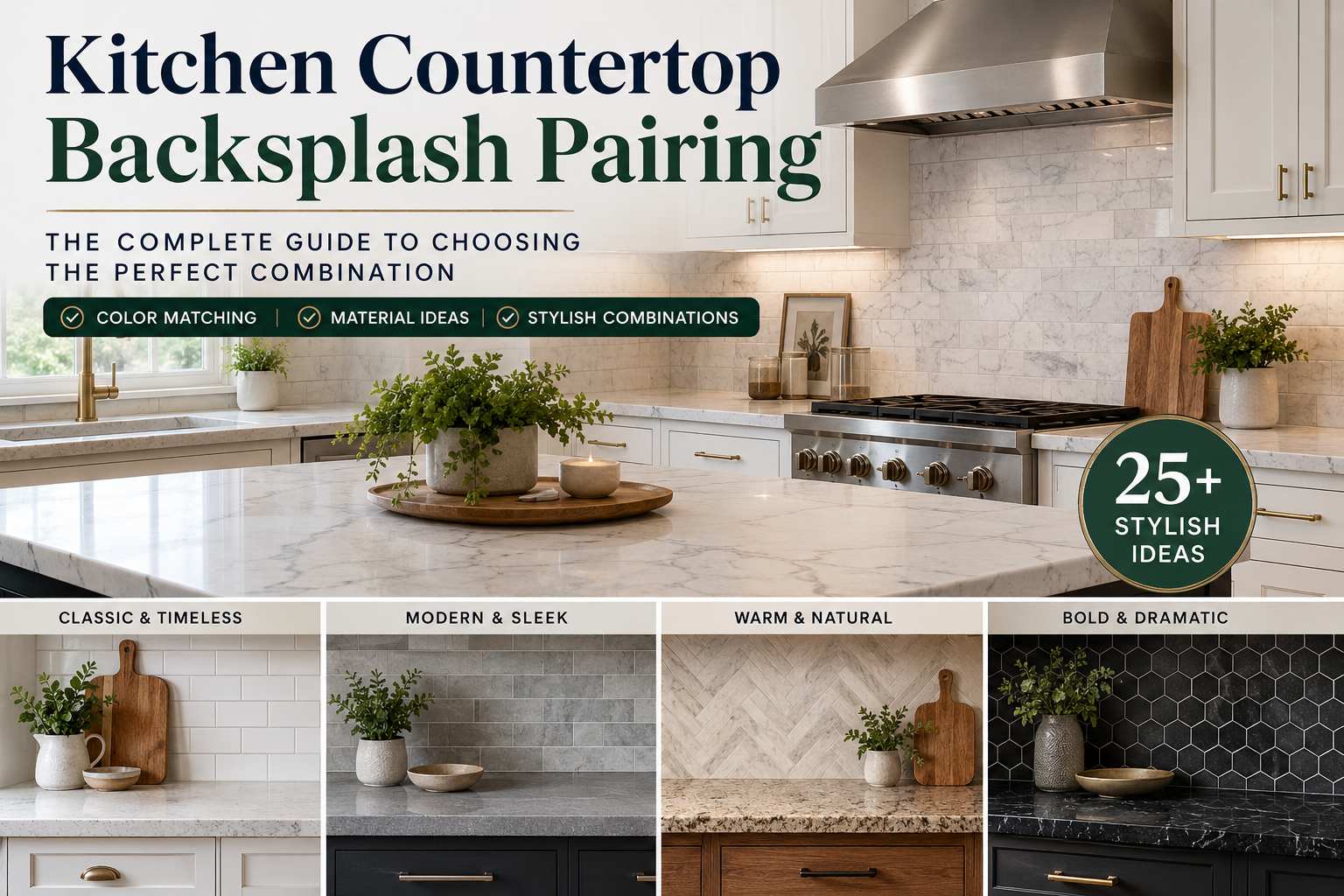
Choosing the materials for your kitchen can dramatically change the appearance, functionality, and overall feel of the space. One of the most important design decisions involves kitchen countertop backsplash pairing. Your countertop and backsplash occupy a significant amount of visual space, so they need to complement each other rather than compete for attention. Whether you prefer a farmhouse, traditional, transitional, or minimalist kitchen, the right combination can create a polished and cohesive result.
A successful kitchen design does not necessarily require matching your countertop and backsplash exactly. In fact, combining colors, patterns, textures, and materials often creates a more sophisticated appearance. The key is understanding how each surface contributes to the design and finding a balance between contrast and coordination.
Why Kitchen Countertop and Backsplash Combinations Matter
The countertop and backsplash are two of the most noticeable surfaces in a kitchen. The countertop typically covers a portion of the lower visual field, while the backsplash fills the wall space between countertops and cabinets.
Because these elements sit close together, their relationship affects how the entire kitchen looks. An uncoordinated combination may make the room feel visually busy, disconnected, or outdated. On the other hand, a thoughtful combination can make even a simple kitchen feel professionally designed.
Good kitchen countertop backsplash pairing focuses on creating harmony while allowing individual materials to retain their character.
When selecting these surfaces, consider:
- Color
- Pattern
- Veining
- Texture
- Material
- Cabinet color
- Flooring
- Hardware
- Lighting
- Overall design style
You do not have to make every element identical. Instead, select a few characteristics that connect the surfaces.
The Basic Rule: Coordinate Rather Than Match
One of the biggest mistakes homeowners make is assuming the backsplash must exactly match the countertop. While matching can work, it is not the only option.
For example, a white quartz countertop can look beautiful with a white subway tile backsplash. However, it can also work with a gray tile, a marble-look slab, handmade ceramic tile, or a subtle geometric design.
The goal is to create a harmonious relationship between the two surfaces.
A simple approach is to choose one dominant element and one supporting element. If your countertop features bold veining, allow it to be the focal point and select a quieter backsplash. If your countertop is relatively plain, you can introduce personality through the backsplash.
This approach prevents competing focal points.
Consider Your Countertop First
In most kitchens, the countertop should be selected before the backsplash because it is typically the larger investment and often has a stronger visual presence.
Countertops made from granite, marble, quartzite, or patterned quartz frequently feature unique veins and multiple colors. These characteristics provide natural inspiration for selecting your backsplash.
Look closely at your countertop and identify:
- The dominant color.
- Secondary colors.
- Veining colors.
- Whether the pattern is subtle or dramatic.
- Whether the surface has warm or cool undertones.
Once you identify these characteristics, choose a backsplash that relates to at least one of them.
For example, if your countertop has cream and soft gray veining, you could choose a backsplash that incorporates one of those colors instead of introducing an unrelated shade.
Design Ideas by Countertop Material and Color
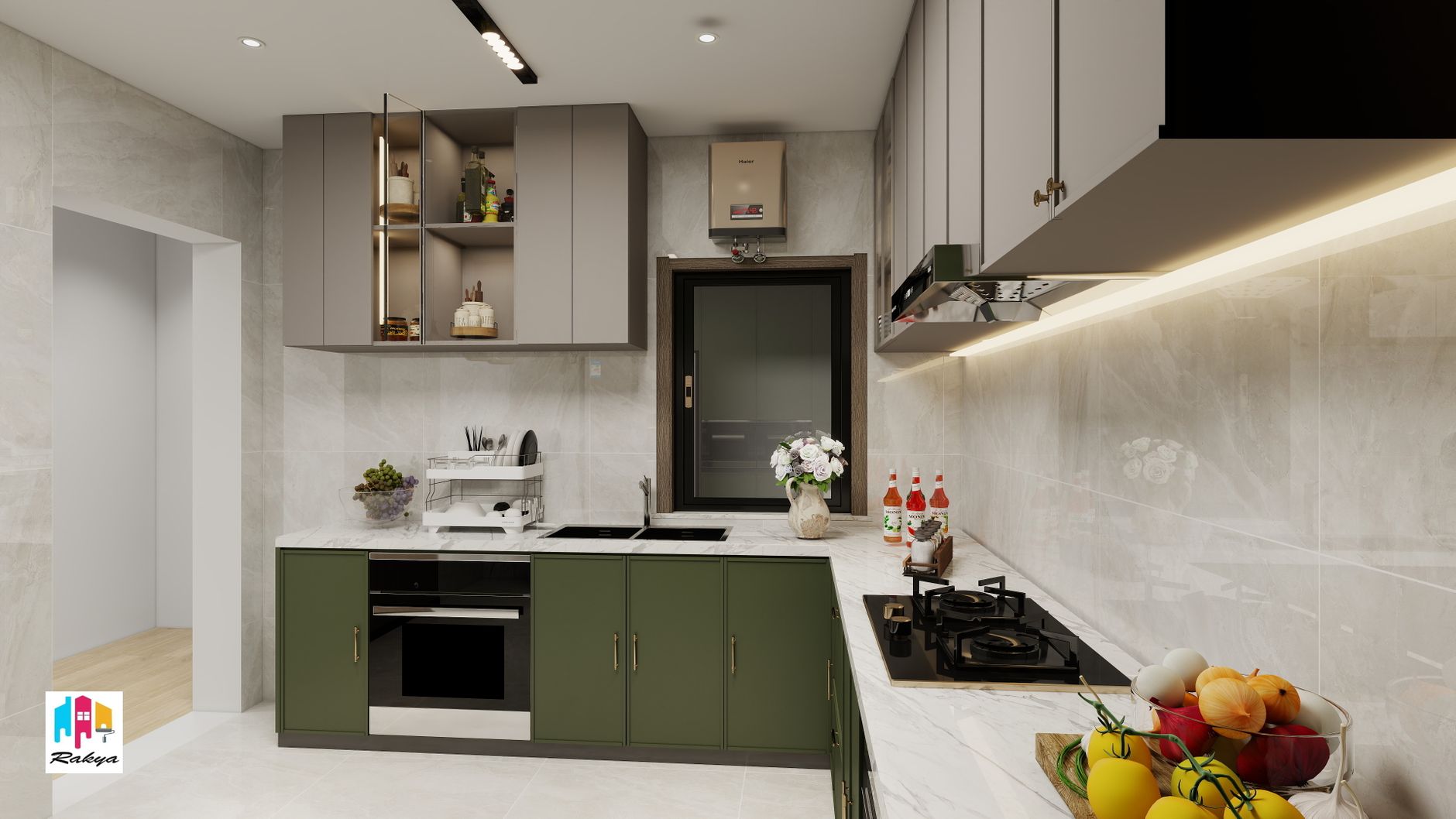
White Countertops With Backsplash Ideas
White countertops are extremely versatile and work with many backsplash materials.
If you have a white countertop, you have more freedom to experiment. You can use classic subway tile, patterned ceramic tile, marble, glass tile, or even a bold decorative backsplash.
For a timeless appearance, consider:
- White subway tile
- Light gray tile
- Marble-look tile
- Beige ceramic tile
For a contemporary kitchen, consider:
- Large-format porcelain
- Slab backsplash
- Glass tile
- Matte textured tile
If the countertop has dramatic gray veining, a simpler backsplash may be the better choice. A soft white or light gray tile can reinforce the countertop’s colors without overwhelming the space.
Gray Countertops and Backsplash Combinations
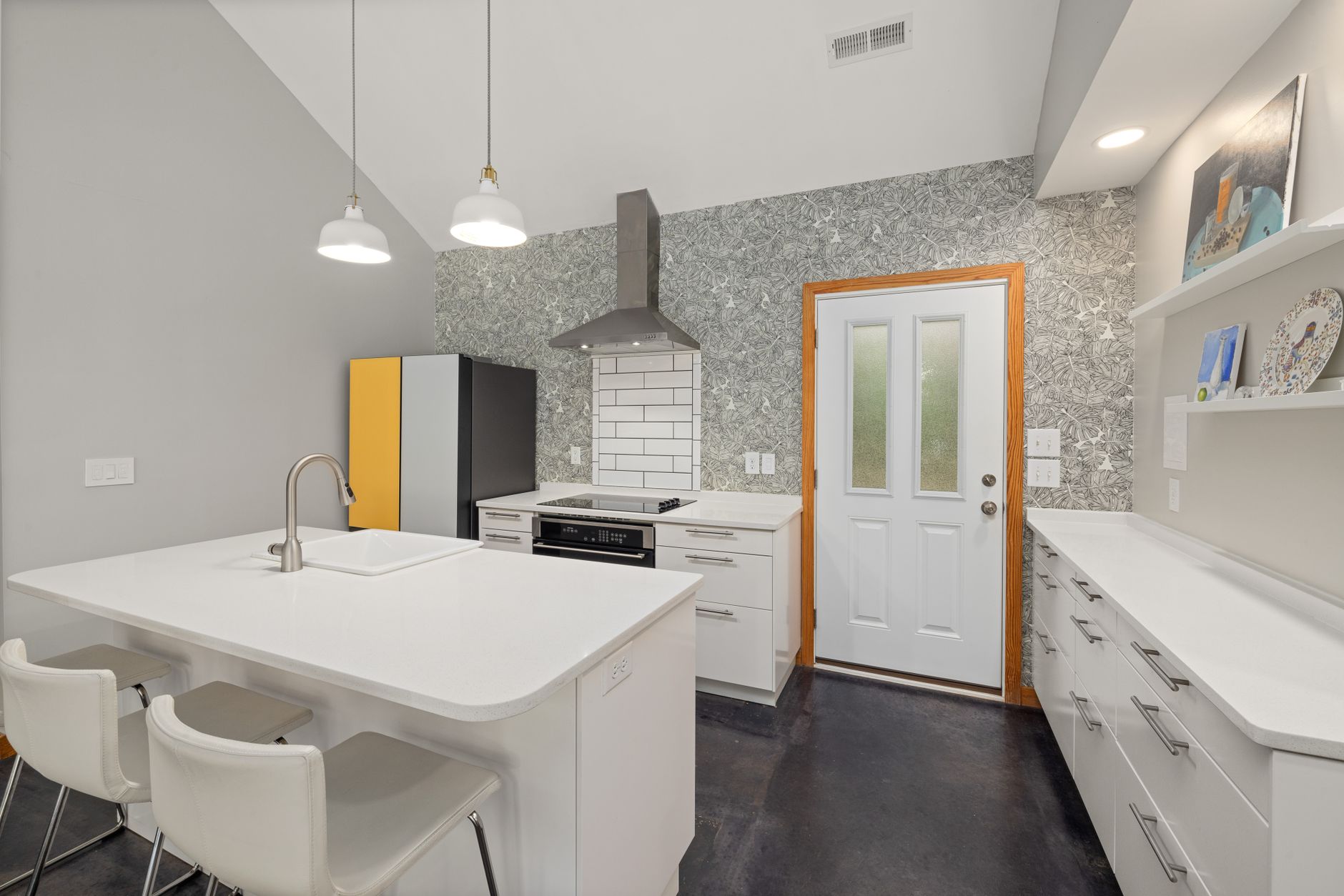
Gray countertops are another versatile choice because they can work with both warm and cool color schemes.
A light gray countertop pairs beautifully with white backsplash tile, while a darker gray countertop may benefit from lighter wall materials to maintain contrast.
For a bright kitchen, consider combining a gray countertop with a white elongated subway tile. For a dramatic look, charcoal cabinetry and a darker backsplash can create a sophisticated monochromatic design.
However, when using dark surfaces, ensure the kitchen receives sufficient natural or artificial lighting.
Marble Countertops and Backsplash Ideas
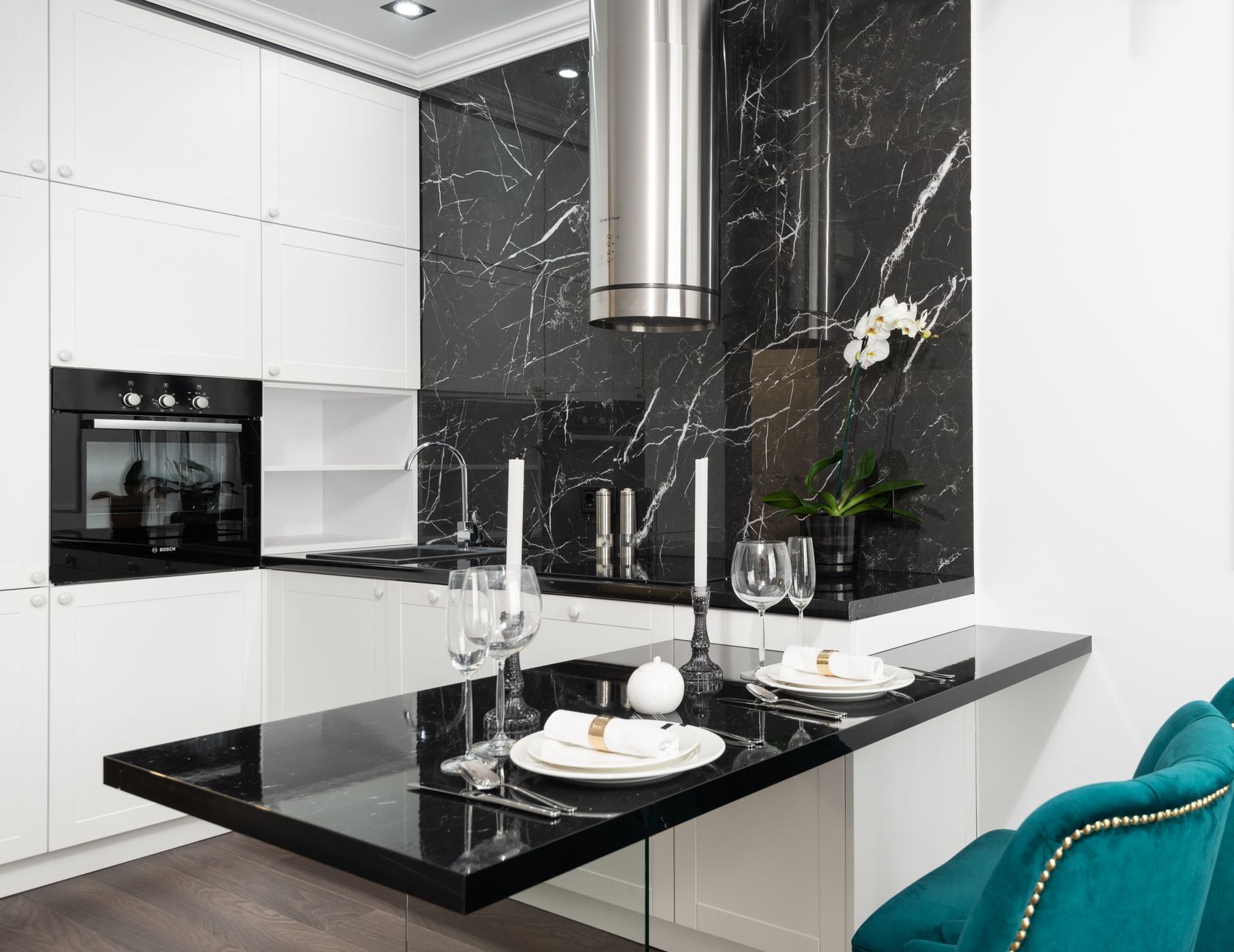
Marble countertops naturally become a focal point because of their distinctive veining. When working with marble, the backsplash should generally support rather than compete with the stone.
One elegant option is to continue the marble onto the backsplash as a full slab. This creates a seamless, luxurious appearance.
Another option is to use a ceramic or porcelain tile that picks up a secondary color found in the marble’s veining.
For example, a white marble countertop with gray veins works well with:
- White subway tile
- Soft gray ceramic tile
- A matching marble slab
- Light gray porcelain
- Handmade white zellige tile
When using heavily patterned marble, avoid combining it with an equally dramatic tile pattern unless you are intentionally designing a maximalist kitchen.
Quartz Countertops and Backsplash Pairing
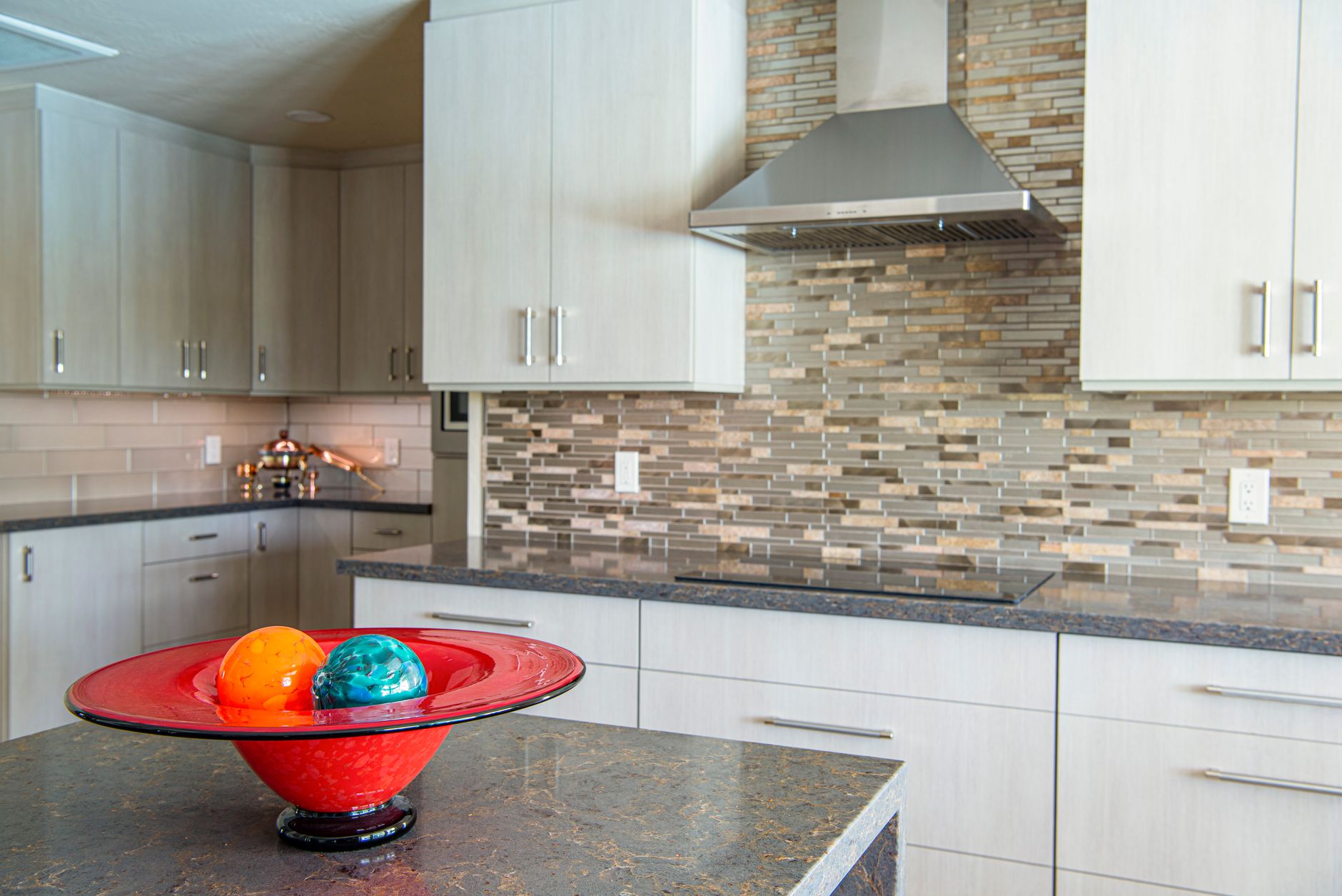
Quartz offers a broad range of design possibilities because it is engineered in many colors, textures, and patterns.
A solid or subtly patterned quartz countertop gives you an opportunity to use a bolder backsplash. Conversely, quartz with heavy veining looks best alongside a more restrained backsplash.
For a sleek kitchen, consider a white quartz countertop with a large-format porcelain backsplash. For a classic aesthetic, traditional subway tile creates a timeless look.
If your quartz mimics natural stone, examine the subtle accent colors within the pattern to guide your backsplash selection.
Dark Countertops With Light Backsplashes
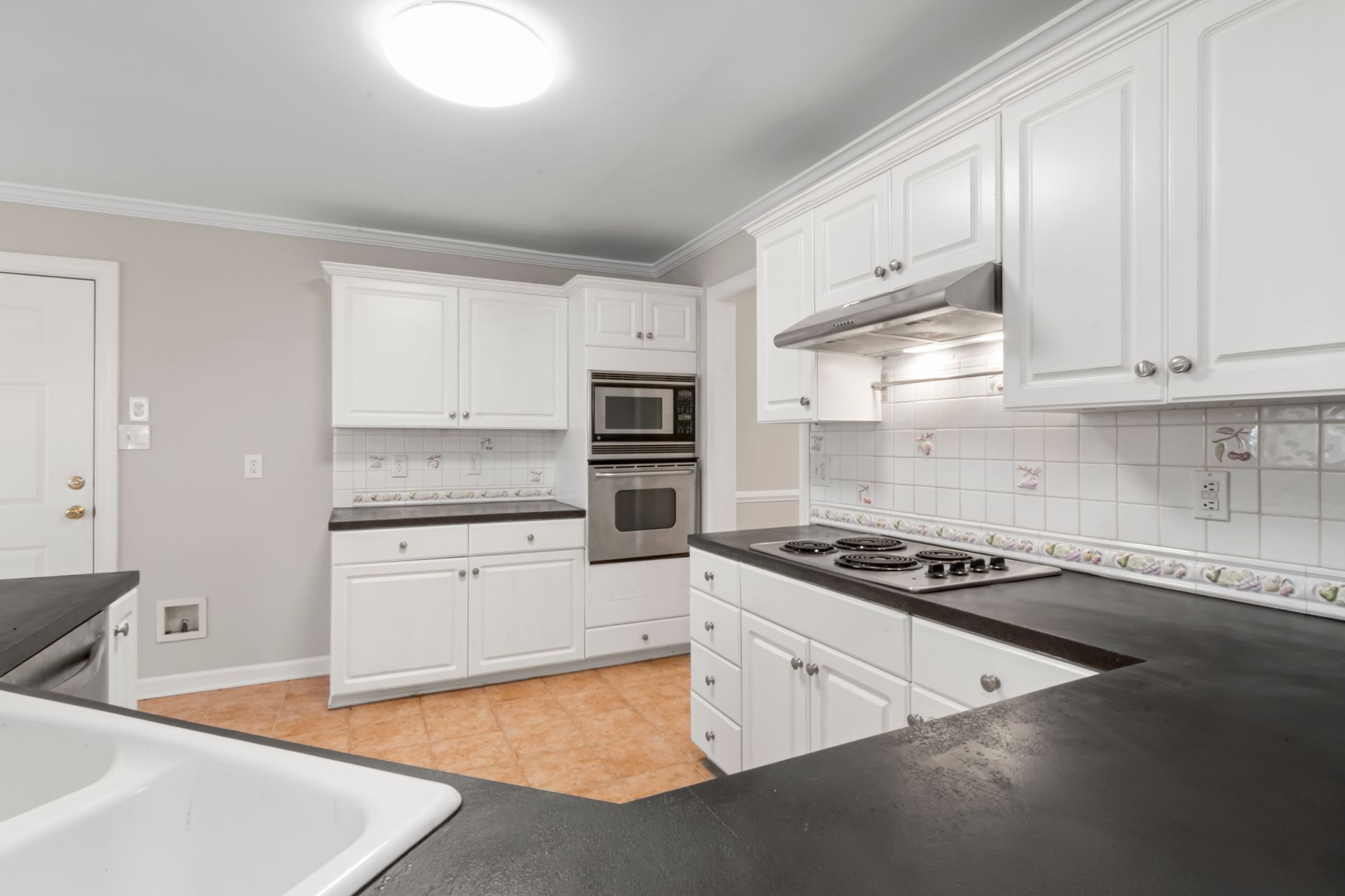
High-contrast pairings can be extremely striking in kitchen design.
Dark countertops paired with light backsplashes allow the wall feature to stand out while keeping the lower portion of the kitchen grounded.
Black, charcoal, dark green, and espresso countertops work well with:
- Bright white tile
- Soft cream tile
- Light gray tile
- Warm beige tile
- Marble-look surfaces
This combination is particularly effective when paired with light cabinetry.
For example, white cabinets, a black granite countertop, and a soft white backsplash create a classic, enduring contrast.
Strategic Design Factors
Matching the Backsplash to Cabinet Colors
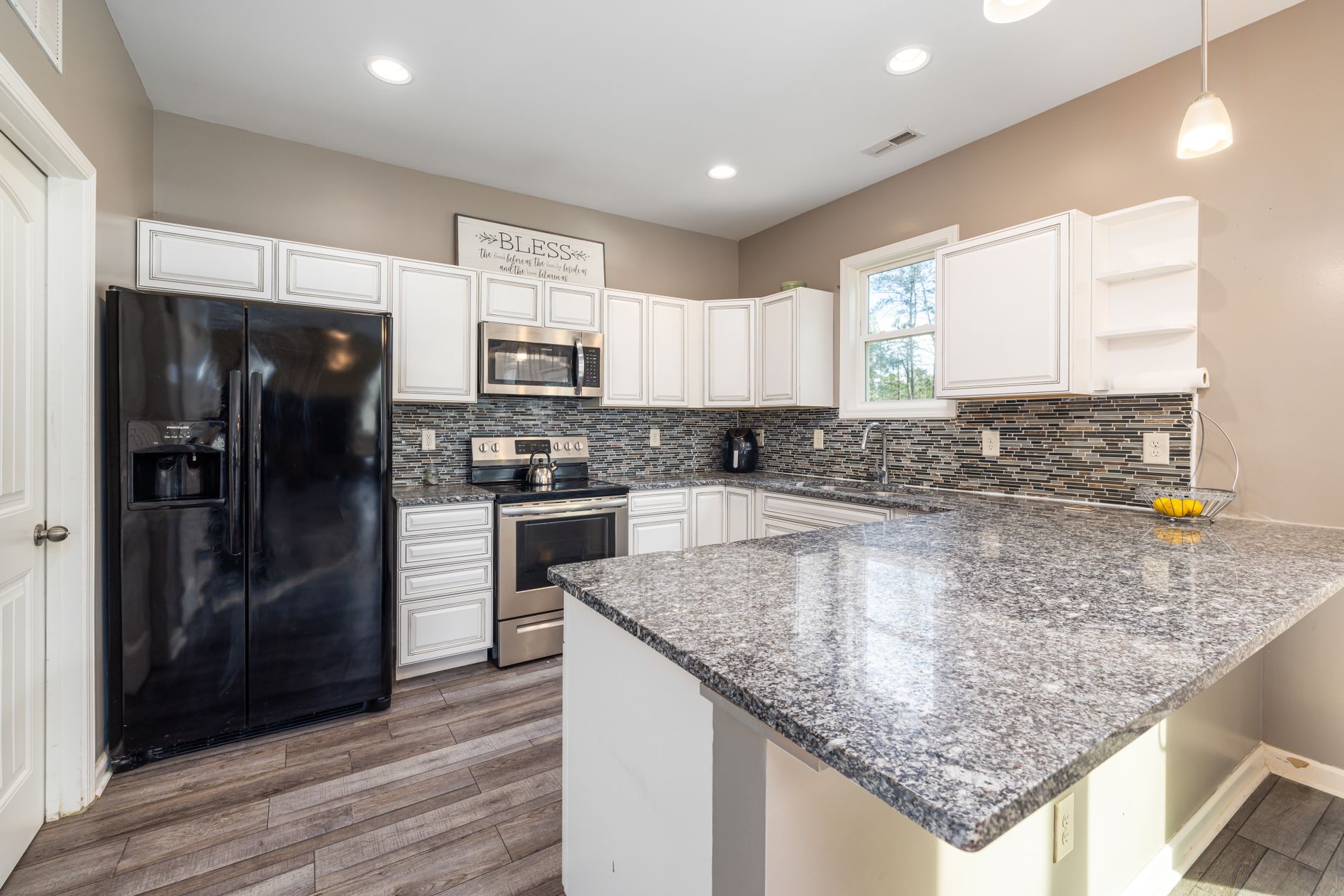
Your countertop and backsplash should not be considered in isolation from your cabinets. Cabinet color is one of the largest visual components in the room.
White cabinets provide maximum flexibility, working with both cool and warm countertop-backsplash combinations.
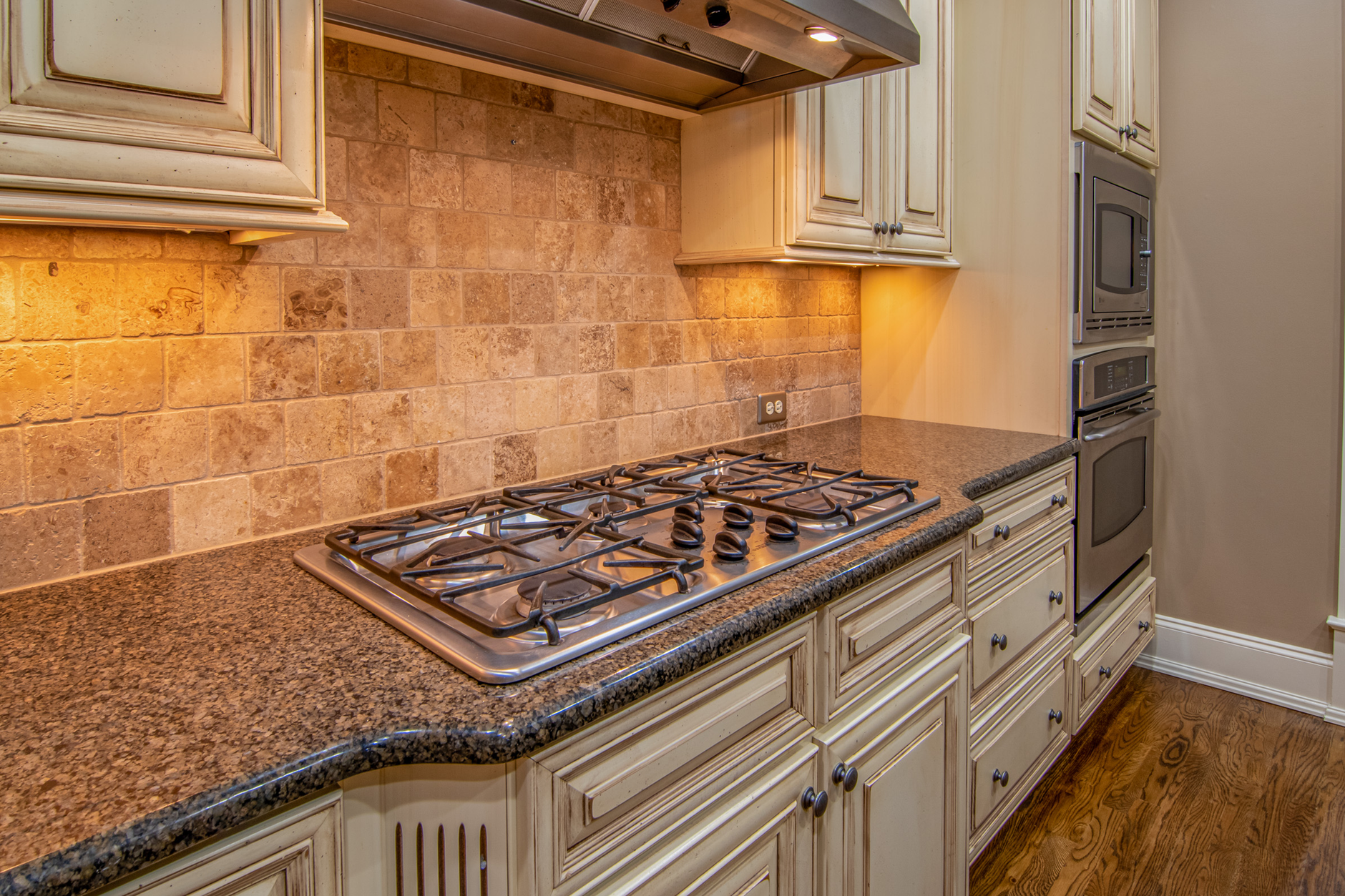
Wood cabinets require a bit more attention because natural wood typically carries warm undertones. In these kitchens, a backsplash with cream, beige, taupe, or warm gray tones often feels more cohesive than a cool blue-gray tile.
For dark cabinets, decide whether you want light contrast or a dramatic, moody aesthetic.
The best kitchen countertop backsplash pairing considers all three major elements together: cabinets, countertops, and backsplash.
Warm vs. Cool Undertones
Understanding undertones prevents visual clashes.
Warm colors generally include:
- Cream
- Beige
- Taupe
- Warm white
- Brown
- Terracotta
Cool colors generally include:
- True blue
- Blue-gray
- Crisp cool white
- Charcoal
- Certain cool greens
Suppose your countertop has warm cream veining. A backsplash with cool blue-gray undertones may look disjointed. A warm white or beige tile will create a much smoother transition.
This does not mean warm and cool tones can never be combined, but the pairing should look intentional rather than accidental.
Backsplash Styles and Formats
Subway Tile: A Timeless Choice
Subway tile remains popular because it effortlessly complements almost any countertop material.
Classic white subway tile pairs seamlessly with:
- Quartz
- Granite
- Marble
- Butcher block
- Concrete
- Soapstone
You can customize the look by adjusting the tile size, finish (matte vs. glossy), grout color, and layout pattern (such as herringbone or vertical stack).
For instance, white subway tile with dark grout creates high-contrast grid lines, while matching white grout produces a soft, continuous appearance.
If your countertop already features significant movement, simple subway tile provides essential balance.
Large-Format Backsplash Ideas
Large-format tiles and solid panels are increasingly popular in modern kitchen design. Minimizing grout lines creates a clean, uninterrupted surface.
Large porcelain panels can convincingly mimic marble, natural stone, and polished concrete while offering an easy-to-clean aesthetic.
This approach pairs exceptionally well with handleless, minimalist cabinetry and understated countertops.
A large-format backsplash can also make a small kitchen feel visually larger by reducing visual clutter on the walls.
Using the Same Material for Countertop and Backsplash
One of the most sophisticated design approaches is running the same material up both surfaces.
Continuing a stone or quartz slab straight up the wall creates seamless visual continuity and high-end appeal.
This approach works exceptionally well with:
- Marble
- Quartz
- Quartzite
- Porcelain slabs
The result is sleek, elegant, and contemporary.
However, using the exact same material everywhere can sometimes feel monochromatic. To add dimension, introduce contrast through cabinet finishes, warm wood accents, textured hardware, or prominent lighting fixtures.
Adding Contrast With the Backsplash
If your countertop is simple and solid-colored, your backsplash presents the perfect canvas for character and texture.
Consider a decorative or patterned tile to create an eye-catching focal point.
Popular options include:
- Patterned encaustic tile
- Herringbone layouts
- Moroccan-inspired zellige tile
- Handmade ceramic tile
- Geometric shapes
- Textured 3D tiles
The key to success is keeping the surrounding elements (cabinets and counters) relatively muted so the backsplash can take center stage without creating visual clutter.
Backsplash Grout Is More Important Than You Think
Grout selection drastically alters the final appearance of your tile.
Matching the grout color to the tile creates a smooth, monolithic surface, whereas choosing a contrasting grout highlights individual tile shapes and patterns.
For instance, white tile paired with white grout looks clean, soft, and minimal. The same white tile paired with medium gray grout accentuates the geometric layout.
Treat grout color as an essential design decision from the start rather than an afterthought during installation.
Achieving Balance and Visual Harmony
How to Make a Balanced Kitchen Design
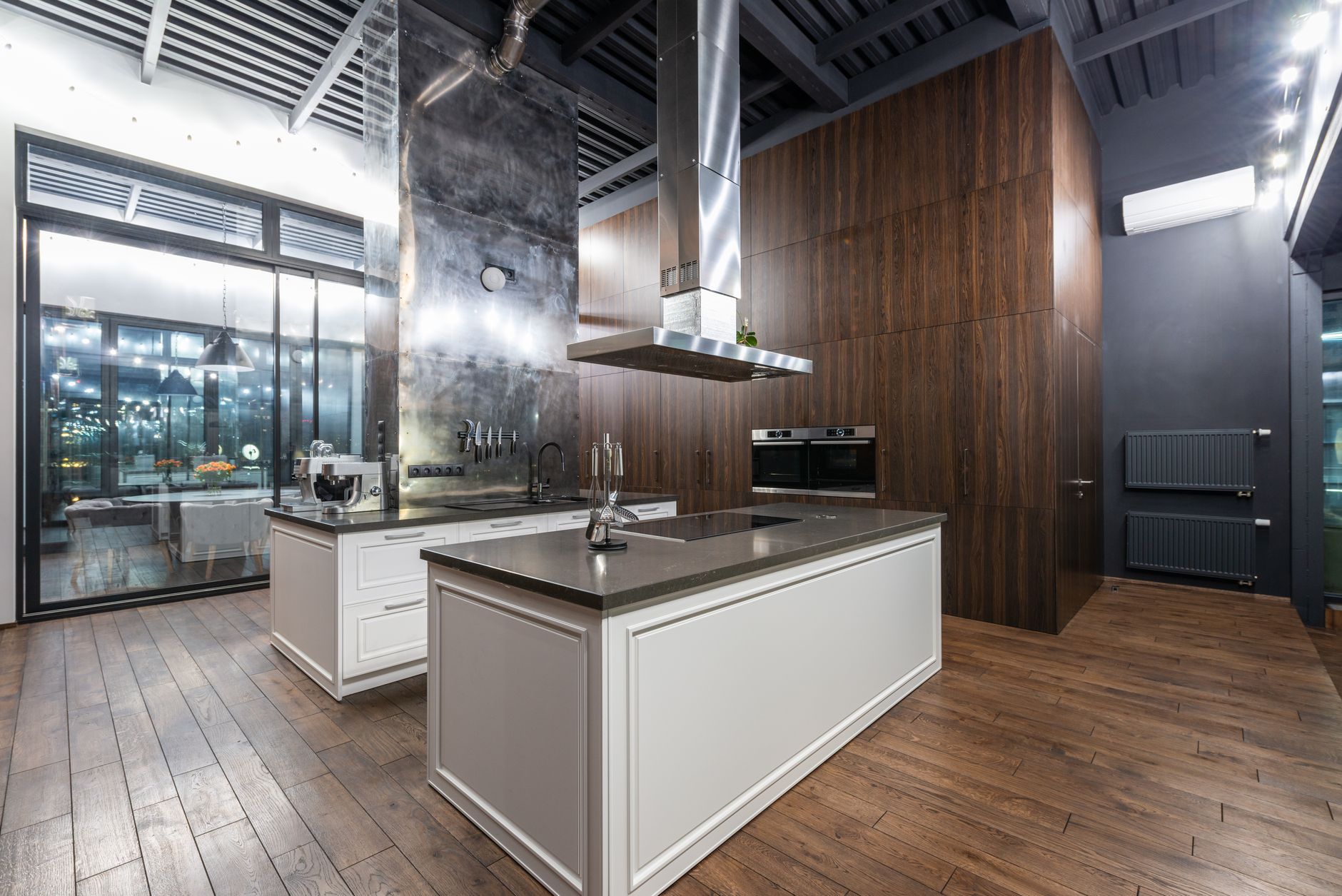
A fundamental rule of interior design is limiting the number of elements competing for attention simultaneously.
If you combine:
- Intricately veined countertops
- A busy, patterned backsplash
- Boldly painted cabinets
- Heavily patterned flooring
the kitchen quickly becomes visually overwhelming.
Instead, select one or two focal points and allow the remaining materials to play a supporting role.
For example:
Option 1 (Countertop Focus):
- Painted cabinets
- Heavily veined quartz countertop
- Simple, solid white backsplash
- Warm wood flooring
Option 2 (Backsplash Focus):
- Natural wood cabinets
- Plain white quartz countertop
- Patterned or textured backsplash
- Neutral, low-variance flooring
Both configurations provide rich visual interest without overwhelming the eye.
Ideas for Small Kitchens
Small kitchens require thoughtful material selection, as excessive variation can make a compact footprint feel cramped.
A clean, continuous backsplash helps expand the perceived boundaries of the room.
Consider using:
- Light-colored countertops
- Matching light-colored backsplash tiles
- Low-contrast grout colors
- Reflective or glossy finishes
- Larger tile formats to reduce line divisions
Extending the backsplash all the way up to upper cabinetry or ceiling lines creates long, vertical sightlines.
Darker palettes can still work in smaller kitchens, provided there is ample natural light and adequate task lighting.
Kitchen Design Styles
Modern Kitchen Pairings
Modern kitchens emphasize clean geometry, minimal decorative clutter, and streamlined color palettes.
Popular combinations include:
- White quartz with large-format white porcelain
- Medium gray countertops with stacked white tile
- Black granite with a full marble-look slab backsplash
- Concrete-look quartz with matte gray porcelain
- Solid light countertops with subtle geometric tile
Flat-panel cabinet doors, integrated hardware, and concealed appliances help preserve this sleek layout.
Farmhouse Kitchen Pairings
Farmhouse and rustic kitchens lean on tactile, inviting materials with natural warmth.
Popular options include:
- Butcher block countertops paired with classic subway tile
- Warm white quartz alongside handmade, imperfect zellige tile
- Dark soapstone paired with light beadboard or simple ceramic
- Solid light countertops paired with warm cream backsplash tiles
Organic textures prevent simple color schemes from feeling sterile.
Traditional Kitchen Pairings
Traditional kitchens feature classic architectural detailing, warm tones, and enduring natural materials.
Detailed marble countertops paired with framed ceramic tile or stone inserts work beautifully. Classic white cabinetry, natural granite surfaces, and understated tile layouts yield a timeless look that transcends passing trends.
Budgeting and Common Pitfalls
Affordable Pairing Ideas
Creating a gorgeous kitchen does not require an extraordinary budget.
If your budget is limited, invest heavily in one high-impact surface while opting for cost-effective choices elsewhere.
For instance, pair a premium quartz countertop with standard ceramic subway tile, which is widely available and affordable.
Additional cost-saving strategies include:
- Choosing standard-sized tiles over custom formats
- Tiling only the primary focal area (such as behind the range)
- Using engineered porcelain instead of expensive natural stone slabs
- Selecting simple, straight-stack installation patterns to lower labor costs
- Comparing material pricing across multiple suppliers
- Avoiding overly intricate tile cuts
A thoughtful, well-proportioned layout frequently looks far more expensive than its raw material costs suggest.
Common Mistakes to Avoid
- Selecting Materials Independently: Never finalize your countertop and backsplash choices in isolation. Always evaluate physical samples together in your home’s specific lighting environment.
- Overloading Patterns: Pairing a heavily patterned countertop with an intricate, multi-colored backsplash leads to visual conflict.
- Ignoring Undertones: A tile that appears pure white under store lighting may display noticeable pink, blue, or yellow undertones once placed in your home.
- Overlooking Grout Options: Grout alters the perceived color and grid intensity of tile; select it deliberately alongside your main materials.
- Chasing Micro-Trends: Highly trendy patterns can quickly date a space. Prioritize enduring design foundations for high-cost surfaces.
Final Decision Guidelines
How to Test Your Combination Before Installing
Before placing major material orders, construct a physical sample board.
Gather sample pieces of your:
- Countertop material
- Backsplash tile
- Cabinet finish/paint swatch
- Flooring material
- Hardware finish (brass, nickel, black, etc.)
- Wall paint color
Observe these samples together throughout the day in the morning, afternoon, and evening light.
Natural daylight changes color temperature constantly, and artificial overhead lighting will alter how warm or cool surfaces appear. Keep samples in your actual kitchen space for several days before committing.
Should the Countertop or the Backsplash Be the Focus?
There is no single correct answer.
If your countertop features dynamic, natural veining, let it serve as the visual star and select an understated backsplash.
If your countertop choice is clean and simple, feel free to use the backsplash as an artistic focal point.
The goal for any successful kitchen countertop backsplash pairing is to establish a clear visual hierarchy where one element subtly leads while the other gracefully supports.
Popular Color Combinations to Try
Here are several proven combinations to serve as a starting point for your project:
| Countertop | Backsplash | Style |
| White quartz | White subway tile | Classic |
| Gray quartz | White porcelain | Modern |
| Black granite | White marble-look tile | Dramatic |
| Butcher block | White ceramic tile | Farmhouse |
| White marble | Soft gray tile | Elegant |
| Dark quartz | Cream ceramic tile | Warm |
| Concrete-look quartz | Matte gray tile | Contemporary |
| Beige stone | Cream ceramic tile | Traditional |
Use these pairings as inspiration. Your unique cabinet choices, flooring materials, room lighting, and personal taste should guide your final decision.
Frequently Asked Questions
1. Should the backsplash match the countertop?
No. The backsplash does not need to match the countertop exactly. Combining complementary colors, tones, patterns, and textures often creates a much richer and more custom design.
2. What backsplash looks best with white countertops?
White countertops offer maximum versatility. They pair exceptionally well with classic white subway tile, light gray porcelain, marble-look slabs, geometric patterns, and handmade ceramic tiles.
3. Should the backsplash be lighter or darker than the countertop?
Either option can work well. A lighter backsplash brightens the wall area and opens up the room, whereas a darker backsplash adds rich contrast and dramatic focus. The right choice depends on your cabinet color and general lighting.
4. Can you use marble countertops with a tile backsplash?
Yes. Marble countertops pair beautifully with ceramic, porcelain, glass, or natural stone tile. If your marble features striking veining, opt for a simpler backsplash design to avoid visual clutter.
5. Is it better to use the same material for the countertop and backsplash?
Running the same slab material up both surfaces creates a luxurious, seamless look. Using different materials, however, allows you to play with contrasting textures, shapes, and colors.
6. What backsplash is easiest to match with countertops?
Neutral, single-color tiles—such as soft gray, off-white, or ivory subway tiles—are among the most versatile and effortless choices to pair with virtually any countertop.
7. How do I choose a backsplash color?
Examine the existing undertones in your countertop, cabinetry, flooring, and room lighting. Pick a backsplash color that echoes at least one key tone present in those surrounding surfaces.
8. Should backsplash grout match the tile?
Not necessarily. Matching grout produces a unified, sleek surface, whereas contrasting grout highlights the geometric layout and outline of each individual tile.
9. What is the most timeless backsplash design?
Simple white or neutral subway tile, understated ceramic formats, and subtle natural stone tiles consistently remain stylish across changing design trends.
10. How do I avoid making my kitchen feel too busy?
Establish a clear visual hierarchy. If your countertop material has heavy veining or pattern, pick a low-variance backsplash. If your countertop is solid or subtle, feel free to introduce texture or pattern on the backsplash.
Conclusion
Designing a cohesive kitchen involves more than selecting attractive individual materials; success lies in how those materials interact. A thoughtful kitchen countertop backsplash pairing unifies your cabinets, flooring, lighting, hardware, and overall architecture.
Begin by choosing your countertop, identifying its primary tones and undertones, and selecting a backsplash that complements those features. Decide early on whether your space benefits most from sharp contrast, continuous flow, rich texture, or a subtle mix of these elements. Always test physical samples in your home’s natural light before making final purchases.
Whether your vision leans toward crisp white subway tile, dramatic marble slabs, modern porcelain panels, or warm handmade ceramics, endless pairings can showcase your personal style. Ultimately, the best kitchen is not simply the one with the most expensive materials—it is the one where every element works together intentionally.
2 thoughts on “Kitchen Countertop Backsplash Pairing: A Complete Guide to Choosing the Perfect Combination”