
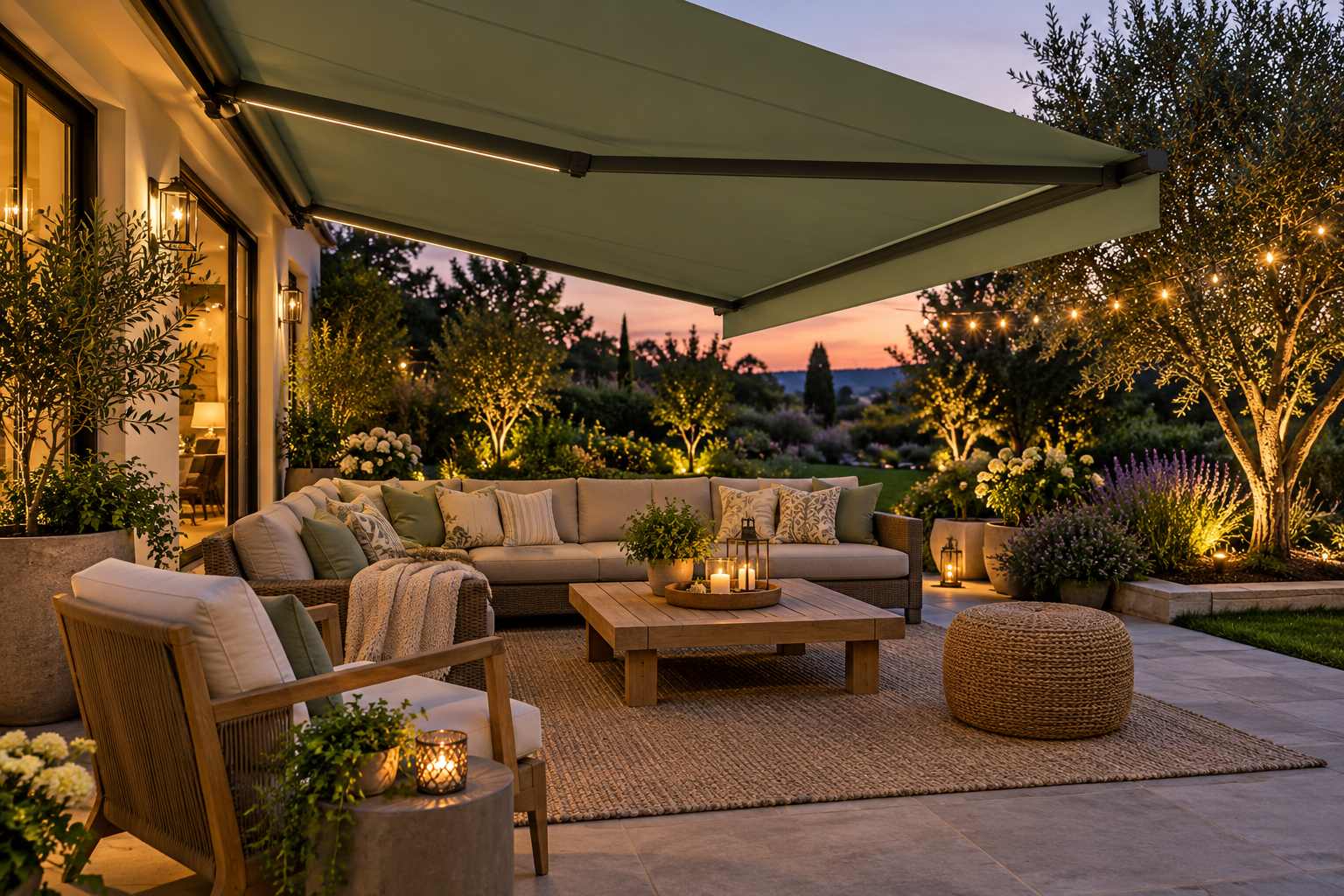
A well-chosen awning for patio spaces can make a backyard more comfortable and inviting. It adds shade over a sunny seating area, helps reduce glare near doors and windows, and can give an outdoor space a more finished look. The best option depends on your patio’s size, exposure to sun and wind, home style, and how much flexibility you want.
From retractable fabric shades to permanent metal canopies, these 21 ideas show ways to make an awning work with different patios. Before choosing one, check the product’s care instructions and weather ratings, and confirm local rules for installation.
What Is a Patio Awning?
A patio awning is a fabric or hard-surface covering that extends over an outdoor area to provide shade and, depending on its design and rating, some protection from light rain. Many awnings attach to a house wall; freestanding models use their own support structure. They can be fixed in place or retracted when you want more sun or when weather conditions call for it.
Awnings differ from pergolas and gazebos. A pergola is an open framework that may support slats or a separate shade cover, while a gazebo is generally a freestanding roofed structure. These can all create shade, but they are not the same product.
21 Patio Awning Ideas
1. Retractable Awning for Flexible Shade
A retractable awning lets you extend the canopy for shade and pull it back when you want more daylight. It works well over a dining set or lounge area beside the house. Choose a manual or motorized model based on your budget and how often you expect to adjust it.
2. Striped Fabric for a Classic Look
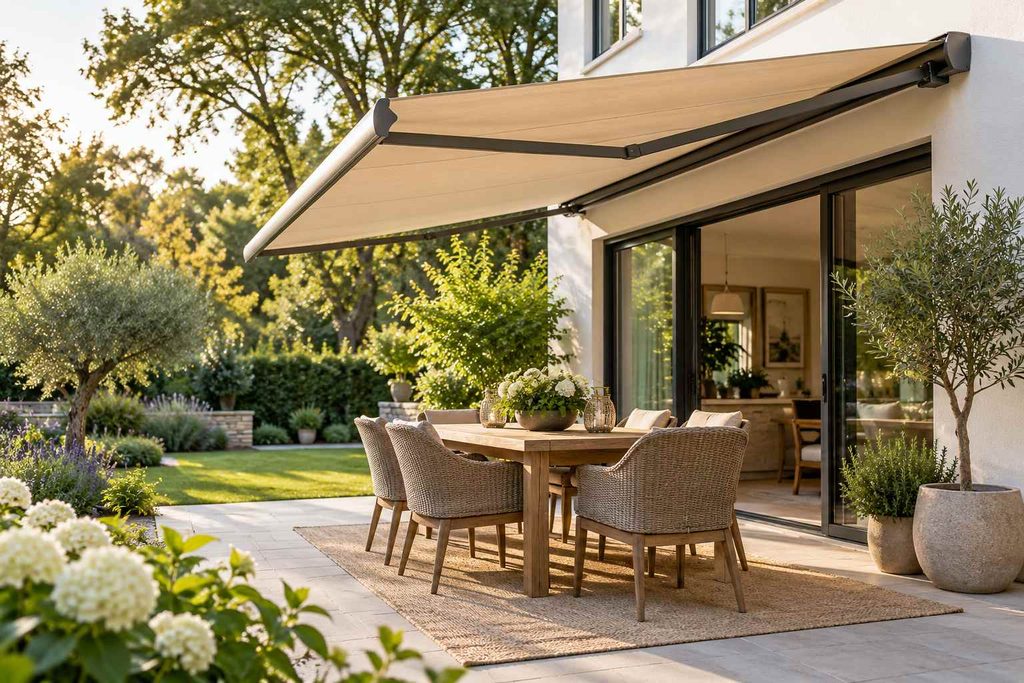
Navy-and-white or muted neutral stripes give a patio a familiar coastal or café-inspired feel. Pair the fabric with simple cushions and natural wood so the pattern remains the focal point.
3. A Clean, Modern Black Frame
A dark frame can define an outdoor seating zone and complement black window trim, modern railings, or dark patio furniture. Balance it with light cushions, pale paving, or greenery to keep the space from feeling heavy.
4. Neutral Canvas for a Relaxed Backyard
Sand, taupe, and warm gray fabrics suit many exterior colors and are easy to coordinate with changing cushions and accessories. Check the fabric’s cleaning and fade-resistance guidance before selecting a light shade.
5. Awning Over an Outdoor Dining Table
Covering the dining area makes meals more comfortable during sunny parts of the day. Measure the table and chairs with enough room for people to move around, and make sure the awning’s projection provides useful shade when the sun is at its highest.
6. Shade for a Small Balcony or Compact Patio
A wall-mounted awning can add shade without taking up floor space. For a small area, keep the frame visually light and use foldable chairs or a narrow bistro table beneath it.
7. Awnings for Multiple Patio Zones
If your yard has separate dining and lounging areas, one large awning may not shade both equally. Consider two smaller covers or a combination of an awning and a freestanding shade structure, making sure each installation has adequate clearance.
8. A Color That Echoes Your Home
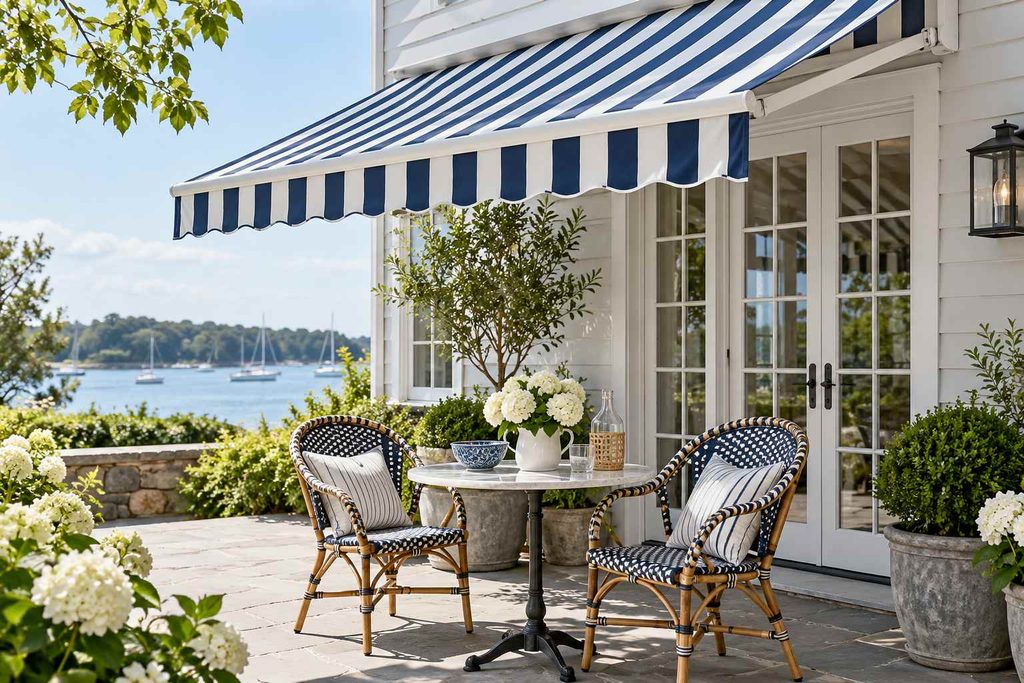
Choose a canopy color that picks up a detail from your home’s siding, trim, door, or outdoor furniture. Repeating one color in cushions or planters can make the patio feel coordinated without matching every item.
9. A Subtle Coastal Style
A pale blue, soft gray, or narrow striped canopy can create a breezy look without relying on beach-themed décor. Add woven textures and a few hardy potted plants for a comfortable, understated finish.
10. Shade Beside the Pool
An awning near a pool can provide a shaded place to sit between swims. Select materials intended for outdoor use and follow the manufacturer’s guidance for moisture, cleaning, and wind. Keep the installation clear of pool access and safety equipment.
11. A Canopy for the Outdoor Kitchen
A cover over a prep or dining area can make an outdoor kitchen more pleasant in bright sun. Keep the canopy at a safe distance from grills, pizza ovens, and other heat sources. Follow appliance and awning instructions for required clearances.
12. A Soft, Romantic Evening Setting
Warm-toned fabric can soften a brick or stone patio. Add outdoor-rated lanterns or string lights only where they can be installed safely and kept clear of moving awning parts.
13. A Compact Window or Door Awning
A smaller awning above a patio door or window can provide a little shade and help reduce glare indoors. Match its frame and fabric to the larger patio design for a consistent exterior.
14. A Freestanding Awning for an Open Yard
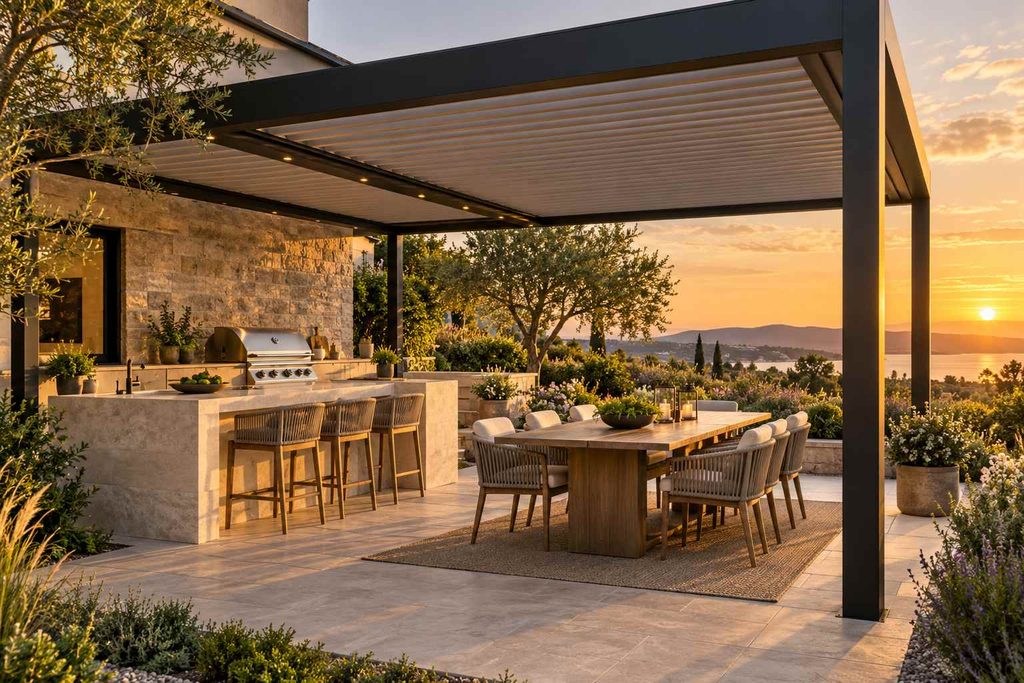
When there is no suitable wall for mounting, a freestanding canopy may work better. Check how it must be anchored and whether the surface below can support the required fixings. Do not assume a freestanding model is safe in strong wind.
15. A Fixed Canopy for a Defined Outdoor Room
A fixed awning creates a permanent covered zone and can suit patios used regularly throughout the season. Because it stays in place, choose a design and material intended for your local conditions and plan for routine inspection and care.
16. A Motorized Awning with Simple Controls
Motorized models make it easier to extend or retract a large canopy. Some products offer wind or sun sensors, but features vary. Read the product specifications and understand how the system behaves during a power outage or severe weather.
17. A Water-Resistant Cover for Light Showers
Some awning fabrics are designed to shed light rain when installed at the recommended pitch. They are not necessarily waterproof or suitable for heavy rain, snow, or standing water. Check the manufacturer’s rating and retract or secure the awning as directed.
18. A Patterned Canopy as the Main Accent
A botanical or geometric fabric can bring personality to a simple patio. Keep nearby furniture and accessories relatively restrained so the canopy remains the main design feature.
19. A Shade Cover for a Garden Seating Nook
Use a smaller awning to make a bench or pair of chairs feel like a destination in the garden. Surround it with planters or low-maintenance greenery, while leaving enough space for easy access and airflow.
20. A Retractable Side Awning for Low Sun
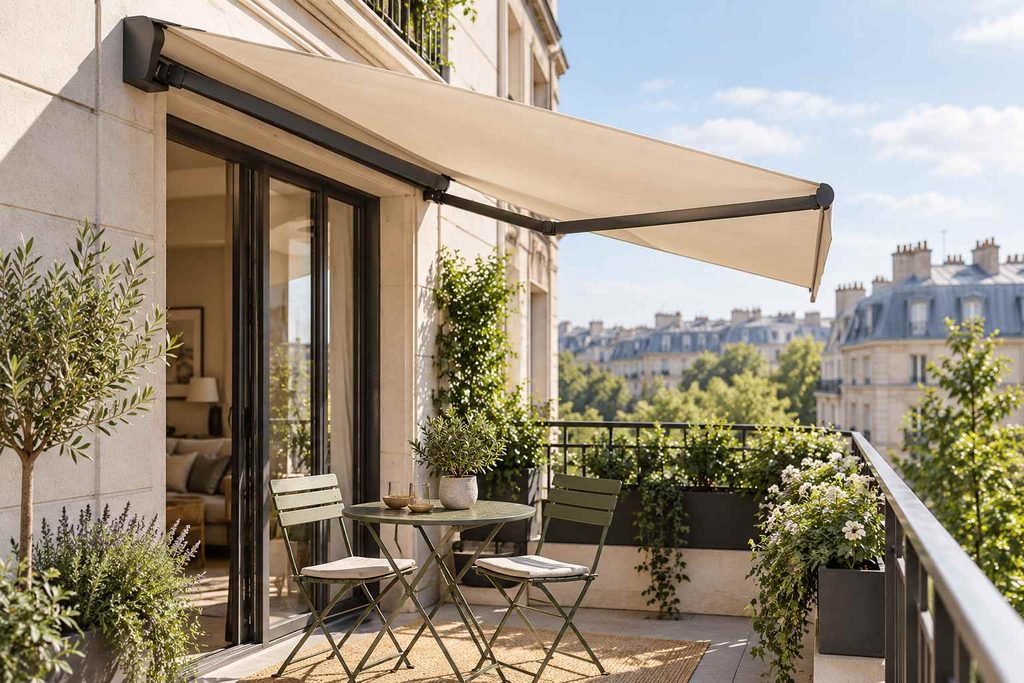
A side screen can help block low-angle sun or add privacy along an exposed edge. Confirm that the product is designed for your intended use, and retract it when wind conditions exceed its rating.
21. A Coordinated Awning and Outdoor Rug
Tie the patio together by repeating one color from the canopy in an outdoor rug or cushions. This simple approach works with both bold patterns and plain fabrics and helps the seating area feel intentional.
Benefits of a Patio Awning
- Adjustable shade: Retractable designs let you change the amount of shade when conditions allow.
- More comfortable outdoor use: A shaded area can make dining and relaxing more pleasant during sunny weather.
- Style and definition: An awning can visually anchor a seating or dining zone.
- Potential glare reduction: Shade over nearby doors or windows may reduce direct sunlight, depending on placement and sun angle.
- Options for different spaces: Wall-mounted and freestanding designs suit different layouts.
Possible Drawbacks to Consider
- Weather limits: Awnings have product-specific wind, rain, and snow limits. Follow the manufacturer’s instructions and retract or secure the cover when required.
- Ongoing care: Fabric, frame, and moving parts may need cleaning, inspection, or maintenance.
- Installation requirements: Some models need professional installation, suitable wall support, electrical work, or local approval.
- Reduced daylight: A fixed or extended canopy may darken nearby indoor rooms, depending on its size and position.
- Upfront cost: Price varies by size, material, controls, installation, and local labor.
How to Choose the Right Patio Awning?
Start by measuring the area you want to cover, including the space needed to walk around furniture. Observe where the sun falls at the times you use the patio. Then compare fixed and retractable designs, canopy materials, frame finishes, operation methods, and the product’s stated weather limits.
Also check how the awning will attach to your home. Masonry, siding, and other wall types may need different fixings or reinforcement. Ask a qualified installer to assess the mounting surface if you are unsure. Before purchasing, confirm any homeowners’ association rules, building restrictions, or permit requirements that apply in your location.
Frequently Asked Questions
How long does it take to install a patio awning?
Installation time depends on the awning type, mounting surface, electrical requirements, and site conditions. A straightforward installation may take part of a day, while custom work or preparation can take longer. Ask the installer for a project-specific estimate.
Do I need a permit to install a patio awning?
Requirements vary by location and may depend on the awning’s size, projection, attachment, and whether it is permanent. Check with your local building department or homeowners’ association before installation.
Do patio awnings protect against rain?
Some are designed to handle light rain, but water resistance varies by material and installation. Check the product specifications, maintain the recommended slope, and follow instructions about retracting the awning during heavy rain or storms.
Can strong wind damage an awning?
Yes. Wind can damage an awning, and each model has its own operating limits. Follow the manufacturer’s guidance, retract it when advised, and do not rely on a sensor as a substitute for understanding its limits.
What colors and fabrics are available?
Options vary by brand but commonly include neutral solids, brighter colors, and stripes. Compare outdoor durability, cleaning instructions, fade resistance, and any product-specific weather ratings along with appearance.
Conclusion
The right awning for patio use should fit the space, suit your home, and match the weather conditions it will face. A retractable canopy offers flexibility, while a fixed or freestanding design may work better for other layouts. Measure carefully, check installation and local requirements, and follow the product’s care and weather guidance. With those details in place, an awning can make your backyard more comfortable and visually complete.