
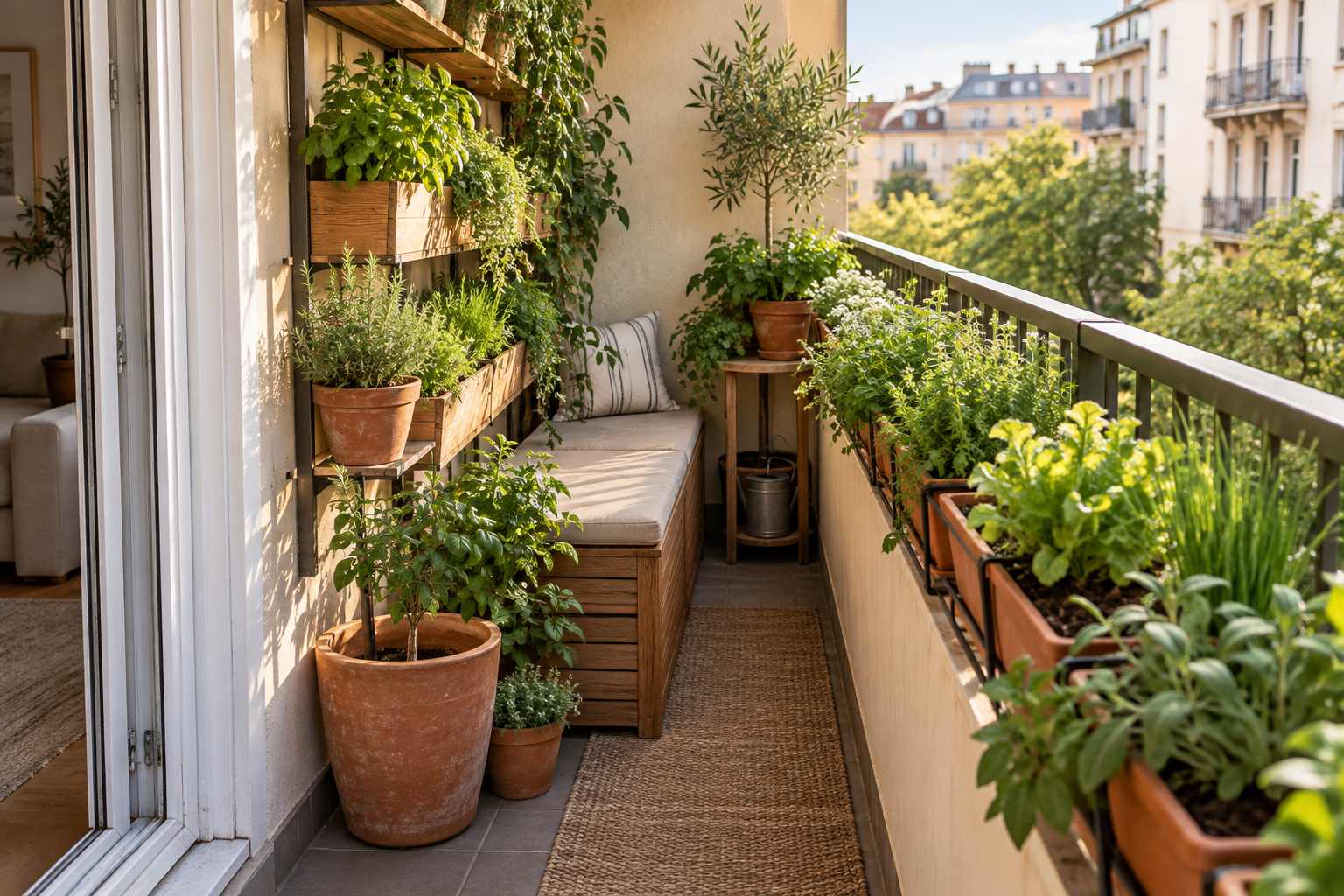
A balcony can be only a few feet deep and still feel like a useful extension of your home. With a thoughtful layout, comfortable seating, and a little greenery, even a narrow outdoor area can become a place to enjoy breakfast, read, or unwind after work. These small balcony ideas focus on practical changes that work for apartments, rentals, and compact homes.
Before you buy anything, measure the floor, note where the door swings, and consider how much sun and rain the balcony gets. A clear path from the door to the railing will make the space feel more comfortable. Then choose one main purpose—dining, gardening, lounging, or a mix—and let that guide your choices.
1. Start with furniture that folds away
On a tight balcony, furniture that can be folded or stacked gives you options. A folding bistro table and two slim chairs can make a cozy breakfast spot, then tuck against the wall when you want more room. Look for pieces that are light enough to move easily but sturdy enough for outdoor use.
Check the table’s depth before purchasing. A smaller round top often makes it easier to move around than a rectangular one with sharp corners. If you usually sit alone, one chair and a folding side table may suit you better than a full dining set.
2. Choose one comfortable seat instead of several small ones
A single well-sized chair, compact loveseat, or built-in bench can feel more inviting than several seats crowded together. Measure the width of the doorway and the balcony before ordering, especially if the furniture arrives assembled.
A bench along the shortest wall can leave the center of the balcony open. Add a weather-resistant cushion for comfort, and keep a small basket nearby for a throw or gardening gloves. If storage matters, choose a bench with a lift-up seat, but make sure it is designed to handle outdoor conditions.
3. Use the railing for plants
Railing planters add color without taking up much floor space. They work well for flowers, trailing greenery, or herbs such as basil, thyme, and parsley. Use planters designed to fit your railing securely, and follow any building rules about attachments and weight.
Think about watering before filling every container. Water can drip onto a neighbor’s balcony, so use trays or self-watering planters where appropriate. If your balcony gets strong wind, choose compact plants and secure containers so they stay in place.
4. Grow upward with a vertical garden
When floor space is scarce, walls can hold shelves, hanging pots, or a narrow trellis. Grouping plants vertically creates a leafy backdrop and leaves more room for seating. Keep heavier pots low and use wall attachments only where your lease and building rules allow them.
A useful approach is to pick a few plants with different shapes rather than filling every available inch. For example, combine upright herbs with one trailing plant and a small flowering variety. This gives the arrangement depth without making the balcony feel crowded.
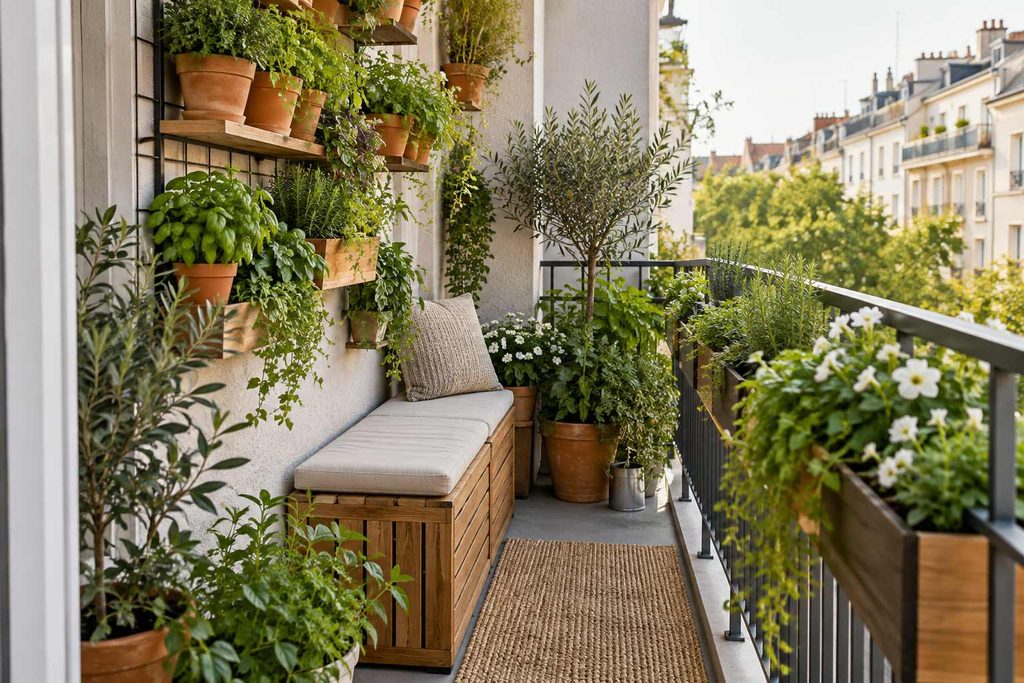
5. Set up a simple coffee corner
A tiny table, one or two chairs, and a pair of mugs can turn an unused balcony into a pleasant place for coffee. A folding table is handy if you need to reclaim the space during the day. A small tray keeps drinks stable and makes it easy to carry everything back inside.
Keep the setup simple. A plant or lantern can make the corner feel finished, but too many decorations can make the tabletop hard to use. If the balcony faces a busy street, a comfortable chair and a few plants may make the view feel calmer.
6. Add an outdoor rug to define the space
An outdoor rug can make a bare balcony feel more like a room. It also helps visually separate a seating area from a row of planters. Measure first, leaving a border of visible flooring around the edges so the rug does not bunch against the door or railing.
Choose a material made for outdoor use, and check its care instructions. Balconies exposed to rain may need a quick-drying rug that can be lifted for cleaning. A restrained pattern or solid color is often easier to coordinate with cushions and pots you already own.
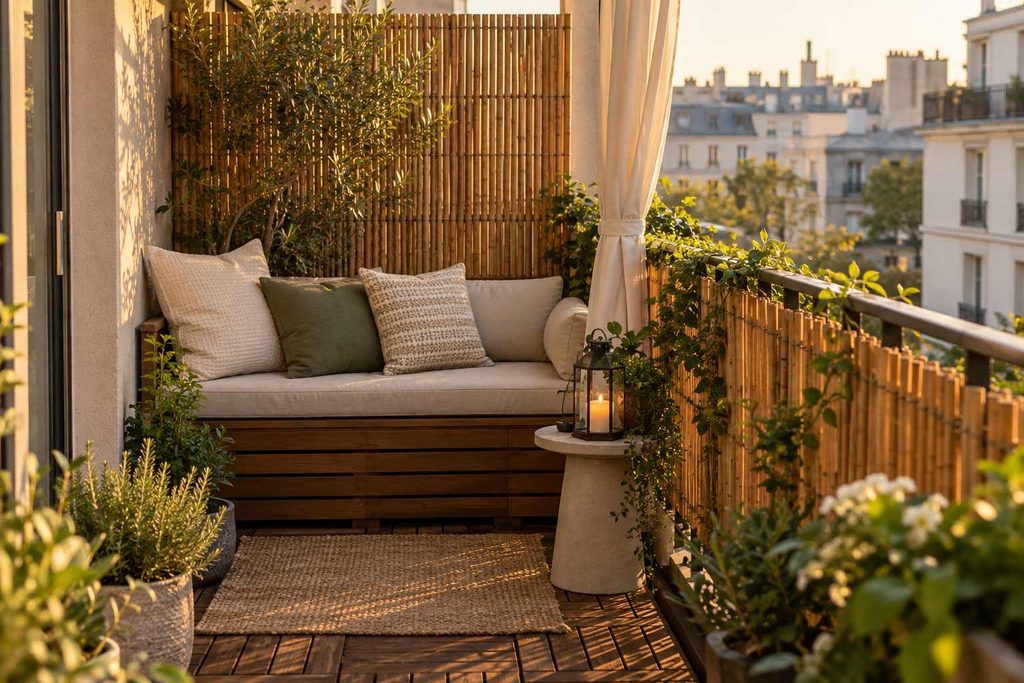
7. Create privacy without closing the space in
If nearby windows or balconies look directly into yours, try a screen, outdoor curtain, or tall plants. A bamboo screen can add texture, while a light fabric panel can soften the view. Before installing anything, check building guidelines and avoid blocking required exits or ventilation.
Leave some openings so air and daylight can still move through the balcony. On a windy floor, loose curtains may flap or become difficult to manage, so a securely fastened screen or planters may be a better choice. Privacy works best when it feels comfortable rather than sealed off.
8. Make the railing feel like a green border
A coordinated row of planters can make the edges of a balcony feel intentional. Use pots in one or two finishes—such as terracotta and charcoal—or repeat a single color for a cleaner look. Different plant heights keep the line from looking too uniform.
For sunny balconies, choose plants that can tolerate direct light and dry conditions. Shadier balconies may suit ferns, begonias, or other shade-friendly varieties. Check the plant labels and observe how the sun moves across the space before buying several pots.
9. Use a storage bench to keep clutter out of sight
A storage bench can serve as seating and a place to keep small outdoor items. It is useful for cushions, hand tools, or a watering can, as long as the interior stays dry. Look for a model made for outdoor exposure, and avoid storing anything that could be damaged by temperature changes or moisture.
If a bench would crowd the floor, try a slim storage box that doubles as a side table. Keep only what you use regularly outside. A balcony feels larger when the floor is clear and objects have a defined place.
10. Choose a light color palette
Pale cushions, light-colored planters, and natural wood can make a compact balcony feel airy. You do not need to make everything white; a few warm neutrals paired with green leaves can feel relaxed without becoming bland. Use one stronger color in a cushion or planter if you want a focal point.
Outdoor fabrics fade in direct sun, so check care labels and consider storing cushions when they are not in use. If your balcony already has dark flooring or railings, lighter accessories can provide contrast and help the space feel brighter.
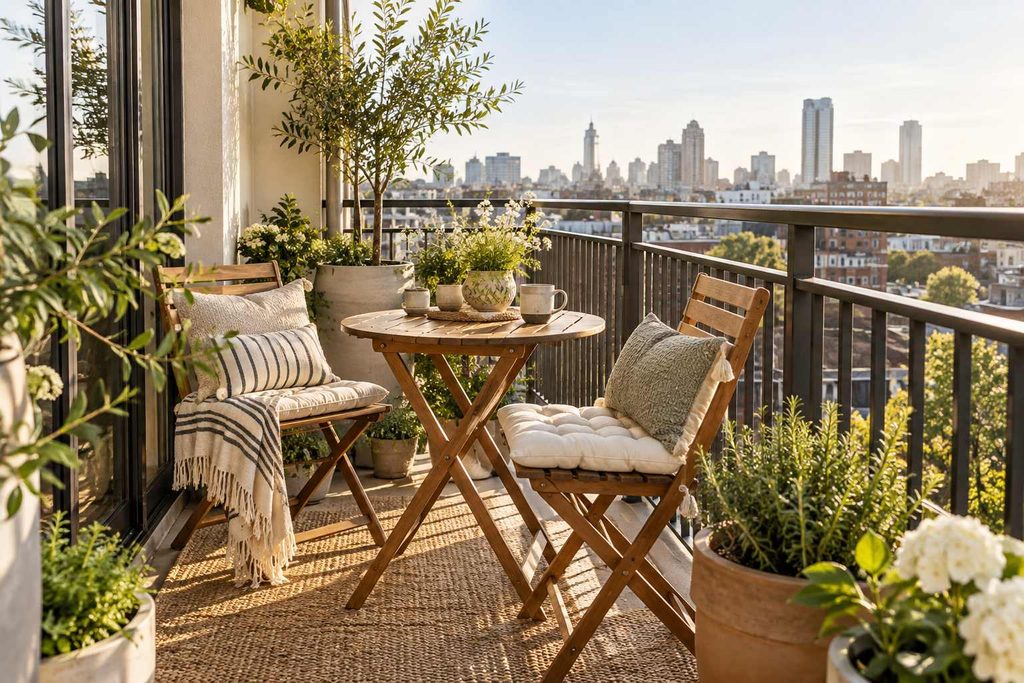
11. Add lighting for evenings
Small solar lights, rechargeable lanterns, or outdoor-rated string lights can make a balcony useful after sunset. Keep the light soft enough for relaxing and position it so it does not shine directly into neighboring windows. Choose products intended for outdoor conditions, and follow the manufacturer’s safety instructions.
If your balcony has no outlet, portable lights are usually easier than trying to add wiring. Solar options work best when their panels receive enough daylight. A single lantern on a table may be all you need for a quiet evening.
12. Make a small balcony feel like an outdoor room
Treat the balcony like a small room with a clear layout: seating, a surface for a drink, and perhaps one plant arrangement. Repeating materials or colors across those pieces helps them feel connected. A narrow outdoor rug can anchor the seating, while a lantern or cushion adds a finishing touch.
The best small balcony ideas leave enough space to step outside comfortably. Avoid filling every corner simply because it is available. A little open floor can make the whole setup easier to use and maintain.
13. Try a compact herb garden
A few herbs can be both decorative and useful. Basil and rosemary generally appreciate plenty of light, while parsley and mint can tolerate some shade, depending on local conditions. Because mint spreads quickly, it is often easier to grow it in its own pot.
Use containers with drainage and a saucer or tray to catch excess water. Group plants with similar sunlight and watering needs together. If you travel often, a self-watering planter or a neighbor who can water occasionally may help keep the garden going.
14. Add a narrow table or wall-mounted shelf
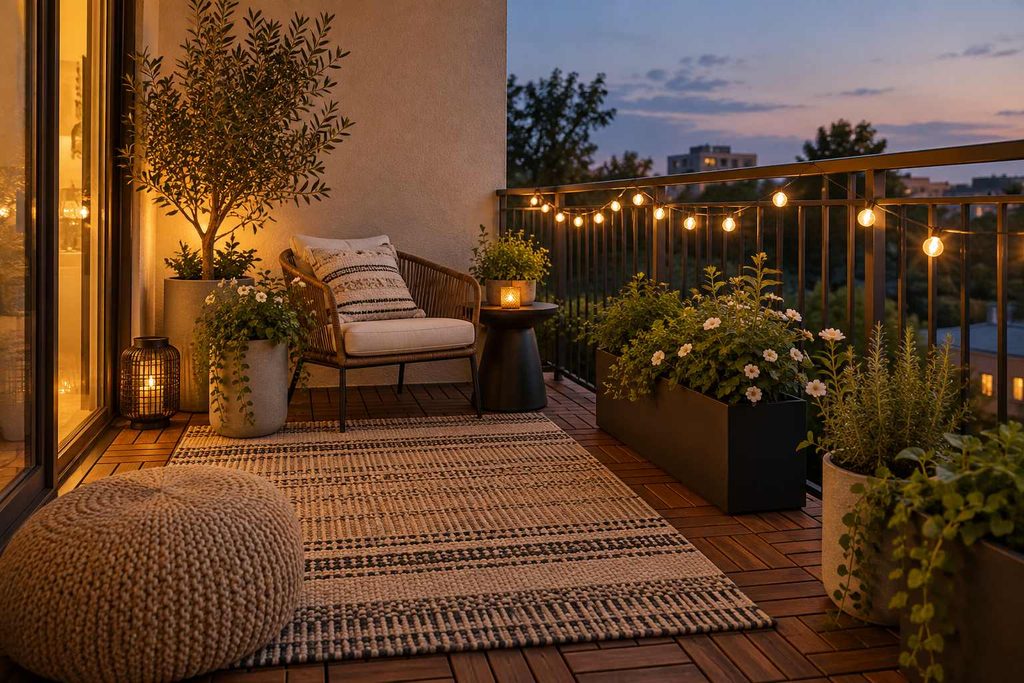
A slim console table or small wall-mounted shelf can hold a drink, book, or plant without using as much floor space as a full table. Measure the depth carefully so it does not interfere with the door or walkway. For renters, a freestanding narrow table avoids drilling into the wall.
A shelf can be especially useful beside a chair, where it acts like an outdoor side table. Keep breakable items away from the railing and use stable containers that will not tip easily in wind.
15. Keep the setup flexible through the seasons
Balcony needs change with the weather. In summer, you may want shade and a place for cold drinks; in cooler months, a warm throw and a lantern may be more useful. Choose pieces that are easy to move indoors or store when the season changes.
Before leaving furniture outside year-round, check its care instructions and your local weather. Strong sun, rain, snow, and wind can wear down materials. A small storage box or a simple routine for bringing cushions inside can help your space stay comfortable.
How to plan a balcony before buying
Begin with a quick sketch and write down the balcony’s length, width, and door clearance. Mark the spots that get the most sun and any areas where rain collects. This small step can help you avoid furniture that blocks the door or plants that struggle in the available light.
Then choose your main use:
- For dining: Pick a folding table and chairs that can be moved aside.
- For relaxing: Give priority to one comfortable chair or bench.
- For gardening: Use railing planters and vertical supports to preserve floor space.
- For mixed use: Combine one seat, one compact table, and a modest number of plants.
Set a budget that includes accessories and upkeep, not just furniture. Outdoor cushions, potting mix, trays, and replacement planters can add up. It is often better to buy a few durable pieces first and add more after you have lived with the layout.
Common mistakes to avoid
The most common mistake is buying furniture before measuring. A chair may look compact online and still make it awkward to open the door or walk past. Check product dimensions, including how far a chair extends when someone is sitting in it.
Another mistake is choosing plants without considering the balcony’s conditions. A sunny, windy upper-floor balcony can dry soil quickly, while a shaded space may not support sun-loving flowers. Match plants to the light you actually have and pay attention to watering and drainage.
Finally, avoid treating every empty spot as an invitation to add something. Open floor space is useful. It helps the balcony feel less crowded and makes it easier to sweep, water plants, and move furniture.
Frequently asked questions
How can I make a very small balcony look bigger?
Keep the floor as open as possible, choose furniture with slim profiles, and use vertical space for plants. A light rug and a consistent color palette can also make the layout feel more unified.
What furniture works best on a narrow balcony?
Folding chairs, a small bistro table, a narrow bench, or one compact lounge chair are practical choices. Measure carefully and leave a comfortable path from the door to the seating area.
How do I decorate a balcony on a budget?
Start with items you already own, such as a small indoor stool that can be used outside temporarily, and add inexpensive planters or herbs. Check secondhand listings for outdoor furniture, but inspect it for rust, loose joints, or damaged finishes.
What plants are good for a balcony?
The right plants depend on sunlight, wind, and your local climate. Herbs, compact flowering plants, and hardy foliage varieties can work well in containers. Check plant labels for light and watering needs before choosing.
How can I add privacy to a balcony in an apartment?
Try railing planters, a freestanding screen, or outdoor curtains if building rules allow them. Secure anything that could move in the wind, and avoid attaching items to shared or restricted parts of the building without permission.
What should I put on a balcony floor?
An outdoor rug, removable deck tiles, or the existing floor can all work. Choose materials suited to your weather and make sure water can drain properly. Avoid covering drainage points.
How can I keep balcony furniture from blowing over?
Choose sturdy, outdoor-rated pieces and place lightweight items away from exposed edges. Bring cushions and small accessories inside during strong winds, and follow building guidance for securing furniture and planters.
Conclusion
A comfortable balcony does not need a large footprint or a long shopping list. A well-placed chair, a small table, a few plants, and soft lighting can turn a plain outdoor corner into a useful part of your home. Measure first, choose pieces that fit your routine, and leave enough room to move around. With a simple plan, these small balcony ideas can help you create a space you will enjoy using every day.
1 thought on “15 Small Balcony Ideas to Make the Most of Your Outdoor Space”