
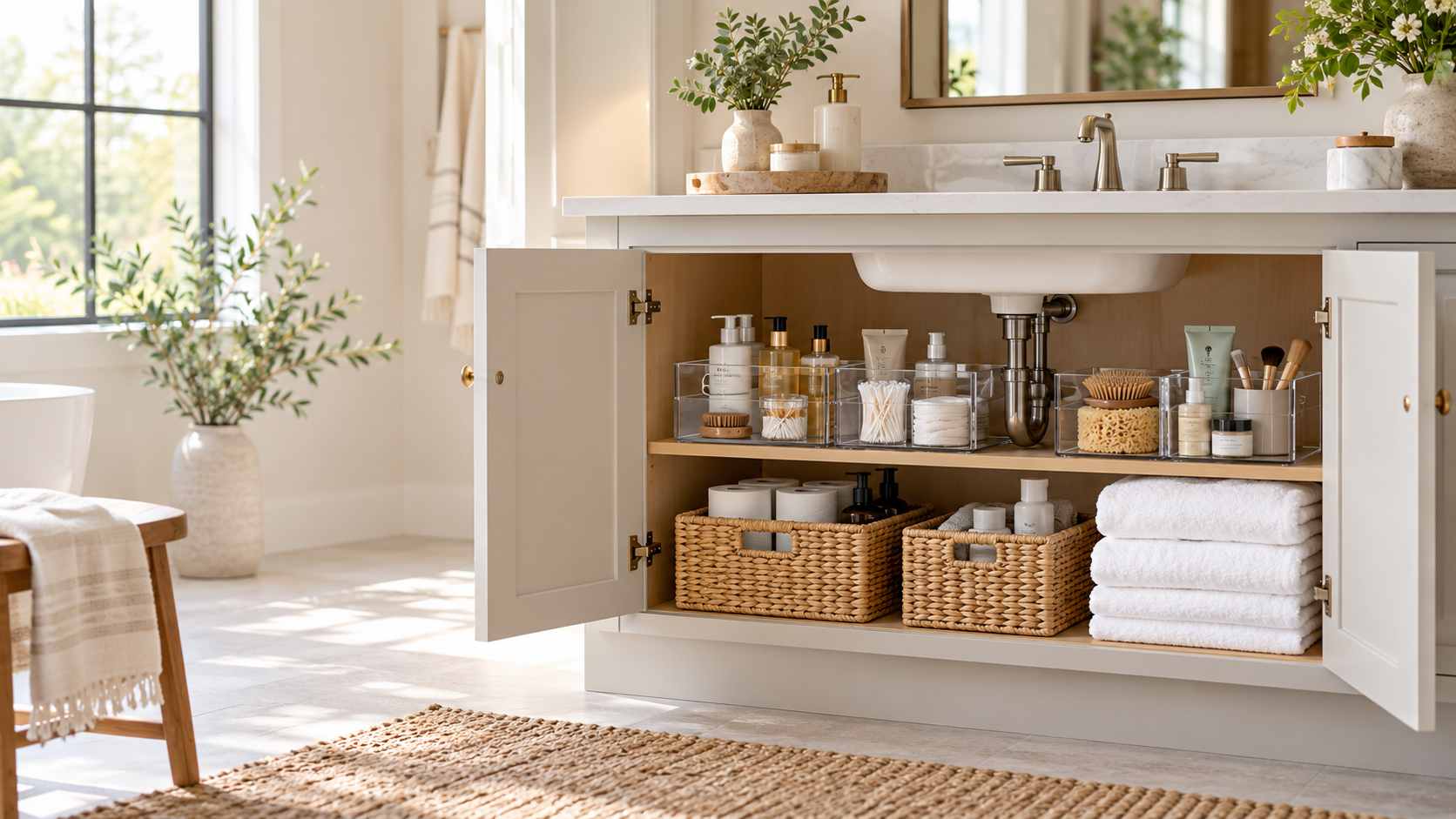
Learning how to organize bathroom cabinet storage can make busy mornings easier and help you find everyday items without moving a stack of half-used products. Whether you have a deep under-sink cupboard, a narrow medicine cabinet, or a few vanity drawers, the goal is the same: keep what you use accessible, group similar items, and make the space easy to reset.
You do not need a full set of matching containers to get started. A careful edit, a few appropriately sized organizers, and a simple storage routine can make a bathroom cabinet work much better. These ideas will help you create a system that suits your bathroom, household, and daily habits.
1. Empty the cabinet before organizing
Take everything out so you can see what you have and clean the cabinet properly. Lay items on a towel or table, grouping similar products together as you go: hair care, skincare, oral care, first aid, cleaning supplies, and spare toiletries.
Wipe shelves, drawers, and cabinet corners with a cleaner suitable for the surface. Let them dry before putting anything back. This gives you a clean start and makes it easier to notice leaks, damaged packaging, or areas that need a liner.
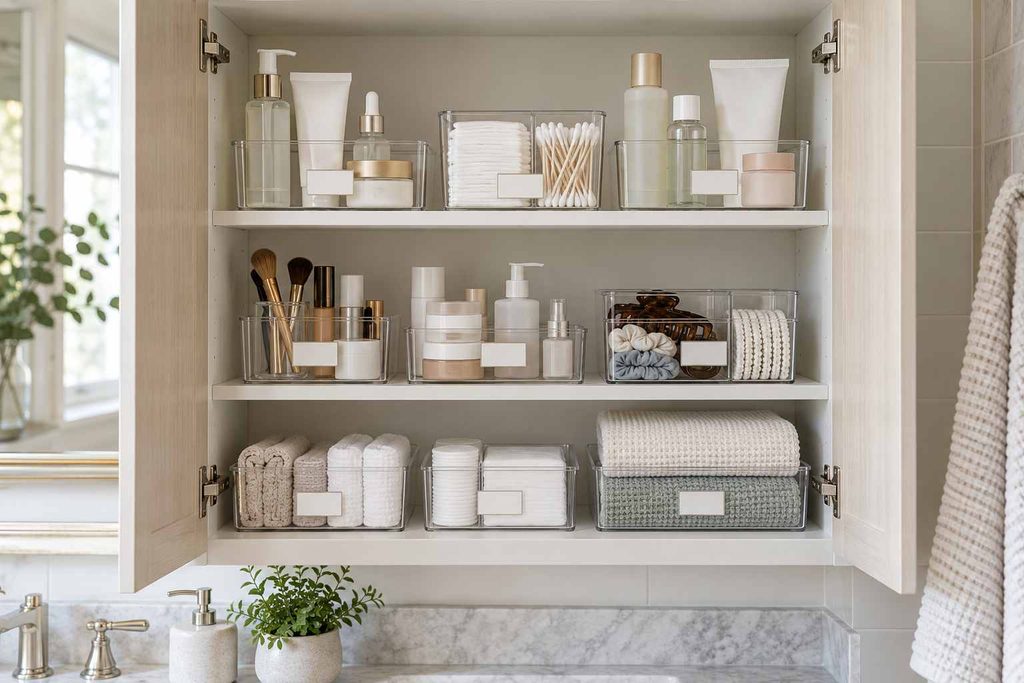
2. Check dates and remove what you no longer use
Look through products one by one. Discard items that are empty, expired, dried out, or no longer suitable for you. If a product’s condition has changed or its label says to discard it after a certain period, follow the manufacturer’s guidance.
Set aside products that are still usable but do not belong in this bathroom. Avoid keeping duplicates just because there is room. A crowded cabinet makes it harder to reach the things you need and easier to forget what you already own.
Dispose of medicines and household chemicals according to their labels and local guidance. Do not pour products down the drain unless the label says that is appropriate.
3. Decide what belongs in the cabinet
Not every bathroom item needs to be stored under the sink. Keep the products you use in this room and relocate anything that belongs elsewhere. Extra towels may fit better in a linen closet, while backup toiletries can go in a hallway cabinet or a labeled storage bin.
When deciding how to organize bathroom cabinet contents, think about frequency of use. Everyday items should be easy to reach, while occasional-use supplies can go farther back or on a higher shelf. This keeps the most useful space available for your daily routine.
4. Measure the space before buying organizers
Measure the cabinet’s width, depth, and height, including the space around plumbing pipes. For drawers, measure the interior dimensions and note where hinges, runners, or dividers may limit the usable area.
Take the measurements with you when shopping for bins or trays. A product can look compact online and still take up too much room once it is inside the cabinet. Leave enough clearance to remove containers easily and open drawers without catching on the cabinet frame.
A quick sketch can help if the cabinet has an awkward layout. Mark the pipes, shelf supports, and any areas that are difficult to reach.
5. Group items by category
Create a few practical categories that match your household. For example, you might have separate groups for hair care, skincare, oral care, shaving, first aid, and cleaning tools. The categories do not need to be elaborate; they should make sense to the people who use the bathroom.
Try not to create more groups than the cabinet can comfortably hold. If each category has only one or two small items, combine related groups. The system should be easy to remember and simple to maintain.
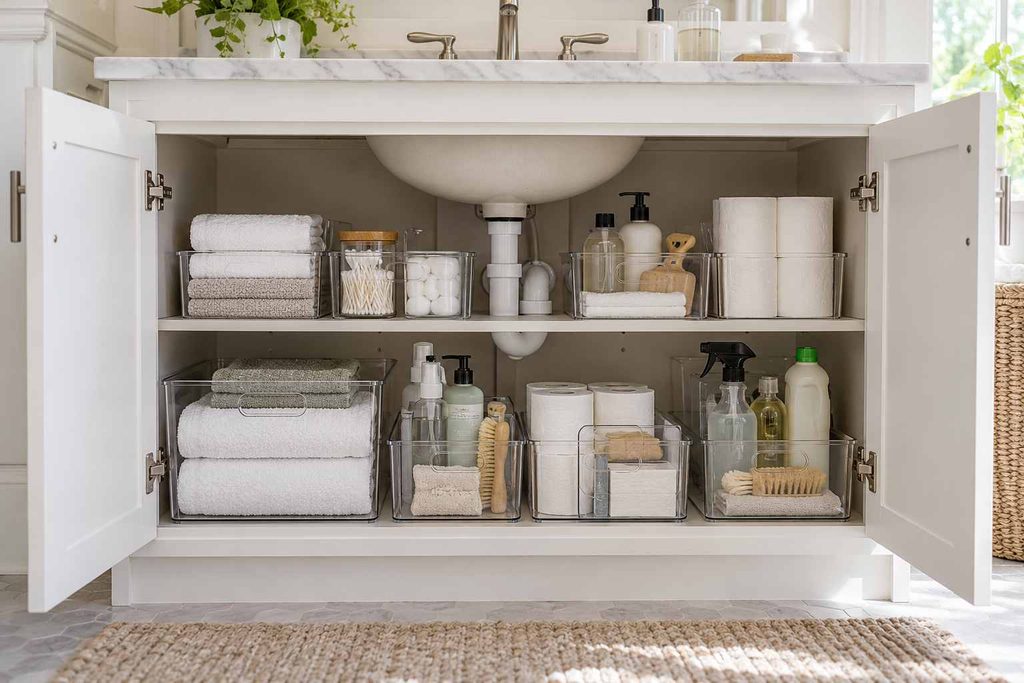
6. Use small bins to keep categories together
A bin turns a loose collection of products into one manageable group. Choose containers with smooth, washable surfaces and handles if you need to pull them off a shelf. Clear bins let you see their contents, while opaque baskets can give open shelving a calmer look.
Label bins with short descriptions such as “hair care,” “oral care,” or “guest supplies.” Labels are especially useful in shared bathrooms, where people may not remember where items belong. Avoid overfilling each container; it should be possible to remove one product without emptying the whole bin.
Useful container choices
- Shallow trays for small items
- Small handled bins for daily products
- Drawer dividers for makeup or grooming tools
- Stackable containers for light backup supplies
- Washable baskets for towels or toilet paper
7. Make the most of the space beneath the sink
The area under a sink often has a drainpipe, supply lines, and other obstacles. Instead of trying to fit one large bin around them, use smaller containers that can sit on either side of the plumbing. Measure carefully so the containers do not press against pipes or prevent access if maintenance is needed.
Keep items that could leak or spill in a tray or bin that is easy to lift out. Check the cabinet periodically for dampness, stains, or signs of a plumbing problem. Do not use the cabinet as a crowded storage area that makes it difficult to notice a leak.
A tiered shelf or sliding organizer can make better use of vertical space, provided it fits around the plumbing and can move without scraping pipes.
8. Store cleaning products separately
Cleaning products should not be mixed in with toiletries, cosmetics, or towels. Keep them in their original containers, with labels intact, and follow the safety instructions on each product. Never combine cleaners unless the labels specifically say it is safe; some combinations can produce dangerous fumes.
If children or pets can access the cabinet, store cleaning products in a locked or otherwise secure place. When the under-sink cabinet is not a suitable location, use a separate high or locked storage area instead.
9. Keep medicines in an appropriate location
A bathroom can become warm and humid, which may not suit some medicines. Read the packaging and store each item as directed. If a medicine needs a cool, dry place, choose a location outside the bathroom. Keep all medicines away from children and pets, and use a secure storage solution where needed.
Do not keep expired or unneeded medicines simply because they fit in a cabinet. Use a pharmacy take-back program or follow local disposal instructions when available.
10. Organize drawers with dividers
Drawers can become cluttered quickly because small items slide around. Adjustable dividers or small trays can separate toothbrush accessories, hair ties, nail tools, cosmetics, and grooming products. Arrange the sections around the items you actually own instead of buying a large organizer first.
Put frequently used products toward the front. If the drawer is deep, use shallow containers so items do not disappear beneath one another. Avoid stacking small objects several layers high; a single layer is usually easier to scan and put away.
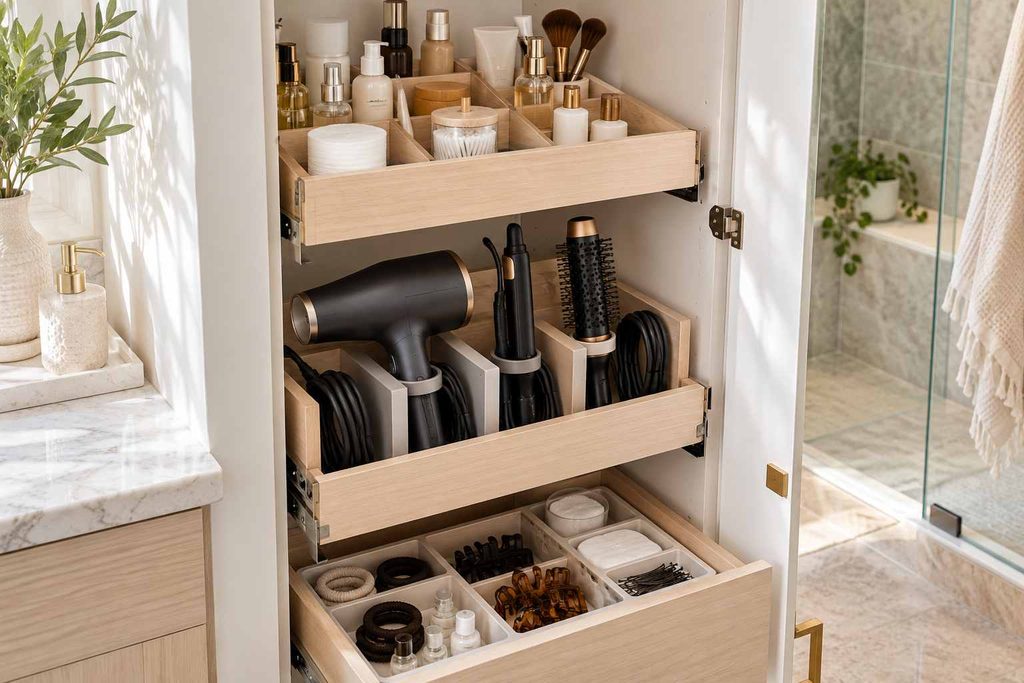
11. Use cabinet doors for lightweight storage
The inside of a cabinet door can hold lightweight items such as hairbrushes, cotton pads, or small tools. Use a slim organizer that does not interfere with the shelves or hinges. Before attaching anything, check the door’s clearance so the organizer will not strike stored items when it closes.
Avoid placing heavy products on door-mounted racks. They can pull on the hinges or make the door difficult to close. If the door is too narrow, a small hook may be enough for a brush or a hand mirror.
12. Arrange items by how often you use them
Put daily essentials at the front of a shelf or in the easiest drawer to reach. Weekly or occasional-use products can sit behind them or on a higher shelf. Keep heavy containers low so they are easier to lift and less likely to fall.
One helpful rule for how to organize bathroom cabinet shelves is to give the most accessible area to the items used most often. This avoids moving several containers every morning just to reach a toothbrush or face wash.
If several people share the space, give each person a small basket or section. That makes it easier to keep personal products together and reduces arguments over where things belong.
13. Create a small-space system
A compact bathroom cabinet needs carefully chosen storage. Use narrow bins, shallow trays, and vertical organizers that fit around the available space. Avoid buying large sets of containers that leave no room for the cabinet doors or plumbing.
Use the wall or cabinet door only where it is safe and practical. A slim wall shelf can hold a few items that do not fit inside the vanity, but keep it away from direct splashes and avoid placing heavy objects overhead.
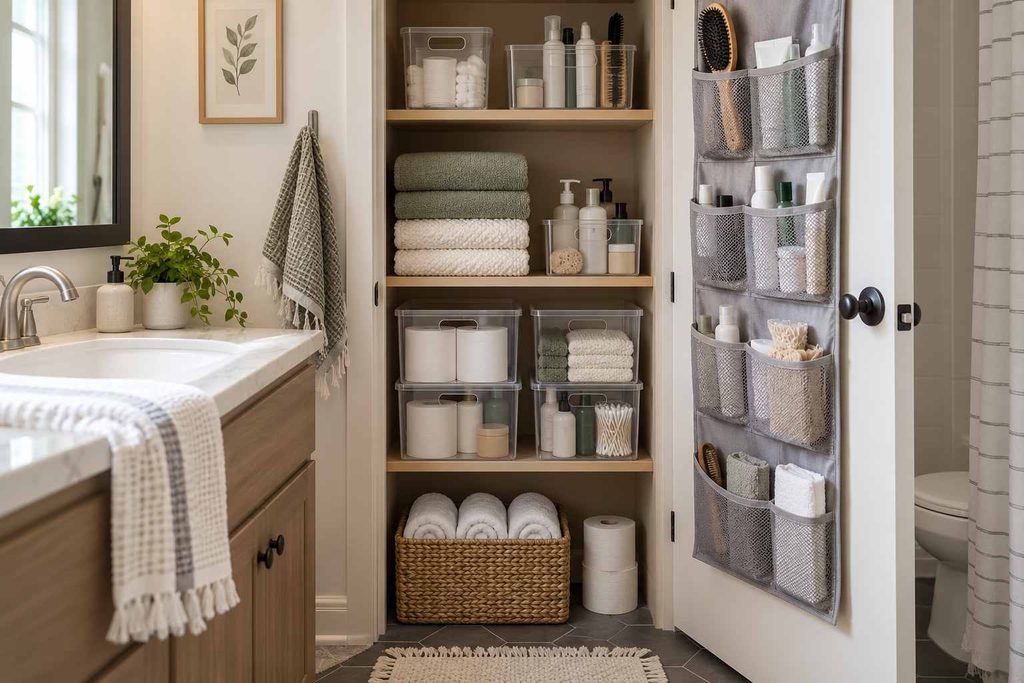
14. Make a system for a shared bathroom
In a family or shared bathroom, organize around each person’s routine. Use separate labeled baskets or drawer sections for personal items, and keep shared supplies such as toilet paper or hand soap in a common area.
Consider placing products used by children at a reachable height, while medicines, razors, and cleaning products stay secured away from them. Ask household members to return items to their assigned baskets after use. A simple system is more likely to last than a complicated one.
15. Keep towels and spare supplies together
Small hand towels, washcloths, and backup toilet paper can take up a lot of cabinet space. Fold towels consistently and store them in a basket or on a dedicated shelf. Keep extra rolls and unopened toiletries grouped together so they are easy to find.
If the cabinet is already full, store bulk supplies elsewhere and bring only a few backups into the bathroom. This keeps the cabinet useful for everyday items instead of long-term overflow storage.
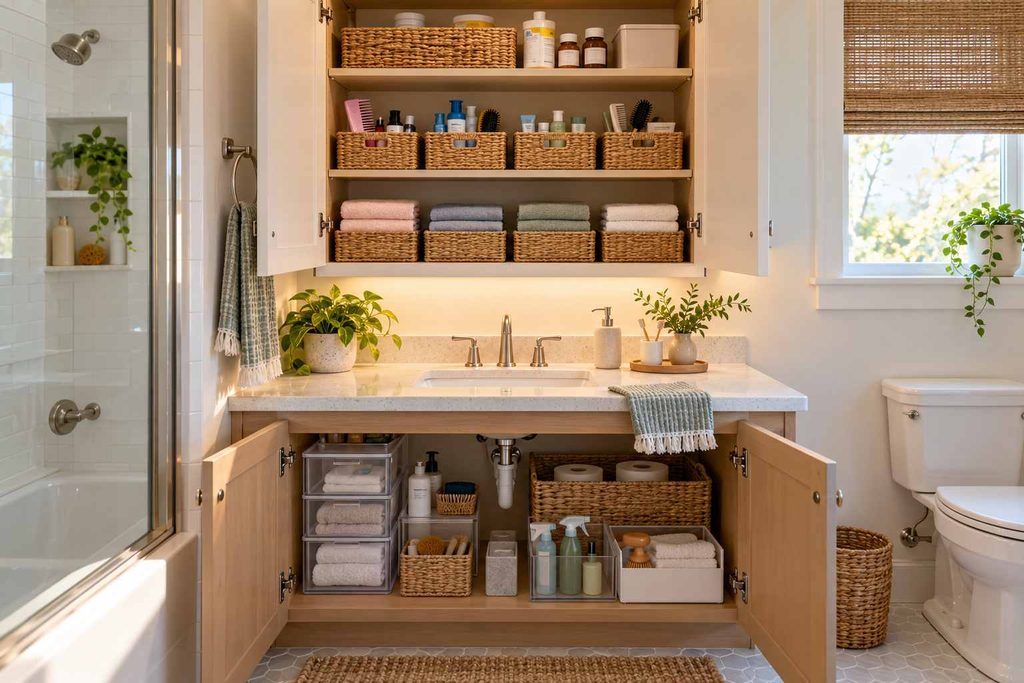
16. Use clear labels, but keep them simple
Labels help everyone follow the system, especially when containers look alike. Use a few plain words that describe the contents. If a bin’s purpose changes, update the label rather than keeping an old one that causes confusion.
You can label by person, product type, or routine. For instance, “daily skincare” may be more useful than a broad label such as “bathroom.” Avoid labeling every individual product; the point is to guide people to the right section, not create extra work.
17. Protect shelves from spills
A washable shelf liner or small tray can protect the cabinet from drips and product residue. Choose a liner that lies flat and can be removed for cleaning. Avoid materials that trap moisture against wood or laminate.
Wipe spills as soon as you notice them. A product that leaks can damage the cabinet surface or make other items sticky. Check bottles before placing them back, and replace cracked or poorly sealed containers.
18. Keep the routine simple
An organization system only helps if it is easy to maintain. After using a product, return it to its assigned bin or drawer. Once a week, take a minute to put stray items back and wipe away dust or residue.
When supplies run low, add them to a shopping list instead of buying replacements immediately. This prevents duplicates and gives you a chance to check whether you already have a backup.
19. Avoid overbuying organizers
It is tempting to purchase a matching set of bins before sorting your belongings, but the containers may not fit the cabinet or the items you plan to store. Organize first, measure second, and buy only what solves a clear problem.
Repurposing a clean tray or small box can be a useful temporary step. Once you have lived with the arrangement for a week or two, you will know whether you need a different size or style.
20. Do a seasonal check
Every few months, review what is stored in the cabinet. Remove empty containers, expired products, and items that are no longer used. Reorganize if your household’s routines have changed or if the current setup has become difficult to maintain.
A quick review is easier than waiting until the cabinet becomes so crowded that everything must be removed again. It also helps you notice a leaking bottle or damp spot before it causes more trouble.
21. Adjust the setup to your routine
The best system is one that reflects your bathroom habits. If you get ready at the sink, keep everyday items in a nearby drawer or a front bin. If the bathroom is mainly used for bathing, prioritize towels, bath products, and a clear area for essentials.
There is no single perfect answer to how to organize bathroom cabinet storage. Start with a few useful categories, place the most-used items within easy reach, and change the arrangement if it does not work in practice.
Frequently Asked Questions
How do I organize a bathroom cabinet under the sink?
First remove everything and measure around the plumbing. Use smaller bins on either side of the pipes, keep items that could leak in a tray, and leave enough space to inspect the cabinet for moisture or plumbing issues.
What should I store in a bathroom cabinet?
Store items that are used in that bathroom, such as daily toiletries, grooming tools, towels, and a small number of backup supplies. Keep cleaning products separate from personal care items, and store medicines according to their labels.
How can I organize a small bathroom cabinet?
Use narrow bins, shallow trays, drawer dividers, and vertical space where it is safe. Keep only the products you use regularly in the bathroom, and store bulk supplies elsewhere.
Should medicine be stored in a bathroom cabinet?
Check the packaging for storage instructions. Some medicines may not be suited to a warm, humid bathroom. Keep medicines secure and away from children and pets, and dispose of expired items according to local guidance.
How often should I declutter bathroom products?
A quick check every few months works well for many households. Remove empty or expired products as you notice them, and review the whole cabinet when it starts becoming difficult to find everyday items.
Conclusion
A tidy bathroom cabinet begins with removing what you no longer use and grouping the rest into practical categories. Measure the space before buying organizers, use bins and dividers where they solve a real problem, and keep daily essentials easy to reach. Store cleaning products and medicines safely, and check the cabinet occasionally for spills or moisture.
When deciding how to organize bathroom cabinet storage, make the system fit your household rather than chasing a perfect-looking setup. A few clear categories and a simple reset routine can keep the space functional long after organizing day.