
Picking a dog fence that actually works in 2026 is less about chasing a trendy material and more about matching design details to your dog’s habits and your property’s realities. Jumpers, climbers, chewers, and diggers each test a different weak point. Slopes, tree roots, and patios create gaps if you choose the wrong panel style. Setbacks and HOA covenants can steer you away from solid privacy fences or limit height. This guide focuses on the planning choices that determine whether a fence contains your dog safely and holds up year after year. You will see how to assess behavior, map constraints, select height and spacing, reinforce the bottom, specify gate hardware, and decide when electronic containment adds value or leaves a vulnerability.
Assess escape behaviors: jumping, climbing, chewing, and digging.
Start with what your dog has already shown you. A husky that scales chain link needs a smooth vertical surface without toe holds, such as closely spaced vertical pickets or welded wire attached to the inside of a frame. A terrier that tunnels under flower beds needs a buried apron. A young retriever that chews will put soft wood pickets and light gauge mesh to the test. For a survey of current materials and configurations, see Learn more about dog fencing | Destination and compare how each fits the behaviors you observe.
Translate those behaviors into concrete specs. Jumpers usually call for 5 to 6 feet of height and a top rail set inside the yard to prevent climbing leverage. Climbers do better with smooth, vertical surfaces and no horizontal rails on the dog side. Chewers push you toward thicker pickets, powder-coated aluminum, or heavier welded wire rather than thin wire or brittle slats. Small dogs that can squeeze through gaps often need picket spacing of about 2 to 3 inches, or 2-by-4-inch welded wire affixed to the interior face of an ornamental fence, to eliminate escape-sized openings.
Map property lines, setbacks, and underground utilities before you dig.
Design on paper after you know what you are allowed to build and where. Confirm property lines with visible survey pins or a recent plat, and check local setbacks, which often limit front-yard height and may prohibit solid privacy panels along street-facing sides. If you have an HOA, review approved materials and colors, which frequently prefer black ornamental aluminum over wood or chain link. Call 811 before digging so utilities can be marked, then plan post locations to avoid gas, water, and communication lines. This early mapping also shows where gates can open inward without hitting a retaining wall, AC condenser, or parked vehicle.
Skipping this step causes two common failures: installing into easements you must later clear, and setting posts at a depth that ignores your frost line. In cold regions, bury posts below frost depth and use concrete with a bell at the bottom to resist heave. On slopes, plan for stepped or racked panels now so you don’t end up with triangular gaps a small dog can exploit. A little graph paper measuring and utility paint can save a season of rework.
Height, spacing, and mesh gauge: stopping squeezers and jumpers
Height is not one size fits all. For many breeds, 4 feet is fine. Athletic or motivated jumpers often need 5 or 6 feet. If HOA rules cap you at 4 feet, remove climb assists by choosing flush vertical pickets, avoiding mid rails on the yard side, or adding roller bars to the top. Close gaps where small dogs can pass. Ornamental fences may look secure but can have generous picket spacing; back them with 2-by-4-inch welded wire on the inside to eliminate openings. For chain link, a smaller diamond and heavier gauge reduce flex and deformation when a dog pushes or chews.
Privacy and wind load are a trade-off. Vinyl privacy panels can reduce visual triggers for reactive dogs, but solid faces catch wind and usually require larger posts and deeper footings to stay upright. If you need privacy on a chain-link line, slats or fabric screens can help, but they also increase wind pressure. A good compromise for many yards is a semi-privacy wood or vinyl style that breaks up sightlines while allowing airflow, or a welded wire panel framed in wood for a smooth, secure, more transparent face.
Stopping diggers: footers, aprons, and ground level details
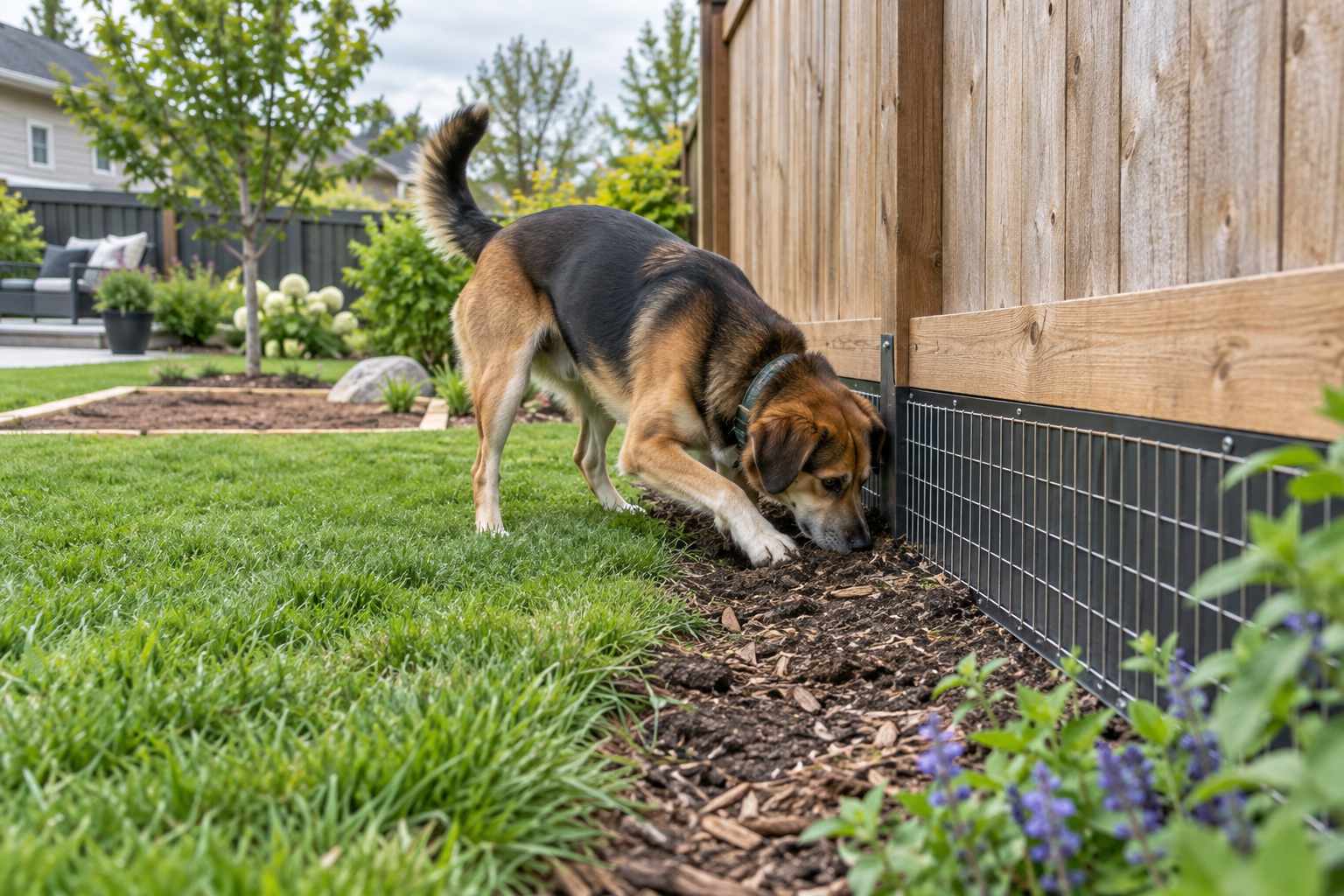
Containment fails most often at ground level. For diggers, plan a buried solution before the first shovel hits soil. One reliable approach is an L-shaped galvanized hardware cloth apron: trench 8 to 12 inches down at the fence line, run the mesh vertically, then extend it horizontally back into the yard 12 to 24 inches, and pin it with landscape staples before backfilling. When a dog starts to dig, paws meet mesh. In heavy chew zones or along active garden beds, a 2-by pressure-treated bottom board secured to posts can reinforce the apron and create a smooth interior face.
Where soil shifts or mowing is tight, a concrete mow strip poured under the line can eliminate channels that paws can exploit and make trimming easier. On hardscape like pavers, use steel angle screwed to post bases or surface-mount flanges to close the bottom gap without creating a toe hold. In a real-world example, a beagle that repeatedly tunneled out near a compost area was finally contained with a 16-inch buried apron and a compacted gravel collar inside the fence that discouraged fresh digging.
Gates that do not become escape routes: placement, hardware, and airlocks
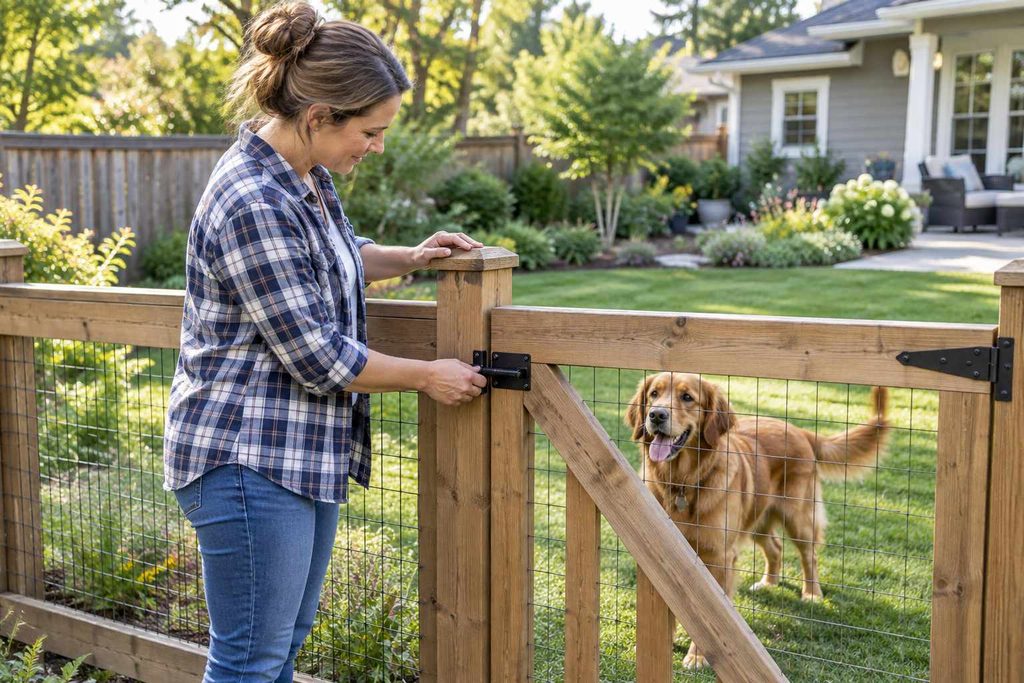
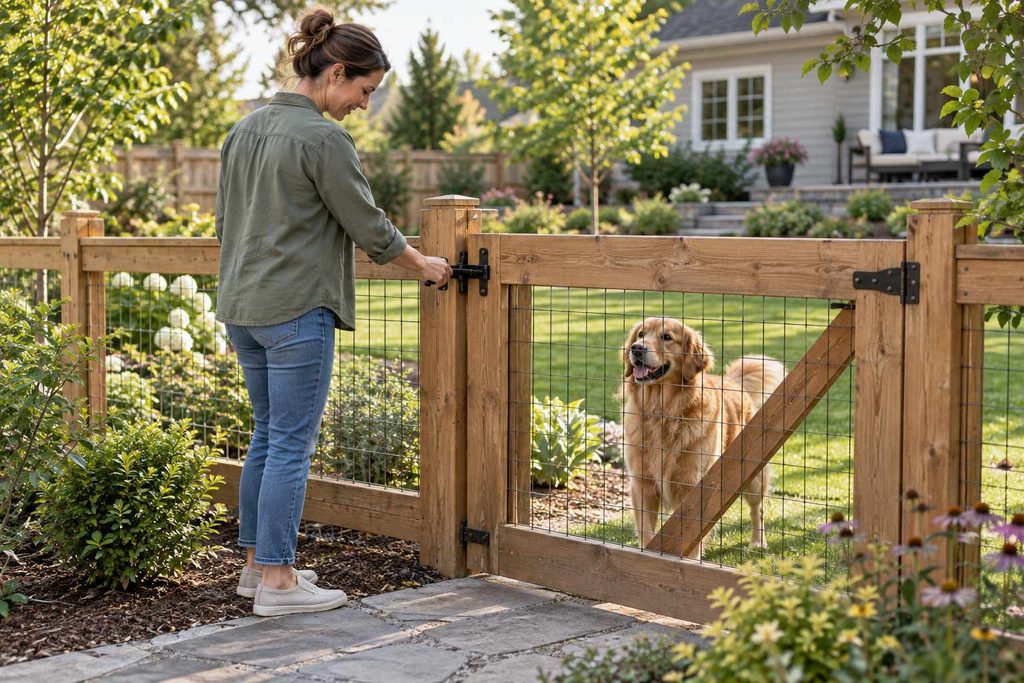
Gates invite attempted escapes because they move and collect the most foot traffic. Place primary gates where they can swing inward, not into sidewalks or streets. For daily use, specify self-closing hinges and a latch that resists pawing, such as a gravity latch shielded on the yard side or a high-mounted magnetic latch. For double drive gates, use a drop rod that pins into a sleeve set in concrete, and consider a cane bolt guide to prevent lifting. A simple but effective upgrade in multi-dog homes is an airlock: two gates spaced a few feet apart to create a vestibule that buys you time if one gate is left ajar.
A common mistake is setting latch and handle hardware at nose height, where a persistent dog can nose it open. Mount latches higher and shield release mechanisms from the yard side. Leave appropriate under-gate clearance as the ground settles, but don’t overdo it. If you must bridge a sloped driveway, a gate shoe or adjustable bottom strike can reduce the gap. In freeze-thaw regions, pick hinges with adjustable tension so you can retune swing speed after the first winter rather than watching the gate slam or drift open.
Slopes, trees, and hardscapes: designing around real-world obstacles
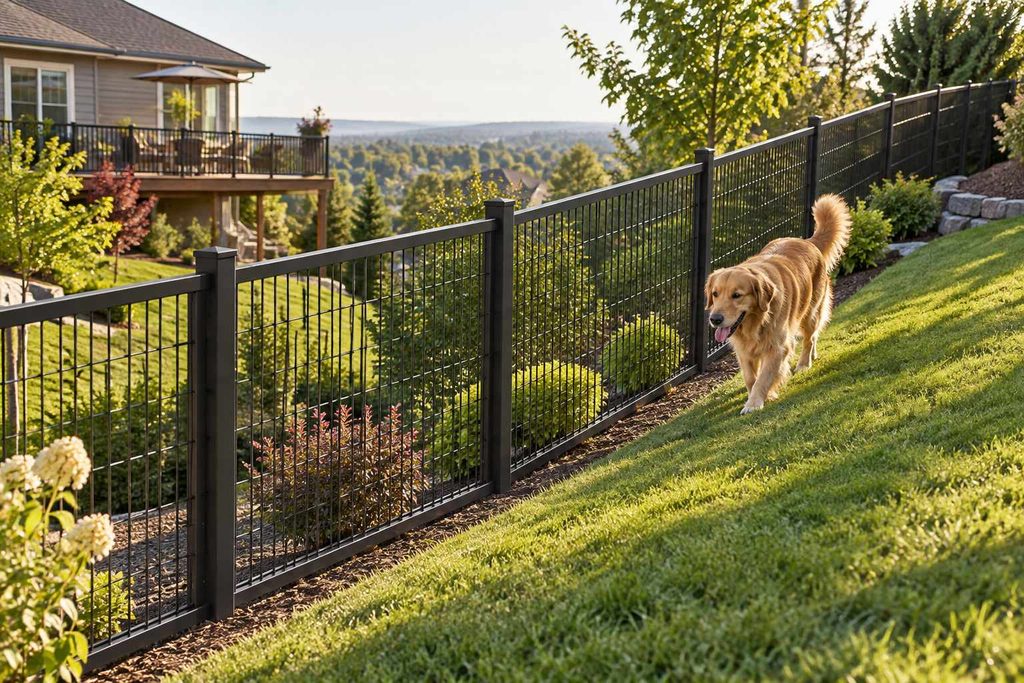
Yards are rarely flat or unobstructed, and the wrong panel style creates escape routes. Stepped panels create stair-step tops and bottoms on slopes and can leave triangular gaps at grade. Racked panels pivot their pickets to follow the slope, keeping the bottom close to the ground. For small or uneven dips, infill with cut-to-size welded wire, fastened to posts and the panel frame, to eliminate wedges where a small dog could squeeze through. Where a tree trunk interrupts your line, offset the fence with short returns rather than jumping to the trunk itself, which grows and can damage the structure.
Anchoring to concrete or stone needs specific hardware. Core-drilled sleeves set in concrete give round steel or aluminum posts a sturdy home. Surface-mount flanges bolt to flat slabs with wedge anchors, but be ready to add a base trim or sweep to close bottom gaps. If a narrow side yard forces the fence close to a foundation, leave room to maintain weep holes and use a slim framed welded wire panel to keep a smooth interior face. Picture a townhouse with a 4-foot ornamental aluminum fence required by the HOA: backing it with welded wire on the interior and adding a buried mesh apron along the patio can turn a stylish perimeter into a true containment line for a fast, small dog.
Physical barriers vs electronic containment: when each fits
Electronic containment systems, whether in-ground perimeter wire or newer GPS-based collars, can create a training boundary without changing a yard’s look. They require consistent training with flags so the dog learns the line and, in most cases, periodic collar checks and battery replacements. They do not stop other animals or people from entering and depend on the dog’s willingness to respect a warning or correction. Many owners use them as a backup inside a physical fence to reinforce the line or protect sections where a solid barrier isn’t possible.
Physical fences have their own upkeep. Wood needs finish and inspection for loose pickets. Chain link benefits from a bottom tension wire and occasional tightening. Vinyl and aluminum require less routine care but still need hinge and latch adjustments as seasons change. If you combine systems, keep the electronic boundary slightly inside the physical line to avoid corner confusion, and walk the perimeter a few times each year to catch soil washouts, frost heave at posts, or a gate that no longer latches flush. The right pairing can reduce risk in tricky spots without relying on one method alone.
Frequently Asked Questions
How do I choose a fence for a dog that likes to jump?
Choose a fence tall enough for your dog and avoid nearby objects, such as sheds or raised planters, that could act as launching points. Some jumpers do better with a solid fence or a sloped extension at the top. Supervise your dog and check the fence regularly for weak spots.
What type of fence works best for a dog that digs?
A dig-resistant fence can include buried mesh, a concrete footing, or a ground-level barrier that extends inward beneath the soil. The best option depends on your yard and how persistent your dog is. Remove loose soil near the fence and give your dog an approved place to dig.
Is an invisible fence a good choice for every dog?
No. An electronic boundary may not suit dogs that are anxious, highly motivated to chase, or likely to run through a boundary despite discomfort. It also does not create a physical barrier between your dog and people or animals outside the yard. Discuss your dog’s temperament and training needs with a qualified professional before choosing one.
How should my yard layout affect the fence I choose?
Walk the perimeter and look for slopes, trees, retaining walls, gates, drainage areas, and gaps beneath existing barriers. These features can create escape routes or make installation harder. Plan for secure gate latches and enough clear space around the fence so your dog cannot climb or jump from nearby objects.
Do local rules affect what kind of dog fence I can install?
They can. Local building codes, property restrictions, homeowners’ association rules, and lease terms may set requirements for fence height, placement, materials, or permits. Check the rules that apply to your property before buying materials or starting work.
How high should a dog fence be?
There is no single height that works for every dog. Consider your dog’s size, jumping ability, climbing habits, and motivation, as well as the rules that apply to your property. A taller fence may still need design changes if the dog can climb it or use nearby objects to get over.
How can I make an existing fence safer for my dog?
Inspect it for loose boards, rust, sharp edges, gaps, and spaces under gates. Secure the gate latch, repair damaged sections, and block digging spots. If your dog climbs or squeezes through, change the fence design or add a suitable barrier instead of relying only on closer supervision.
Should I supervise my dog in a fenced yard?
Yes. A fence helps contain a dog, but it does not remove every risk. Stay nearby, especially while your dog is learning the yard’s boundaries, and check that gates are closed and the fence is intact.
Conclusion:
Lasting containment starts with a sketch, a tape measure, and an honest look at your dog’s habits. List the behaviors you need to block, walk the route to spot grade changes and obstructions, and note every place a gate or panel might need reinforcement. Then turn those observations into specifics: height, picket spacing, mesh size and gauge, buried aprons, hinge type, and latch placement. After installation, schedule quick seasonal checks for bottom gaps, loose fasteners, and hinge tension. Focus on behavior, terrain, and rules first, and your 2026 fence choice will be easier to make and harder for your dog to beat.