
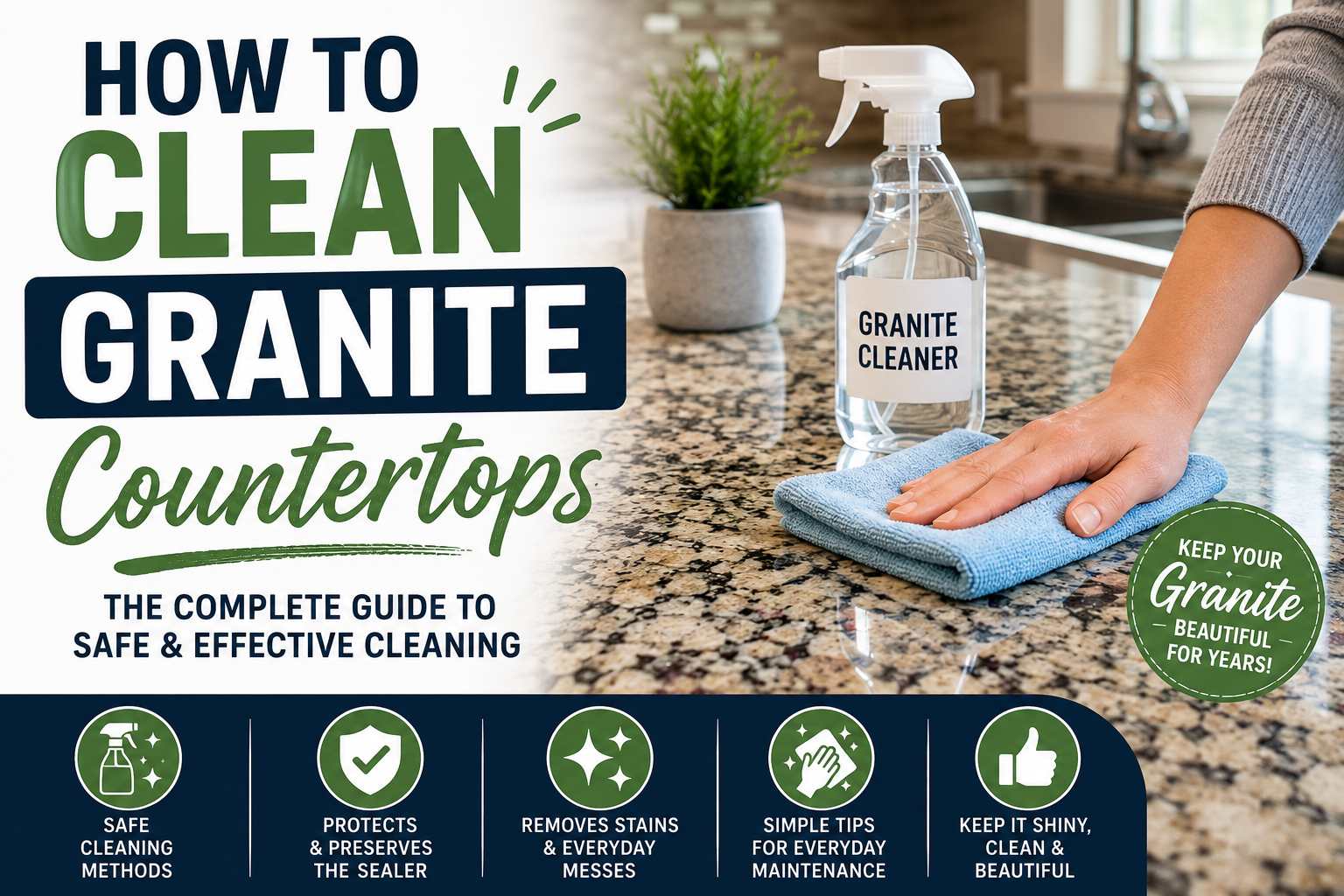
Learning how to clean granite countertops is really important for keeping them looking beautiful and staying in condition for a long time. Granite countertops are very strong. Can withstand heat, scratches and daily wear but they still need to be cleaned the right way. If you use chemicals, rough tools or acidic cleaners they can damage the special coating on the granite or make it look dull. Fortunately taking care of granite countertops is not that hard. With a simple things and the right way of cleaning you can get rid of crumbs, spills, grease, fingerprints and everyday messes without hurting the stone.
Granite countertops are very popular in kitchens and bathrooms because they are strong and look nice. Every piece of granite is unique with its colors, patterns and mineral variations making it a special addition to a home. However granite is a stone that can absorb liquids if it is not properly sealed. Regular cleaning and taking care of it can help keep its appearance and reduce the chance of stains.
This guide will tell you everything you need to know about cleaning granite countertops, including cleaning, removing stains, deep cleaning, what products to avoid, sealing and tips for taking care of them.
Why Proper Granite Countertop Cleaning Matters
Granite is a natural stone but that does not mean you can use any cleaning product on it. The stone itself can withstand a lot of wear. The special coating on the surface can be affected by the wrong cleaners.
A good cleaning routine gets rid of food residue, grease, dust and bacteria while keeping the countertops finish safe. It also stops spills from becoming hard-to-remove stains.
The goal is not to scrub the granite. Instead it should be cleaned gently and regularly. A soft cloth, water and a suitable stone cleaner are usually enough for everyday messes.
What You Need to Clean Granite Countertops
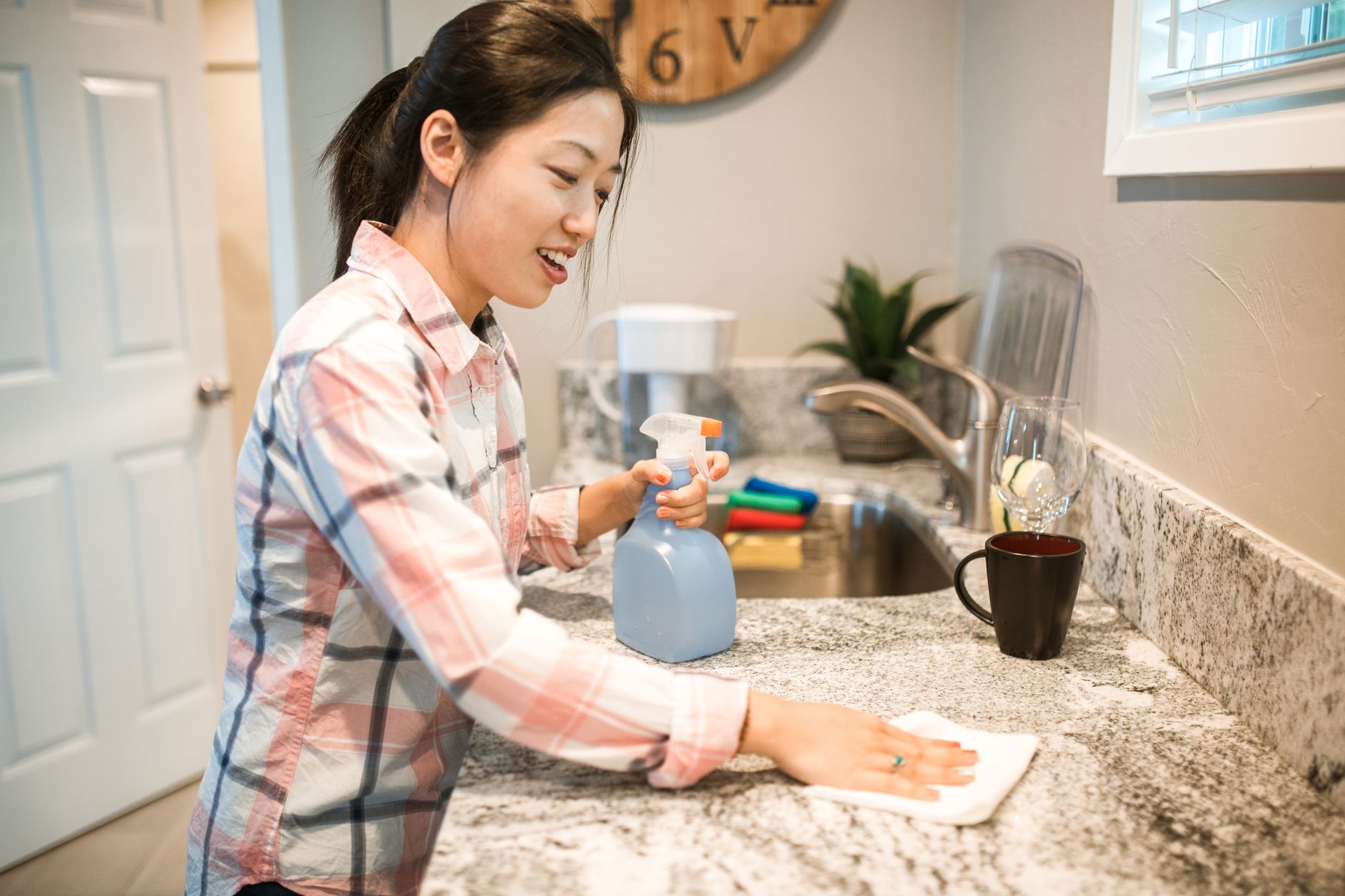
Before you start cleaning you need to get a basic things. You do not need any equipment.
The things you need include:
- water
- A clean soft cloth
- A soft sponge
- dish soap
- A cleaner that is safe for granite or natural stone
- A clean dry towel
- A spray bottle for a cleaning solution
Avoid using rough scrubbers, steel wool, powdered abrasives and harsh household chemicals. These can scratch the surface. Weaken the special coating.
It is also an idea to keep separate cloths for cleaning countertops. Cloths used for cleaning jobs may have dirt or chemical residue that you do not want to transfer to your granite countertops.
How to Clean Granite Countertops Every Day
The easiest way to take care of granite countertops is to clean them instead of waiting for dirt to build up.
Start by removing crumbs and debris. You can use a cloth, paper towel or a gentle brush. Be careful not to drag particles across the surface because they can cause scratches.
Next dampen a cloth with warm water. If the surface has grease or food residue add an amount of mild dish soap.
Wipe the countertop using overlapping motions. Pay attention to areas around sinks, cooking zones, handles and appliances because these areas often collect more residue.
After cleaning wipe the surface again with water to remove any soap residue. Finally dry the countertop with a dry towel.
Drying is a step. Water left on the surface can leave mineral deposits in areas with hard water. Regular drying also gives granite a more polished look.
How to Clean Granite Countertops With Dish Soap
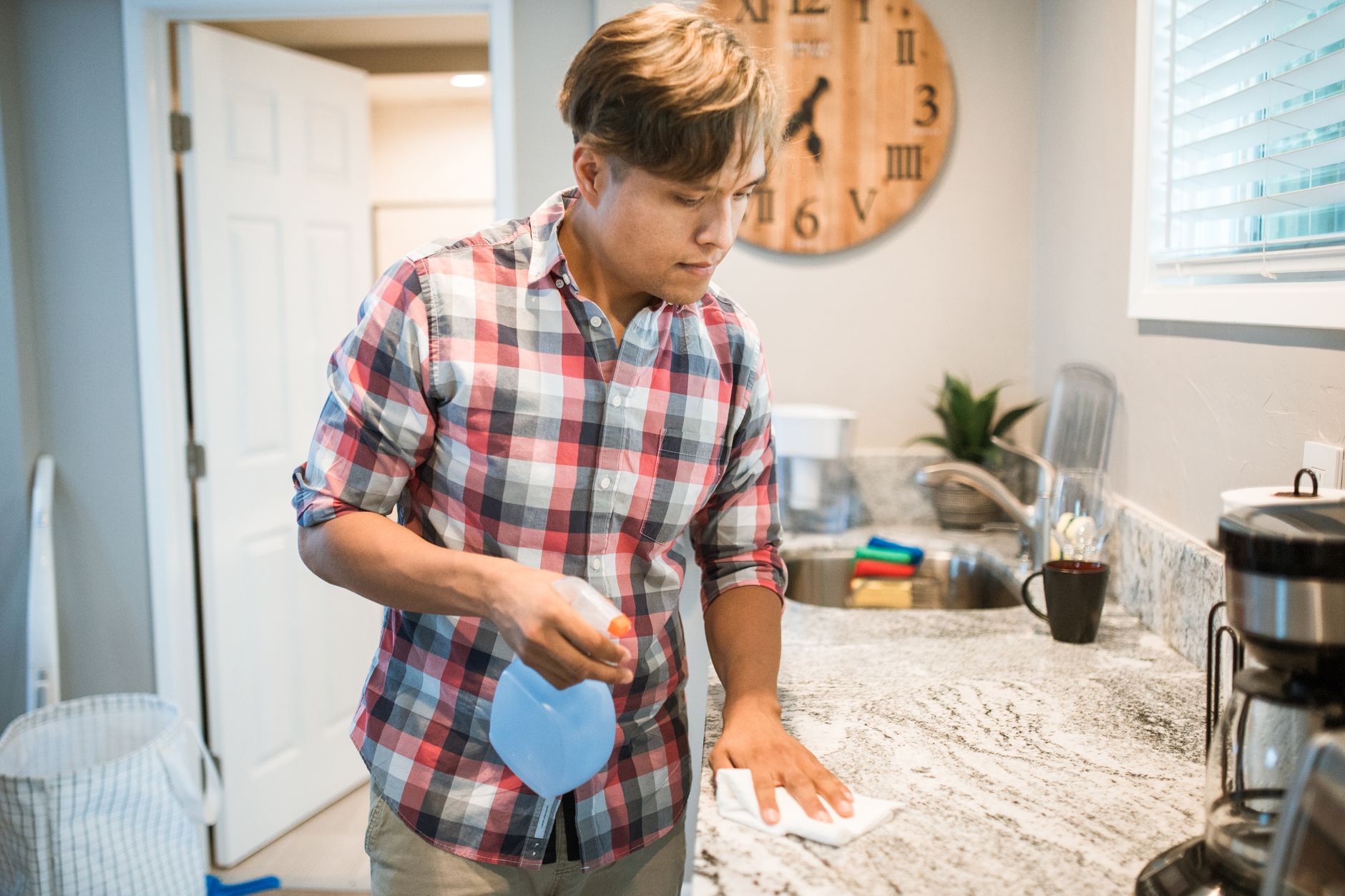
Mild dish soap is one of the options for everyday granite maintenance. It can break down grease and food residue without needing aggressive chemicals.
Fill a bowl with water and add a small amount of mild dish soap. You only need soap to create a light cleaning solution.
Dip a cloth into the solution and wring it out so that it is damp rather than soaking wet. Wipe the countertop thoroughly.
Once finished use another cloth dampened with water to remove any remaining soap. Dry the granite with a towel.
Do not use much dish soap. Much soap can leave a film that makes granite look cloudy or streaky.
How to Clean Granite Countertops With a Commercial Stone Cleaner
If you prefer a made product choose a cleaner that is specifically labeled as safe for granite or natural stone.
Read the product instructions before applying it. Some products are designed for cleaning while others are intended for polishing or specialized maintenance.
Spray the recommended amount onto the countertop or cloth according to the manufacturers instructions. Wipe the surface with a cloth then buff it dry if required.
Avoid assuming that a product is safe just because it is marketed as a kitchen cleaner. Check the label carefully for compatibility with stone.
What Cleaners Should You Avoid?
Knowing what not to use is just as important as knowing what to use.
Avoid cleaners that contain acids or aggressive chemicals unless the manufacturer specifically confirms that they are suitable for your particular granite surface.
Some common products to avoid include:
- Cleaners that contain vinegar
- Lemon juice
- acidic cleaners
- Abrasive powders
- Bleach-heavy solutions
- Ammonia-based products unless specifically recommended
- Oven cleaners
- Drain cleaners
- Bathroom cleaners designed for mineral deposits
- Rough scrubbers
products can be especially problematic because natural stone surfaces can react negatively to acids. Even if damage is not immediately visible repeated exposure can affect the finish or special coating.
How to Remove Grease From Granite
Kitchen countertops often accumulate grease around cooking areas. Fortunately light grease can usually be removed without treatment.
Start with water and a small amount of mild dish soap. Apply the solution with a cloth and gently wipe the greasy area.
For buildup use a granite-safe degreasing product. Always follow the products instructions. Test an unfamiliar cleaner on a small inconspicuous area first.
After removing the grease wipe the area with water and dry it thoroughly.
Do not scrape grease with a metal blade. A plastic scraper can sometimes be used carefully if necessary. Avoid applying excessive pressure.
How to Remove Coffee and Tea Stains
Coffee and tea spills are common in kitchens. The key is to clean them rather than allowing them to sit for an extended period.
Blot the spill with a paper towel or soft cloth. Do not rub aggressively because spreading the liquid can make the affected area larger.
Then clean the area with water and mild dish soap. Rinse with a damp cloth and dry the countertop.
If a dark mark remains, use a stain-removal product specifically designed for granite or natural stone. Follow the manufacturers instructions carefully.
Persistent stains may require treatment particularly if the liquid has penetrated the porous stone.
How to Remove Oil Stains
Oil can sometimes penetrate granite if the surface is not adequately sealed. When an oil spill occurs absorb much as possible immediately using paper towels.
Do not smear the oil across the countertop. Blot instead.
For a stain a commercial stone poultice may help draw the oil from the stone. Because different granite slabs can react differently follow the instructions carefully. Consider professional assistance for severe discoloration.
The best way to prevent recurring oil stains is to maintain the countertops seal.
How to Remove Water Spots
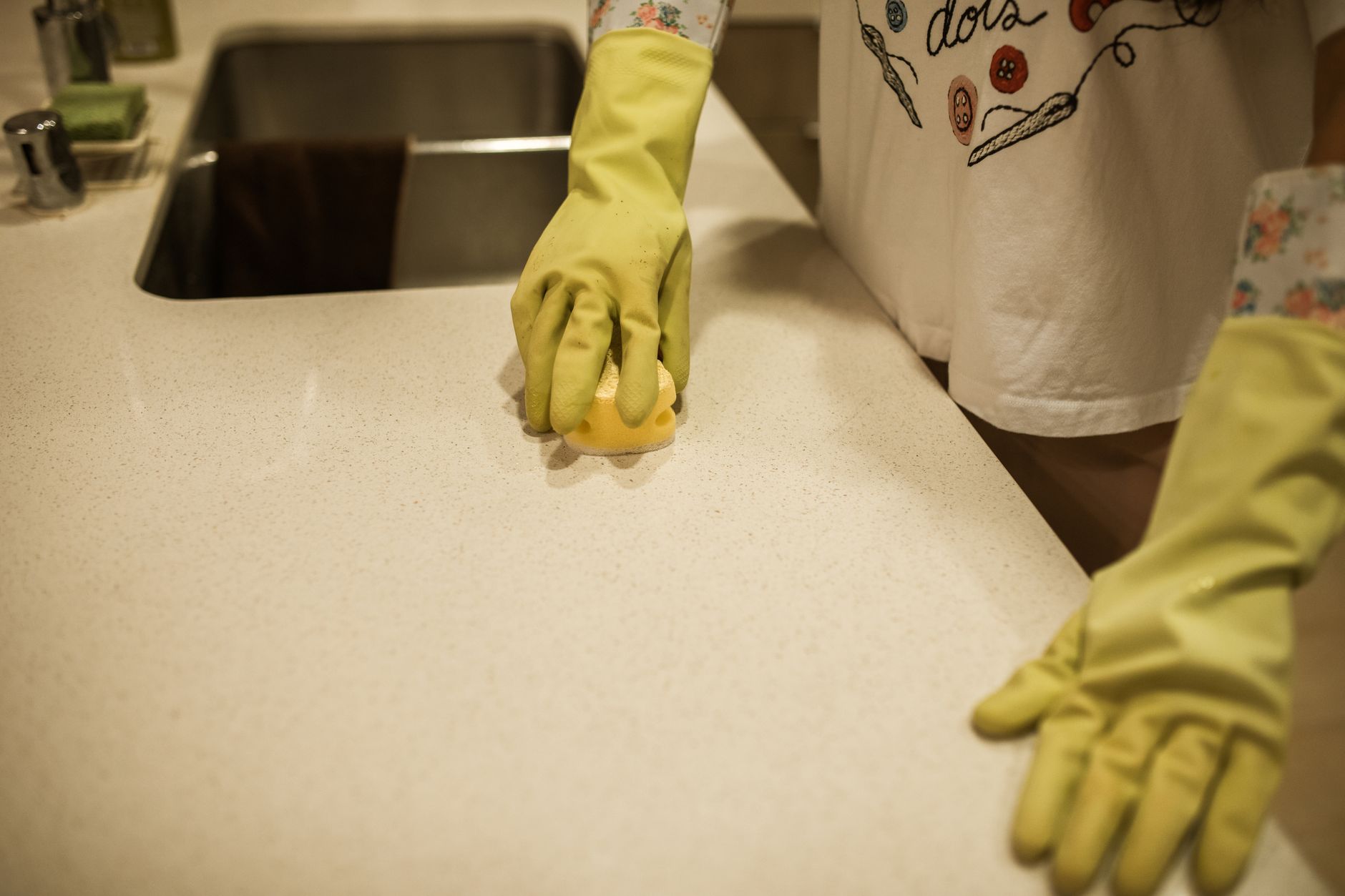
Water spots are particularly common around sinks and faucets. They are often caused by minerals left behind when water evaporates.
For water marks wipe the area with a damp cloth and dry it thoroughly.
If mineral deposits have accumulated, avoid reaching for vinegar or another acidic cleaner. Instead use a product specifically designed to remove mineral deposits from granite or natural stone.
Preventing water spots is even easier: wipe around the sink and faucet after use. Avoid allowing water to sit on the surface.
How to Deep Clean Granite Countertops
Daily cleaning handles household messes but an occasional deeper cleaning can help refresh the surface.
Begin by clearing everything from the countertop. Remove crumbs and loose debris with a cloth.
Apply a granite- cleaner according to its directions. Work in sections rather than covering the entire countertop at once.
Use a cloth to clean the surface paying extra attention to areas around appliances, backsplashes, sinks and corners.
After cleaning remove any remaining product with a damp cloth. Dry the countertop completely.
Do not use cleaning as an excuse to scrub aggressively. Granite benefits from consistent maintenance rather than excessive force.
How Often Should Granite Countertops Be Cleaned?
Granite countertops in kitchens should generally be wiped after food preparation and spills. A thorough cleaning can be done regularly based on how heavily the surface is used.
Homes with cooking, children, pets or high kitchen traffic may require more frequent cleaning.
The important habit is immediate spill cleanup. Coffee, wine, cooking oil, sauces and acidic foods should not be left sitting on the surface
A simple routine is often better than intensive cleaning.
How to Tell Whether Granite Needs Sealing
Sealing helps reduce the amount of liquid that can penetrate granite. However not every granite slab has the same absorption characteristics and sealing requirements can vary.
One common method, for checking the condition of a seal is the water test. Place an amount of water on an inconspicuous section of the countertop and observe how the surface behaves. If the water appears to darken the stone or absorb quickly the countertop may need attention.
This test is a general indicator. Follow the granite manufacturers or fabricators recommendations whenever possible.
If you are not sure about the condition of your granite countertop a professional stone-care specialist can take a look at it.
How to Protect Granite From Scratches

Granite is very strong. It is still a good idea to be careful with it.
Use a cutting board when you need to cut something, of cutting directly on the granite countertop.
Granite can handle a lot of scratches. Knives can get dull when you use them on hard stone.
You should also use trivets or heat-resistant pads when you put cookware on the granite countertop if the manufacturer says to do so.
Granite can handle temperatures but it can still get damaged if the temperature changes too quickly or if it gets too hot for too long.
Do not put gritty objects directly on the granite surface.
Clean up dirt and sand away especially around doors and windows.
Common Granite Cleaning Mistakes
A lot of problems with granite countertops happen because people make mistakes when they clean them.
One common mistake is using vinegar to clean the granite.
Vinegar is a cleaner but it is not good for granite.
Another mistake is not cleaning up spills away.
Even if your granite countertop is sealed you should still clean up spills quickly.
Using much soap is also a problem.
If you use much soap it can leave a dull film on the granite.
Some people also polish their granite much.
You should only use polishing products when you need to. You should follow the instructions on the label.
Do not use a product just because it says it is for all purposes.
Make sure it is safe for granite before you use it.
Tips for Keeping Granite Countertops Looking New
There are a things you can do to make it easier to take care of your granite countertops.
Clean up spills soon as they happen.
Use a cutting board when you are preparing food.
Keep things like lemon juice away from the granite.
Dry the granite around the sink and faucets.
Use coasters under bottles and containers that might leave water spots.
Do not drag gritty objects across the granite surface.
Keep your cleaning products organized so you do not accidentally spill anything on the granite.
Importantly follow the instructions that your countertop installer or stone manufacturer gave you.
Different types of granite may need to be cleaned in ways.
Is Granite Hygienic for Kitchen Countertops?
Granite can be an safe surface for your kitchen if you take care of it.
Clean your granite countertop regularly to get rid of food and other things that might be on it.
It is especially important to clean your countertop when you are preparing meat or vegetables.
Use food practices and clean the granite after you are done preparing food.
Remember that cleaning and disinfecting are not the thing.
If you need to disinfect your granite countertop use a product that’s safe for natural stone and follow the instructions.
Do not use chemicals because they can damage the granite or the sealant.
When Should You Call a Professional?
You can clean your granite countertop at home most of the time.
If you have a deep stain or a damaged surface you might need to call a professional.
A stone-care professional can look at your granite countertop. Decide if it needs to be cleaned polished, repaired or resealed.
If you have already used a chemical that you should not have and you notice that the granite is discolored or damaged you should call a professional.
Do not keep trying to clean the granite with chemicals because you can make the problem worse.
Frequently Asked Questions
Can I use dish soap on granite countertops?
Yes you can use dish soap on granite countertops.
Just dilute it with water and rinse it off completely.
Is vinegar safe for granite?
No vinegar is not safe for granite.
It is too acidic. Can damage the stone.
Use a cleaner that is specifically made for stone instead.
Can I use Windex on granite?
You should not use Windex on granite unless it is specifically labeled as safe for stone.
Some glass cleaners can damage the stone or the sealant.
Can I use baking soda on granite?
You should not use baking soda on granite.
It can be too abrasive and damage the stone.
If you have a stain use a product that is specifically made for granite or natural stone.
How do I remove stains from granite?
Start by cleaning the stain gently.
If it does not come out you can use a poultice or a stain remover that is safe for granite.
If the stain is still there you might need to call a professional.
Should granite countertops be sealed?
Some granite countertops need to be sealed. It depends on the type of stone and the sealant that is already on it.
Follow the instructions of your stone supplier or installer.
How often should I reseal granite?
You should not reseal your granite countertop on a schedule.
Instead test it to see if it needs to be sealed and follow the instructions of the manufacturer.
Can I put pans directly on granite?
You should not put hot pans directly on granite.
Use Heat-resistant pads instead.
Granite can handle temperatures but it can still get damaged if the temperature changes too quickly.
How can I keep granite countertops shiny?
Clean your granite countertop regularly with a cleaner and a microfiber cloth.
Avoid using products or too much polish.
What is the easiest way to maintain granite countertops?
The easiest way to maintain your granite countertops is to clean up spills away clean the granite regularly with a gentle product dry the surface and follow the instructions for sealing.
Final Thoughts
Cleaning granite countertops is not hard. You do not need equipment or expensive products.
Just use water, mild dish soap or a granite-safe cleaner and a soft microfiber cloth.
The important things are to clean up spills right away avoid using acidic or abrasive products dry the surface and maintain the sealant.
If you take care of your granite countertops they will stay beautiful and functional for a time.
Just be gentle and consistent. Do not use harsh chemicals or aggressive scrubbing.
With the routine your granite countertops will continue to be a durable and elegant surface for cooking, entertaining and everyday life.
Remember to take care of your granite countertops and they will take care of you.
Granite is an strong stone and it can last for a very long time if you treat it properly.
So be kind to your granite countertops. They will be kind, to you.