
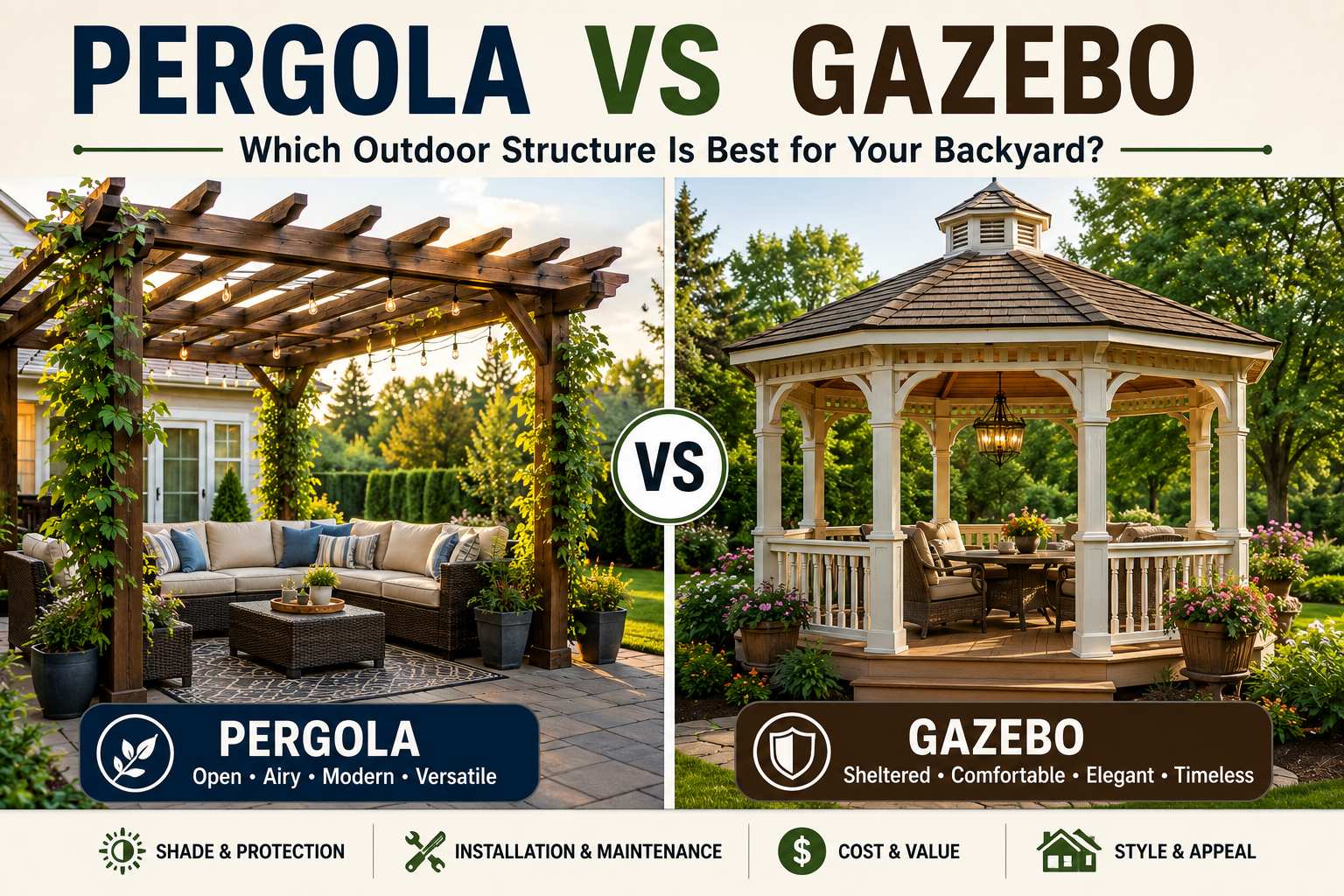
If you are planning to upgrade your outdoor living space, you need to understand the key differences between a pergola and a gazebo. Both structures add beauty, shade, and value to your property, but they serve different purposes and offer unique advantages.
Whether you are designing a relaxing backyard retreat, creating a dedicated dining area, or boosting your home’s curb appeal, choosing between a pergola and a gazebo depends on your budget, style, climate, and intended use.
In this guide, we will compare pergola vs gazebo in detail, covering design, materials, cost, maintenance, installation, durability, and much more.
What Is a Pergola?
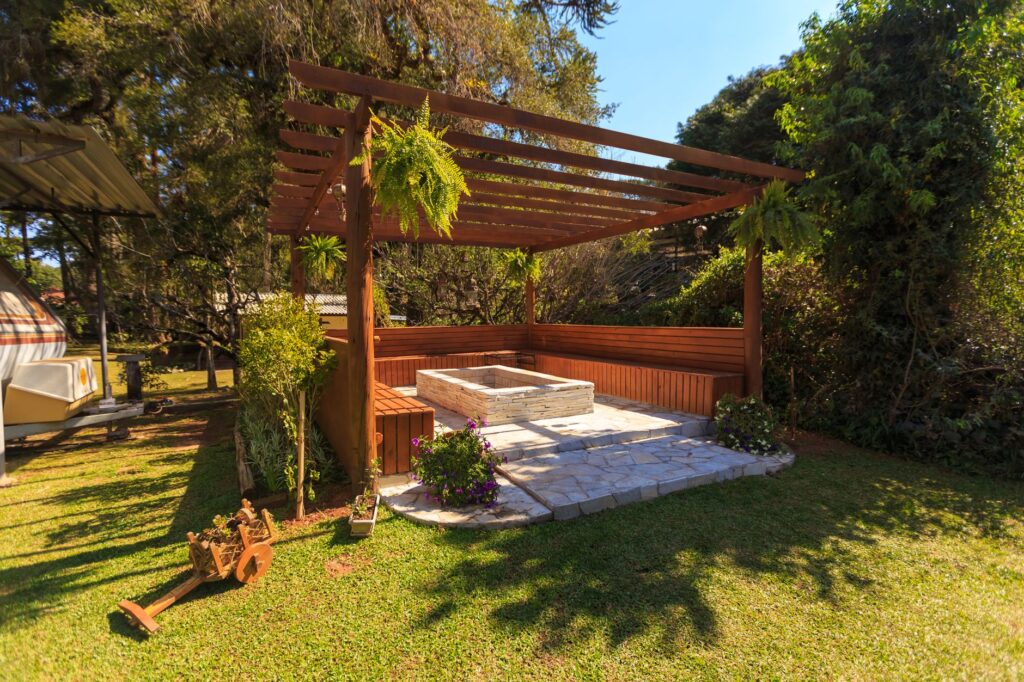
A pergola is an outdoor structure consisting of vertical posts supporting an open roof made of cross-beams or slats. Unlike fully covered structures, pergolas provide partial shade while allowing natural sunlight and airflow to pass through.
Pergolas have become immensely popular in modern landscaping because they define elegant outdoor living areas without making the space feel enclosed.
Key Features of a Pergola
- Open-Roof Design: Slatted roof creates a decorative shadow pattern.
- Minimalist Aesthetic: Fits seamlessly into modern and contemporary architecture.
- Excellent Airflow: Keeps spaces cool without trapping heat.
- Plant-Friendly: Highly customizable with climbing vines and hanging plants.
- Canopy Integration: Supports retractable fabric canopies or shade sails.
- Versatile Placement: Ideal for patios, decks, poolside areas, and gardens.
Pergolas work especially well in warm climates where homeowners want filtered sunlight rather than complete weather enclosure.
What Is a Gazebo?
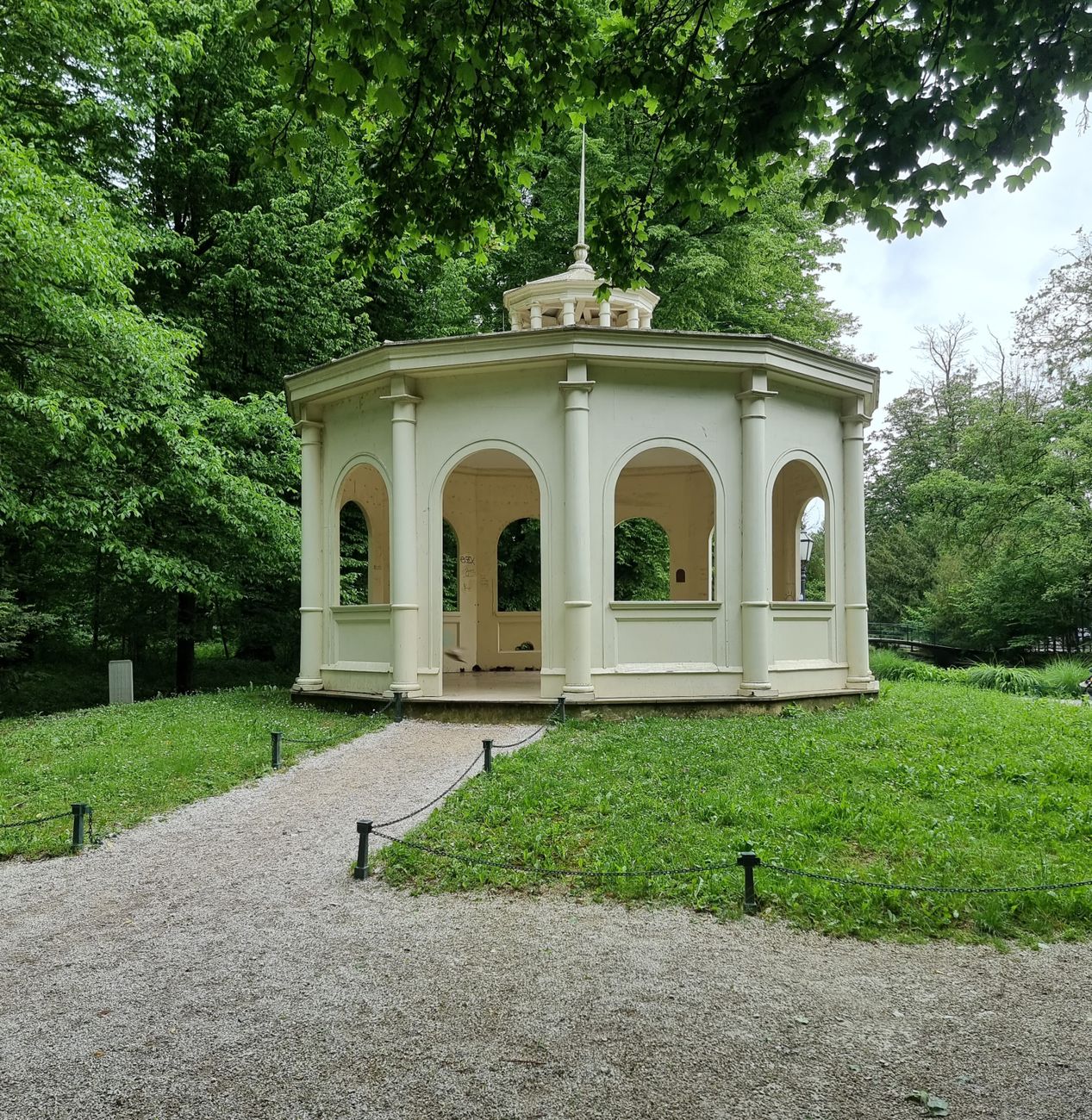
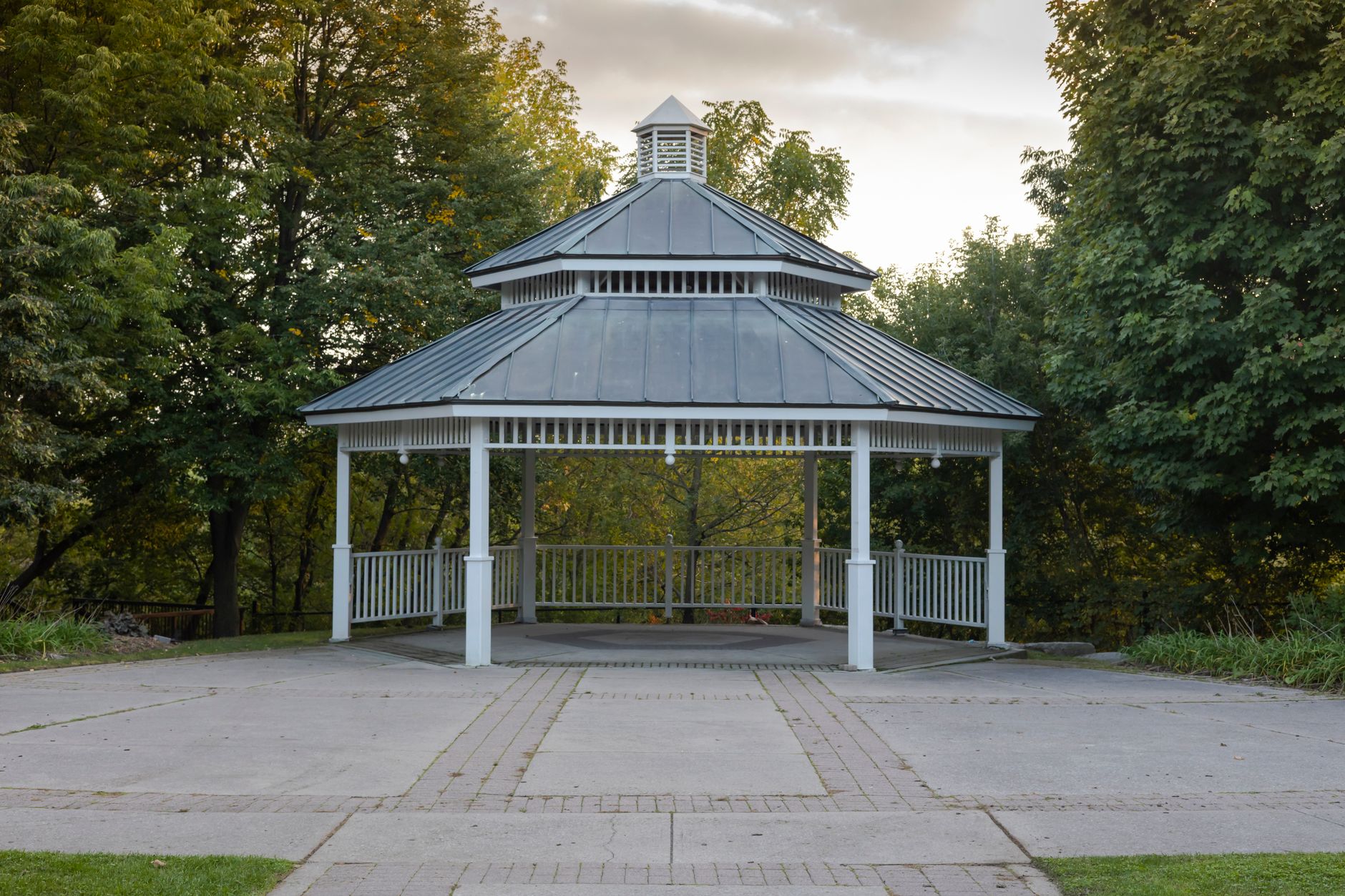
A gazebo is a freestanding structure featuring a fully covered, solid roof and open or lattice-enclosed sides. While traditionally octagonal or round, modern gazebos now come in square, rectangular, and oval designs.
When comparing a pergola vs a gazebo, the gazebo provides full protection from the sun, rain, and elements, making it suitable for year-round outdoor use.
Key Features of a Gazebo
- Solid Roof Structure: Delivers complete shade and full rain protection.
- Traditional & Elegant Architecture: Serves as an immediate backyard focal point.
- Defined Seating Space: Ideal for outdoor dining sets or built-in benches.
- All-Weather Entertaining: Suitable for hosting guests regardless of light rain or harsh sun.
Gazebos often become the centerpiece of residential gardens due to their classic, pavilion-style appearance.
Pergola vs Gazebo: Quick Comparison
| Feature | Pergola | Gazebo |
| Roof Type | Slatted / Beams (Open) | Solid / Pitched (Covered) |
| Shade Level | Partial (Filtered) | Complete (Full Shade) |
| Rain Protection | Minimal (Unless upgraded) | Excellent |
| Airflow | Excellent | Good |
| Average Cost | Lower ($1,500 – $7,000+) | Higher ($3,000 – $12,000+) |
| Installation | Easier / Faster | Complex / Multi-step |
| Maintenance | Low to Moderate | Moderate to High |
| Design Style | Modern & Minimalist | Traditional & Classic |
| Best For | Patios, decks, climbing plants | Outdoor dining, all-weather gatherings |
Design Differences
The most noticeable difference when comparing a pergola vs gazebo is the architectural roof design.
Pergola Design
Pergolas emphasize openness and clean structural lines. Their beam-style roofs create striking geometric shadows while maintaining a strong connection with nature.
Modern Pergola Upgrades:
- Integrated LED lighting
- Retractable fabric roofs or louvers
- Privacy screens & outdoor curtains
- Hanging planters & ceiling fans
Gazebo Design
Gazebos are designed for shelter, warmth, and full coverage. They offer an “outdoor room” feel that feels protected from external weather elements.
Traditional Gazebo Features:
- Pitched or cupola roofs
- Decorative railings & cupolas
- Built-in wooden flooring or benches
- Weather-resistant asphalt or metal roofing
Which Structure Offers Better Shade?
Pergola Shade
Pergolas offer filtered sunlight. The exact amount of shade depends on the beam spacing, sun angle, and added accessories like climbing vines or fabric canopies. They are best for spring and fall climate conditions, garden seating, and decorative landscaping.
Gazebo Shade
Gazebos provide full shade all day long. Their solid roof completely blocks overhead sunlight, making them the superior choice for summer afternoons, family BBQs, outdoor dining, and high-heat environments.
Weather Protection Comparison
- Pergolas: Traditional open pergolas offer minimal protection against rainfall. However, modern designs can be upgraded with polycarbonate panels, waterproof canvas canopies, or motorized louvered systems.
- Gazebos: Gazebos excel in weather resistance. Their solid pitched roofs easily shield you against rain, heavy UV rays, falling leaves, snow, and bird droppings.
Materials Used for Pergolas and Gazebos
The material you select directly impacts aesthetics, lifespan, upkeep, and budget.
Wood
- Pros: Timeless natural charm, easy customization, high aesthetic appeal (Cedar, Redwood, Pressure-Treated Pine).
- Cons: Requires regular staining, sealing, or painting; vulnerable to moisture and insects over time.
Aluminum
- Pros: Lightweight, rust-resistant, low maintenance, sleek modern finish, long lifespan.
- Cons: Higher upfront cost than basic wood; can look industrial if not styled properly.
Vinyl / PVC
- Pros: Zero painting required, rot- and insect-proof, easy to clean with water, highly durable.
- Cons: Less natural appearance; limited color customization compared to painted wood.
Cost Comparison: Pergola vs Gazebo
Budget is often a deciding factor when weighing your options. In general, pergolas are more affordable because they require fewer raw materials and feature a simpler roof assembly.
Typical Pergola Costs
- Basic DIY Kit: $1,500 – $3,500
- Mid-Range Custom Build: $3,500 – $7,000
- Luxury Motorized/Custom Pergola: $8,000 – $20,000+
Typical Gazebo Costs
- Basic Soft-Top/Metal Kit: $3,000 – $6,000
- Premium Wooden Gazebo: $6,000 – $12,000
- Luxury Custom Gazebo: $12,000 – $30,000+
Installation Comparison
Installing a Pergola
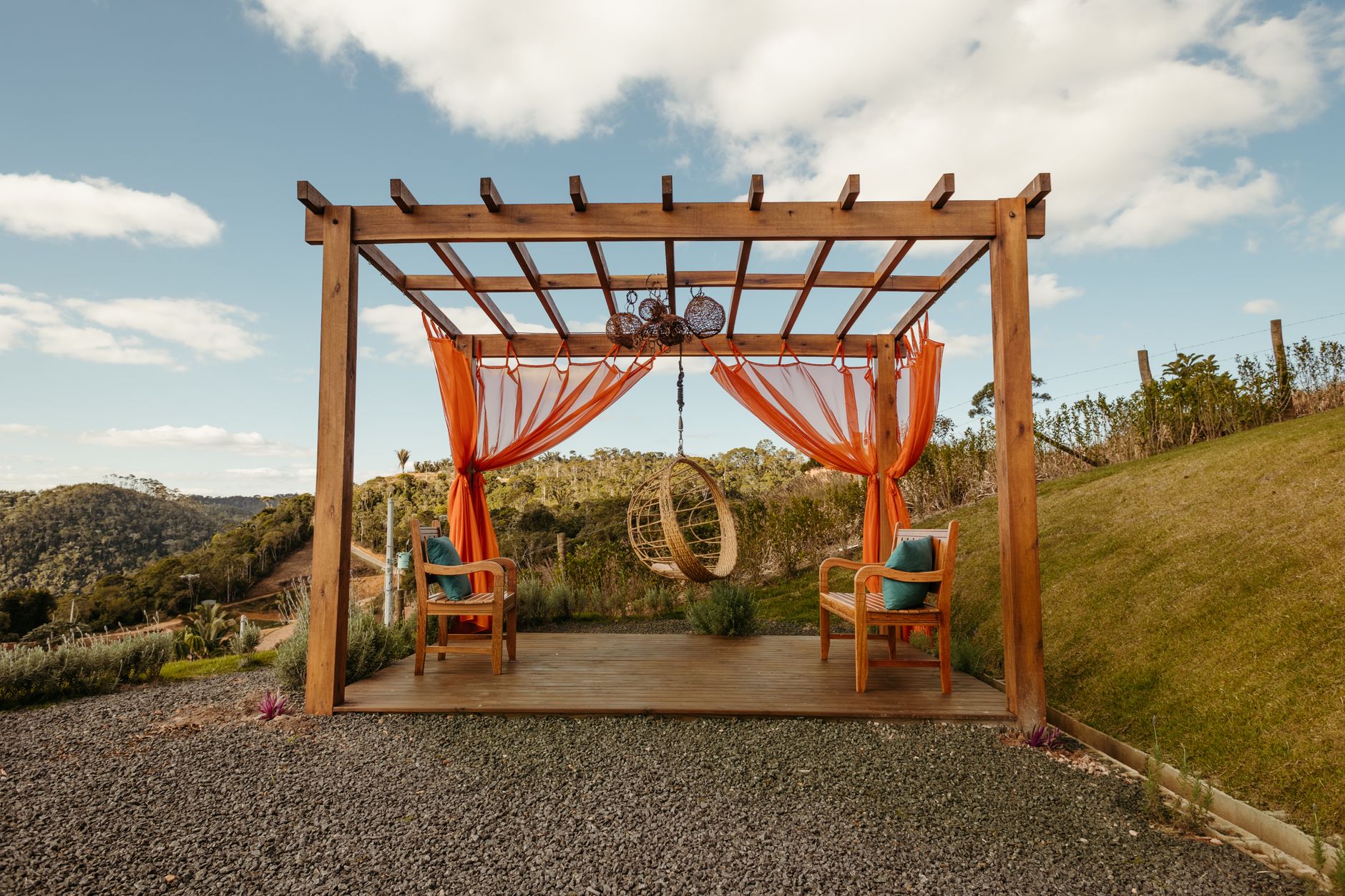
Pergolas are generally easier and faster to install. Many homeowners purchase DIY kits that come pre-cut with complete hardware.
- Clear and level the installation site.
- Secure post anchors into concrete or deck framing.
- Erect vertical support posts.
- Mount main support beams and cross-rafters.
- Apply stain, paint, or protective coatings.
- DIY Time: 1–3 Days
- Pro Time: 1–2 Days
Installing a Gazebo
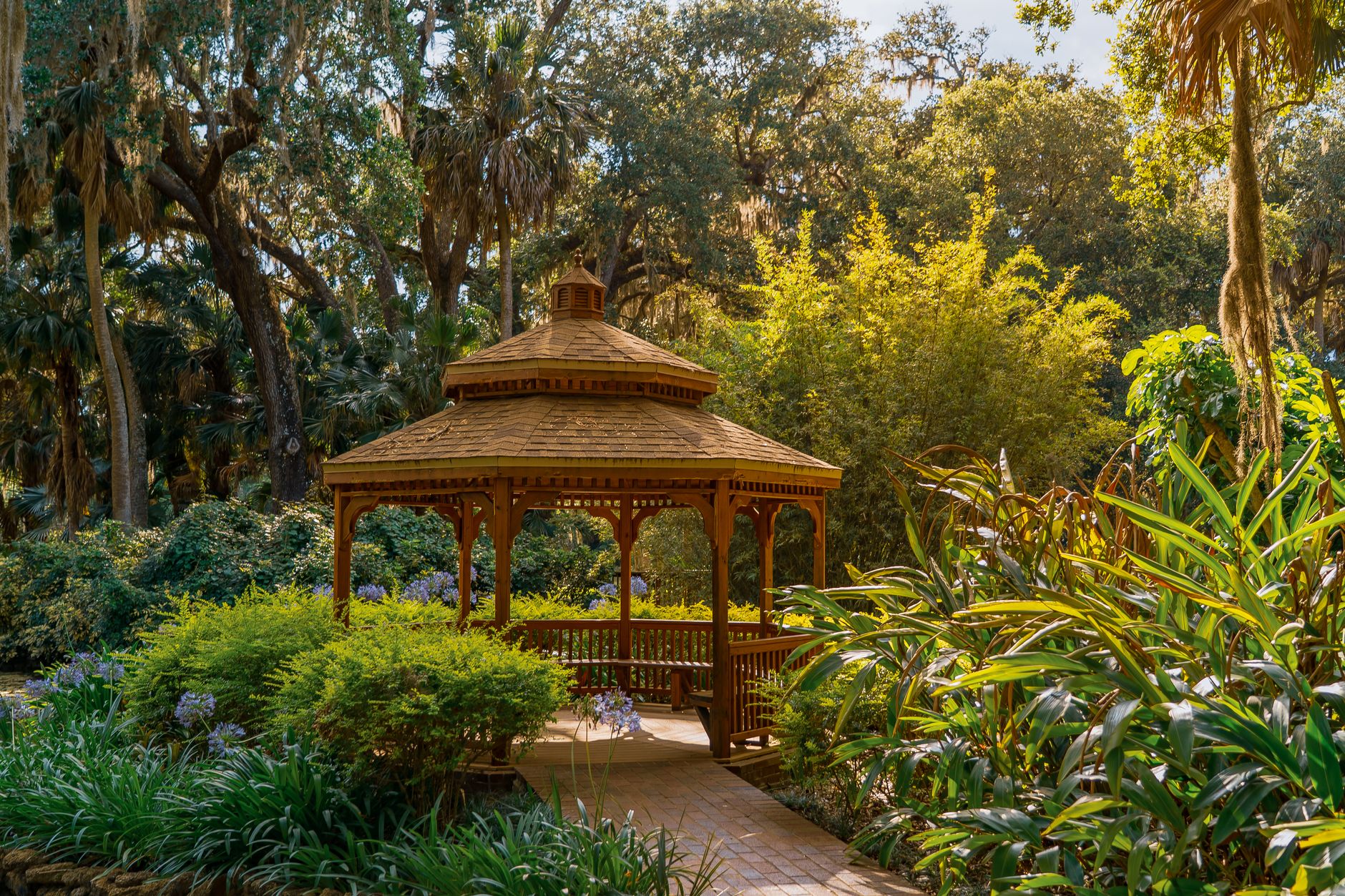
Gazebos require meticulous planning due to their heavy, enclosed roof structures. Installation often involves laying concrete foundations, constructing floor decking, framing pitched roofs, and installing shingles or metal roof panels.
- DIY Time: 2–5 Days
- Pro Time: 2–7 Days (Large custom builds may take weeks)
Maintenance & Durability
Expected Lifespan
- Wood: 15–25 Years (Requires regular sealing/staining)
- Vinyl: 20–35 Years (Requires simple soap & water wash)
- Aluminum/Steel: 25–40+ Years (Requires hardware inspection & rust prevention)
Customization Options
Pergola Ideas
- Motorized louvered roof panels
- Integrated smart LED lighting
- Outdoor curtains and drop-down shade screens
- Climbing plants (wisteria, jasmine, grapevines)
- Overhead ceiling fans & infrared heaters
Gazebo Ideas
- Built-in perimeter benches or outdoor kitchens
- Screened mesh walls or glass panels for bug protection
- Overhead chandeliers or lantern fixtures
- Integrated electrical outlets and audio systems
- Center fire pits or hot tub enclosures
Best Uses for Each Structure
1) Best Uses for a Pergola
- Defining an open-air patio or deck lounge
- Framing garden walkways and pathways
- Covering poolside lounge chairs or hot tubs
- Supporting flowering vines and green canopy coverage
2) Best Uses for a Gazebo
- Outdoor dining rooms and family gatherings
- Backyard wedding ceremonies or focal points
- All-weather reading or meditation retreats
- Protected outdoor kitchens and BBQ stations
Pergola vs Gazebo for Small Backyards
- Choose a Pergola if: You want to maintain an open, airy visual flow. Pergolas do not block sightlines, making small spaces feel larger and more open.
- Choose a Gazebo if: You need full shelter and are comfortable using the structure as the primary focal point of the yard.
Home Value & Curb Appeal
Both structures boost home value by increasing functional outdoor living space:
- Pergolas appeal strongly to modern buyers who favor clean architectural lines, open-air entertainment, and budget-friendly upgrades.
- Gazebos appeal to buyers seeking luxury, classic landscaping, and immediate high-end curb appeal.
Pros and Cons Summary
Pergola
- Pros: Affordable, modern aesthetic, excellent airflow, easy installation, great for climbing plants.
- Cons: Poor rain protection, limited shade without added accessories.
Gazebo
- Pros: 100% shade, complete rain/weather protection, highly durable, usable year-round.
- Cons: Higher cost, complex installation, requires more backyard footprint.
Common Mistakes to Avoid
- Ignoring Local Weather: Installing an open pergola in a region with high annual rainfall will limit your usage days.
- Forgetting Maintenance Costs: Choosing wood without factoring in the time or expense of staining every 2–3 years.
- Skipping Permits: Failing to check local building codes or HOA guidelines before constructing permanent fixtures.
- Underestimating Scale: Choosing a structure that is too large for a small yard or too tiny to fit your outdoor furniture.
Frequently Asked Questions (FAQs)
What is the main difference between a pergola and a gazebo?
The main difference is the roof structure. Pergolas have an open, slatted beam roof that lets light through, while gazebos feature a solid, fully covered roof for complete shelter.
Which is cheaper to build: a pergola or a gazebo?
Pergolas are generally less expensive than gazebos because they require fewer materials, feature simpler roof designs, and demand less labor to construct.
Can a pergola protect you from rain?
A standard slatted pergola does not block rain. However, you can make it water-resistant by installing a retractable waterproof canopy, polycarbonate roof panels, or motorized louvers.
Final Verdict: Which Is Right for You?
Choosing between a pergola and a gazebo ultimately comes down to your personal lifestyle, budget, and climate:
- Go with a Pergola if you love modern design, prefer filtered sunlight and open breezes, want a cost-effective patio upgrade, or love climbing garden plants.
- Go with a Gazebo if you need total shelter from rain and harsh sun, host frequent outdoor meals, and want a classic, sheltered retreat you can use year-round.