

The best living room paneling ideas give a room something it was missing: a little structure, a warmer backdrop, or a sense that the furniture belongs together. You do not need a grand house or elaborate woodwork to achieve that effect. A few carefully spaced molding frames can make a plain wall feel considered, while a single wood-paneled section can bring texture to a room filled with smooth surfaces.
The challenge is choosing a treatment that suits your home rather than copying a beautiful photograph without considering its proportions. These fifteen approaches cover traditional, modern, cottage, and small-space settings, followed by practical advice on materials, layout, color, and installation planning.
Start With the Room, Not the Panel Style
Before comparing living room paneling ideas, look at the features already in place. Notice ceiling height, window positions, door trim, the fireplace, and the largest pieces of furniture. Paneling should make sense around those elements.
A wall divided by several doors may suit a simple lower treatment better than oversized decorative frames. A long, uninterrupted wall behind a sofa can carry a stronger pattern.
Also decide what you want the paneling to do. Is it adding warmth, defining a seating area, or giving an otherwise plain room more detail? One clear purpose makes it easier to avoid unnecessary layers.
Take a straight-on photograph and sketch two options over it. You will often notice awkward lines or competing focal points before buying anything.
1. Add Classic Picture-Frame Molding
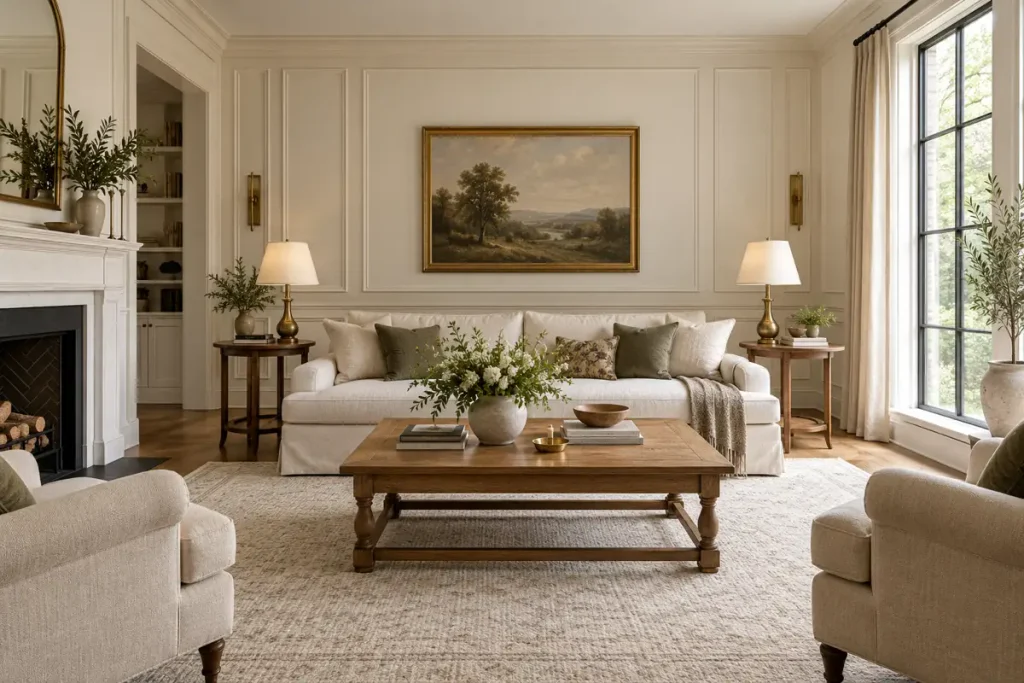
Picture-frame molding creates rectangular outlines on the wall using narrow trim. It brings architectural detail without covering the entire surface with boards.
For a balanced arrangement behind a sofa, try one generous central frame with narrower frames on either side. Alternatively, repeat equal rectangles across the wall if the furniture layout is less symmetrical.
Keep the gaps consistent and consider how the frames relate to existing baseboards and door casings. The molding should look connected to the room rather than added wherever space remained.
Paint the trim and wall the same color for a quiet finish. Cream, warm white, and muted taupe allow the shadows to provide most of the decoration.
2. Use Oak Slats for a Modern Accent
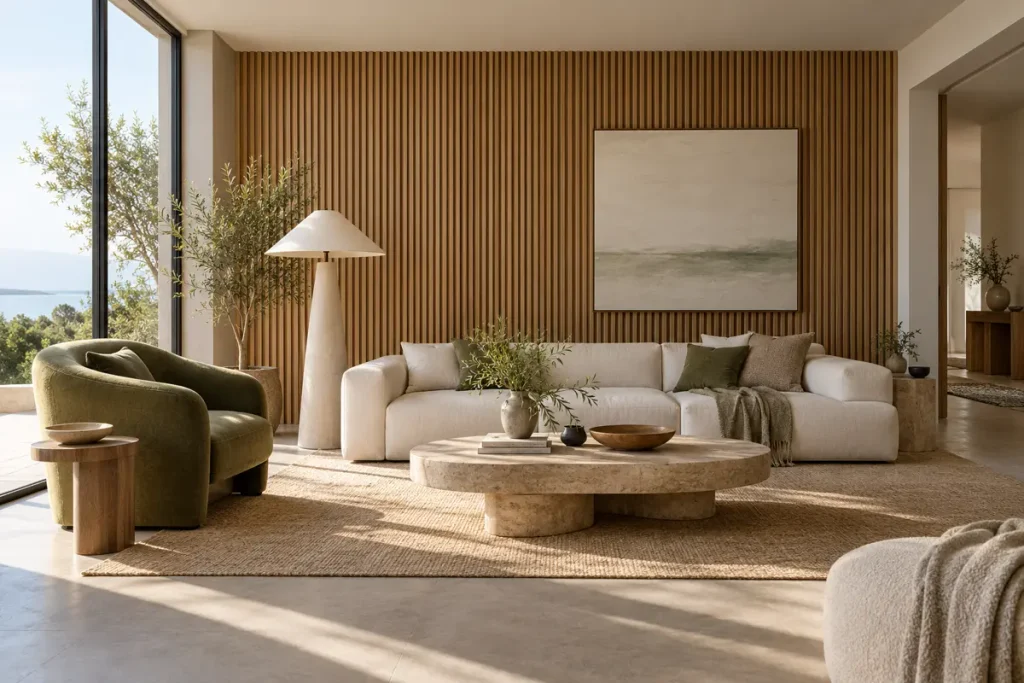
Natural oak slats introduce grain, rhythm, and a warmer surface behind contemporary furniture. They work particularly well alongside linen upholstery, stone-look tables, and restrained black details.
Among living room paneling ideas, this is a strong choice when you want texture without adding several paint colors. Start with one wall or a clearly defined section behind the main seating area.
Check the appearance of the backing as carefully as the wood. Dark backing produces more contrast between the slats; a lighter background can feel softer.
Some slatted products are designed for sound absorption, but performance depends on the tested product and installation. Decorative slats alone should not be described as soundproofing. Manufacturer guidance can specify mounting methods needed for particular acoustic results.[1]
3. Choose Board and Batten for Simple Structure
Board-and-batten treatments use flat surfaces with strips arranged vertically, sometimes with horizontal rails. The pattern can feel traditional or contemporary depending on spacing and finish.
Wider sections tend to create a calmer backdrop, while a dense grid becomes more decorative. In a busy family room, a straightforward arrangement often gives furniture and artwork more breathing room.
Try warm greige behind a neutral sofa or a muted blue-green beside walnut furniture. A single-color finish keeps the geometry cohesive.
Plan the layout from the whole wall rather than installing battens at a convenient interval and discovering a narrow leftover section beside a door.
4. Try Half-Height Wainscoting
Lower-wall paneling adds detail while leaving the upper wall available for art, color, or wallpaper. It can be a useful compromise when full-height treatment feels too formal.
Choose the top line in relation to the room. Consider window ledges, furniture backs, artwork, and electrical fittings rather than relying on one universal height.
These living room paneling ideas work especially well when the lower section and the wall above have a gentle contrast. Think soft mushroom below warm white, or dusty green beneath a pale neutral.
Test the proposed line with painter’s tape. Sit on the sofa as well as viewing it from the doorway; the proportions should work from both positions.
5. Bring Cottage Character With Beadboard
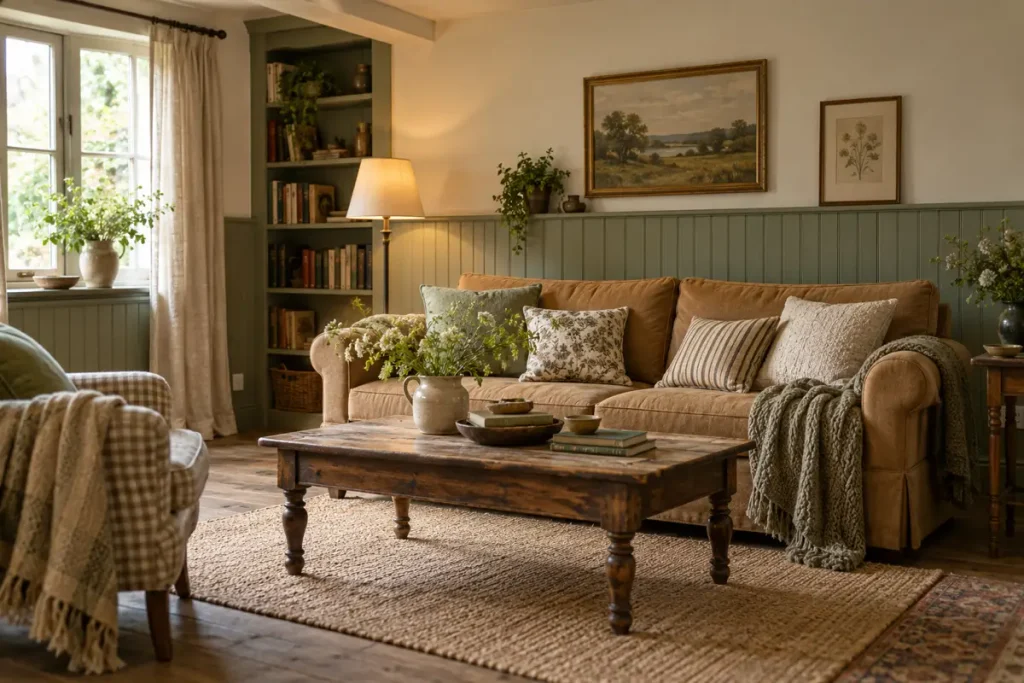
Beadboard has narrow vertical grooves that create a small-scale, repetitive texture. It feels at home with relaxed furniture, painted wood, woven baskets, and informal collections.
Use it below a simple cap rail for a familiar cottage treatment. A pale green or creamy white finish keeps the effect light.
The closely spaced grooves already provide detail, so the room may need fewer competing patterns. Try pairing it with a plain sofa and one patterned cushion rather than several heavily printed textiles.
Check samples before ordering. Bead spacing, board profile, and the look of sheet-panel joints can differ considerably between products.
6. Paint Paneling a Deep, Rich Color
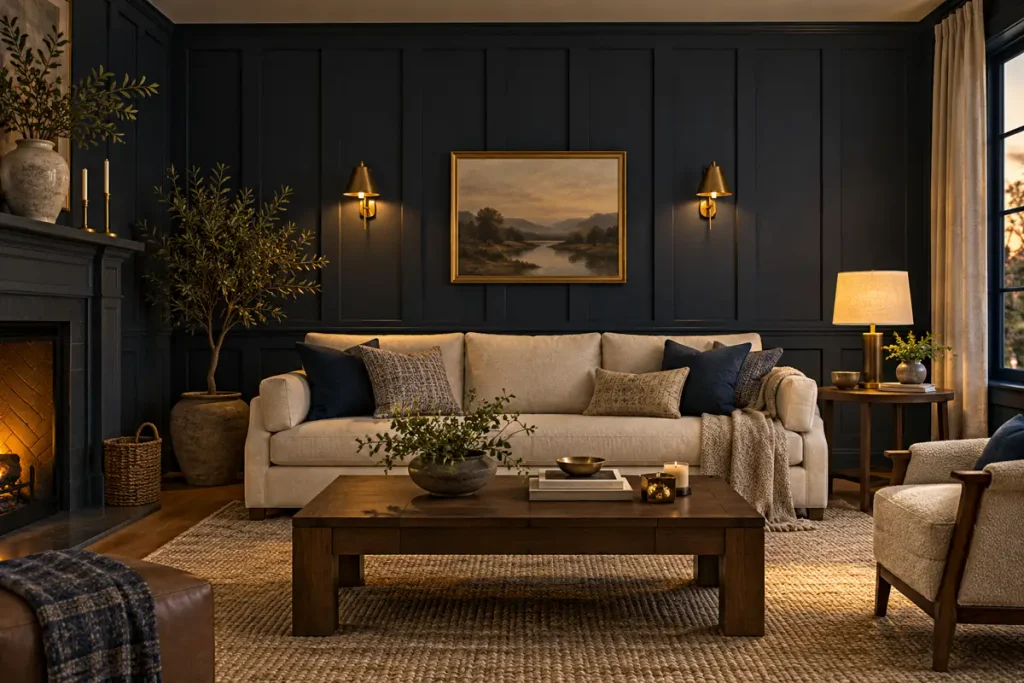
Navy, forest green, charcoal, and brown can turn plain paneling into a distinctive backdrop. The raised details catch light and prevent the wall from looking completely flat.
Dark living room paneling ideas are most convincing when you also consider lighting and contrast. A pale sofa, a light rug, and a few warm lamps can make the arrangement feel balanced.
Try a large sample on the actual wall and look at it in daylight and after sunset. A color that feels restful beside a window may look much heavier in a dim corner.
Keep nearby finishes deliberate. Too many unrelated dark woods can make the scheme feel muddled rather than layered.
7. Keep Small Rooms Tonal and Uncluttered
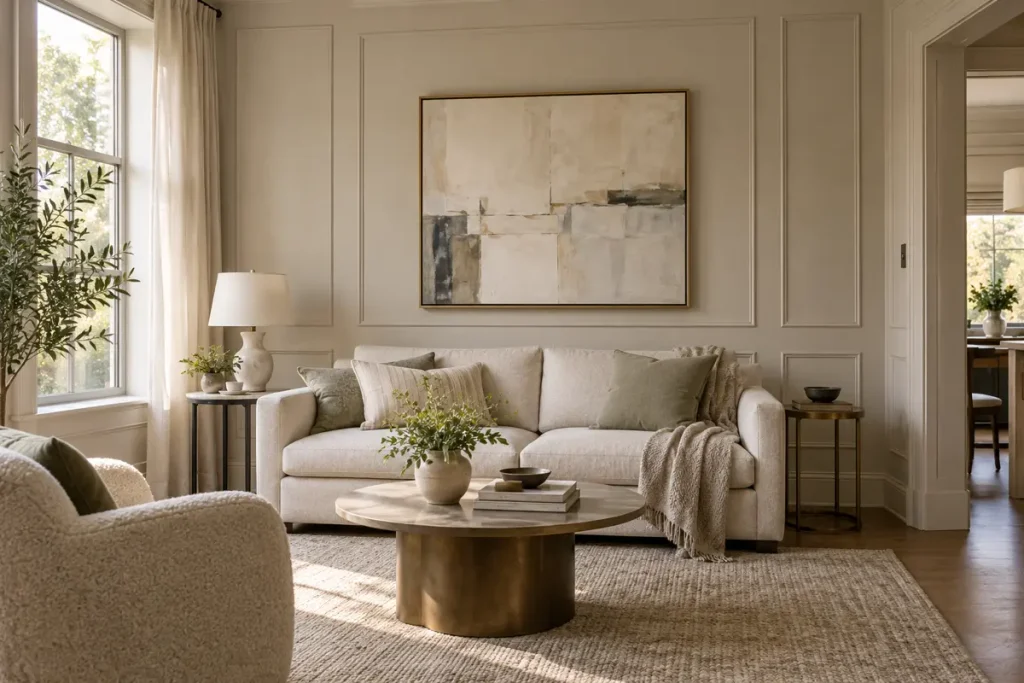
Paneling can work in a compact room, but the pattern needs room to breathe. A few broad rectangles are often easier on the eye than many small boxes.
Paint the wall and molding together, and consider a similar tone for the baseboard. This reduces sharp visual breaks while preserving the texture.
Choose furniture that allows you to see some of the finished wall. A compact sofa, slim side tables, and one substantial artwork can feel more composed than several small accessories.
Paneling will not physically enlarge the room. The aim is to create a more coherent backdrop without adding visual clutter or unnecessary depth.
8. Frame the Sofa Instead of Covering Every Wall
A focused treatment behind the sofa can give the seating area a finished look without committing the entire room to one style.
For living room paneling ideas on a limited budget, this approach also reduces the surface area involved. You can give more attention to neat edges and well-considered proportions.
Make the treatment relate to the seating arrangement. An extremely narrow panel section can look disconnected behind a long sofa, while an overly wide design may compete with adjacent doorways.
You do not have to match the sofa width exactly. Use tape to compare several layouts, including how each looks with lamps and side tables in place.
9. Combine Lower Panels With Wallpaper
Painted paneling beneath wallpaper creates two distinct layers: a structured base and a decorative upper section.
A small botanical print can soften simple flat panels, while a quiet stripe pairs well with traditional trim. If the wallpaper is busy, keep the molding profile restrained.
Choose the panel color from a secondary tone in the paper rather than automatically matching its darkest shade. That can create a softer connection between the surfaces.
Before installation, check the planned cap rail against switches, window trim, and artwork. The join between the two finishes should look intentional around the entire room.
10. Use Horizontal Boards for a Relaxed Look
Horizontal planks can create an informal backdrop suited to coastal, farmhouse, or contemporary interiors. The final mood depends on the board profile and surrounding furniture.
Wide boards with subtle joints usually feel quieter than highly contrasting gaps. A soft painted finish works with casual upholstery, while natural wood brings more visible grain.
To keep the room from becoming overly themed, combine the boards with simple furniture rather than adding every rustic accessory at once.
Look closely at where the runs finish beside windows and doors. Those transitions matter as much as the uninterrupted wall, especially when the paneling has substantial thickness.
11. Build a Calm Backdrop Around the Television
A television is already a strong visual element, so its surrounding wall often benefits from restraint. Flat panels or a simple slatted section can make the screen feel part of a planned arrangement.
Practical living room paneling ideas for a media wall begin with equipment access, cable routes, ventilation, and mounting requirements. Resolve those details before settling the decorative pattern.
A screen should be supported by an appropriate mounting system and suitable structure. Do not assume decorative paneling can carry it.
If the arrangement includes a fireplace, check the appliance instructions and required clearances before specifying nearby materials. Wood-based decoration remains combustible; a stylish example photograph does not establish a safe installation.[2]
12. Choose Painted Shaker-Style Panels
Shaker-inspired panels use simple rectangles and restrained profiles. They are useful when ornate molding feels too formal but a completely plain wall looks unfinished.
Try fewer, larger sections for a contemporary interpretation. A soft clay, muted olive, or warm neutral can create character without a dramatic color contrast.
Among living room paneling ideas, this approach is flexible enough to sit beside both traditional armchairs and cleaner modern furniture.
Avoid adding extra rails simply to fill empty space. The appeal comes from proportion and simplicity. Where possible, align the panel arrangement with the wall’s architectural features rather than every movable object.
13. Introduce Walnut for a Warmer, Moodier Scheme
Walnut tones bring a deeper brown backdrop that pairs well with cream upholstery, aged brass, and earthy textiles. They can work in a reading corner or a room where you want a more enclosed, evening atmosphere.
Use a sample beside the floor before committing. Two wood finishes do not need to match, but their undertones should feel compatible.
A whole room in dark wood can be visually demanding. Start with an accent wall if you are unsure, and balance it with lighter surfaces.
Check whether the product is solid timber, wood veneer, or a printed wood-effect finish. Those differences affect appearance, care, repair options, and installation.
14. Create a Panel-and-Art Arrangement
Art can be incorporated into the layout rather than added after all the trim is fixed. One large painting inside a generous frame-shaped section can give a sofa wall a clear center.
Lay out the artwork dimensions and molding together. Leave enough space around the picture so it does not appear squeezed into a decorative box.
For a less formal room, use one broad panel behind a small collection rather than putting every photograph into its own rectangle.
Remember that art may change. Avoid building an extremely specific arrangement around a piece you are unlikely to keep.
15. Refresh Existing Paneling Before Replacing It
Sometimes the most useful living room paneling ideas begin with what is already there. Older panels may need a different finish, a simpler surrounding scheme, or better lighting rather than removal.
Assess their condition first. Loose sections, damp patches, and damaged surfaces need investigation before decoration.
If painting is appropriate for the material, follow the coating manufacturer’s preparation and primer instructions. Do not assume that a glossy laminate, bare timber, and a previously painted surface need the same treatment.
Removing heavy curtains, updating a rug, or choosing a lighter sofa cover may also change how existing wood feels in the room. Compare those options before committing to a full replacement.
Choose Materials With the Finish in Mind
Paint-grade MDF, solid timber, veneer-faced products, and ready-made decorative sheets serve different purposes. Compare samples and installation instructions, not just product photographs.
Paint-grade material can suit a uniform painted scheme, while veneer is chosen for visible wood grain. Solid wood introduces its own movement and finishing considerations.
Ask about edge finishing, joints, suitable locations, cleaning, and any required acclimatization. These details vary by product.
Avoid covering an unresolved damp problem. Product guidance should determine whether the wall condition and room environment are suitable. For example, WoodUpp specifies a clean, dry, flat surface for its wall panels.[3]
Plan the Layout and Budget Together
The most successful living room paneling ideas are measured before they are purchased. Sketch each wall, including corners, outlets, switches, baseboards, and door casings.
For decorative frames, subtract the planned outer margins and gaps before dividing the remaining width into panels. Check the calculation against the actual trim width.
List the complete project materials: panels or molding, compatible fixings, adhesive where specified, filler, caulk where appropriate, primer, paint, finishing trims, and tools.
Allow for cuts based on the specific layout. Compare full quotes rather than panel price alone, and include preparation, installation, and finishing labor when requesting professional estimates.
Installation Details Worth Resolving Early
Read the instructions for the exact product you choose. An adhesive method suitable for one panel and wall surface may not suit another. WoodUpp, for example, provides separate installation guidance for adhesive, screws, and mounting on a supporting framework.[1]
Check wall condition and hidden-service locations before drilling or fastening. Avoid guessing around cables and pipes.
Panel thickness can also affect electrical outlets, trim transitions, and door clearances. Have electrical alterations assessed by a qualified electrician.
Finally, use a level reference rather than assuming ceilings and floors are perfectly straight. A careful dry layout gives you a chance to adjust uneven margins before the design becomes permanent.
Frequently Asked Questions
What paneling suits a modern living room?
Simple oak slats, broad flat panels, and restrained rectangular molding can suit modern interiors. Choose one clear pattern and keep the surrounding furniture and accessories relatively calm.
Can paneling work in a small space?
Yes. Consider shallow profiles, generous spacing, and a tonal paint scheme. Test the layout with tape so the pattern does not overwhelm a compact wall.
Do I need to panel the entire room?
No. A sofa wall, lower-wall treatment, or defined reading area can provide enough detail. Choose a clear stopping point and finish exposed edges neatly.
Are acoustic panels the same as soundproofing?
No. A product may absorb some sound within a room without preventing sound from passing between rooms. Check tested performance and installation requirements instead of relying on the word “acoustic.”
Is adhesive paneling easy to remove?
Not necessarily. Removal may damage paint, plaster, drywall, or the panels. Check the product and adhesive guidance, and obtain permission before altering a rental property.
Which paint finish should I choose?
Follow the coating guidance for the surface and consider cleaning needs. Test the sheen in the room: stronger sheen can emphasize imperfections, while very flat finishes may show handling marks.
Conclusion
The right living room paneling ideas bring the room’s architecture, furniture, and finishes into a more considered relationship. That might mean understated molding, warm oak slats, cottage beadboard, or a refreshed wall you already own.
Start with one purpose, test the proportions, and compare real samples in your own light. Careful spacing, suitable materials, and neat finishing usually contribute more to the result than an elaborate pattern. Choose a design you enjoy living with, not just one that looks impressive in a photograph.