
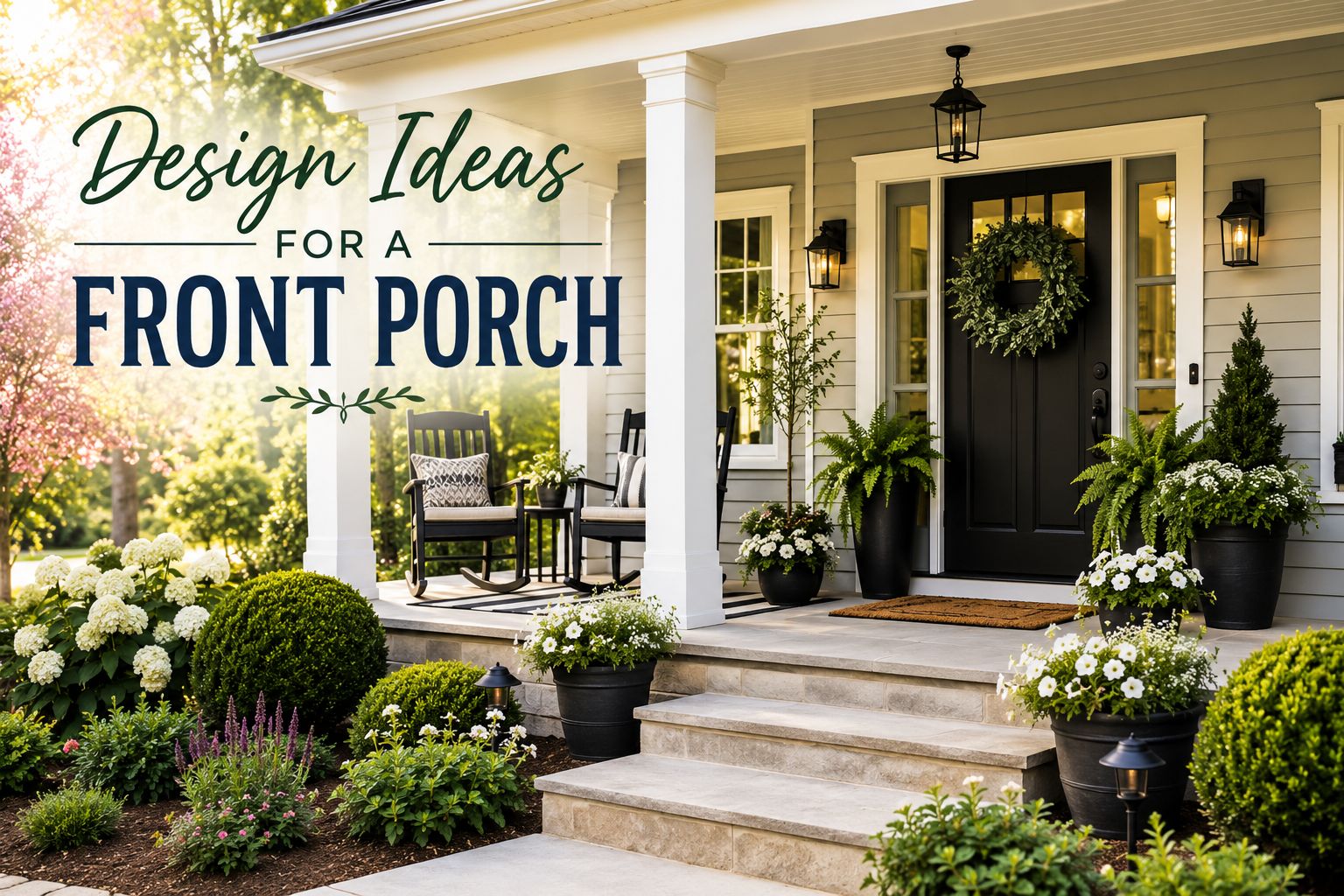
Your front porch is the first thing people see before they even ring the doorbell, and it says more about your home than almost any other single space. Whether you’re staring at a bare concrete slab or a covered porch that’s just never quite come together, good design ideas for a front porch can turn that overlooked stretch of exterior into one of the most-used rooms in the house. This guide walks through 30 practical, real-world ideas — from furniture and lighting to color, plants, and small-space tricks — so you can put together a porch that actually gets used, not just looked at.
Before you buy a single planter, it helps to think about your porch the way you’d think about any other room: what’s the function, what’s the mood, and what’s the budget? A few minutes of planning up front saves a lot of second-guessing later.
Start With an Honest Assessment
Not every porch needs the same treatment. A deep covered porch with room for a sofa is a very different project than a narrow stoop with barely enough room for two people to stand. Before you start pulling inspiration photos, walk outside and take stock of what you’re actually working with:
- Square footage — how much floor space do you realistically have to furnish?
- Coverage — is it covered by a roof, or fully exposed to sun and rain?
- Sun exposure — does it face north, south, east, or west, and how does that affect plant choices and fabric fading?
- Architectural style — is your home craftsman, colonial, farmhouse, ranch, or something else? Your porch should feel like it belongs to the house.
- Budget — a full furniture set and hardscaping project is a different scope than a few pots of flowers and a new door mat.
Once you know your starting point, the following design ideas for a front porch are much easier to filter down to the ones that actually make sense for your space. Think of this list less as a checklist to complete in full and more as a menu — pick the handful of ideas that solve your porch’s specific problems, whether that’s a lack of shade, a bare wall, or simply not enough reasons to sit outside.
30 Design Ideas for Your Front Porch
Furniture and Seating Ideas
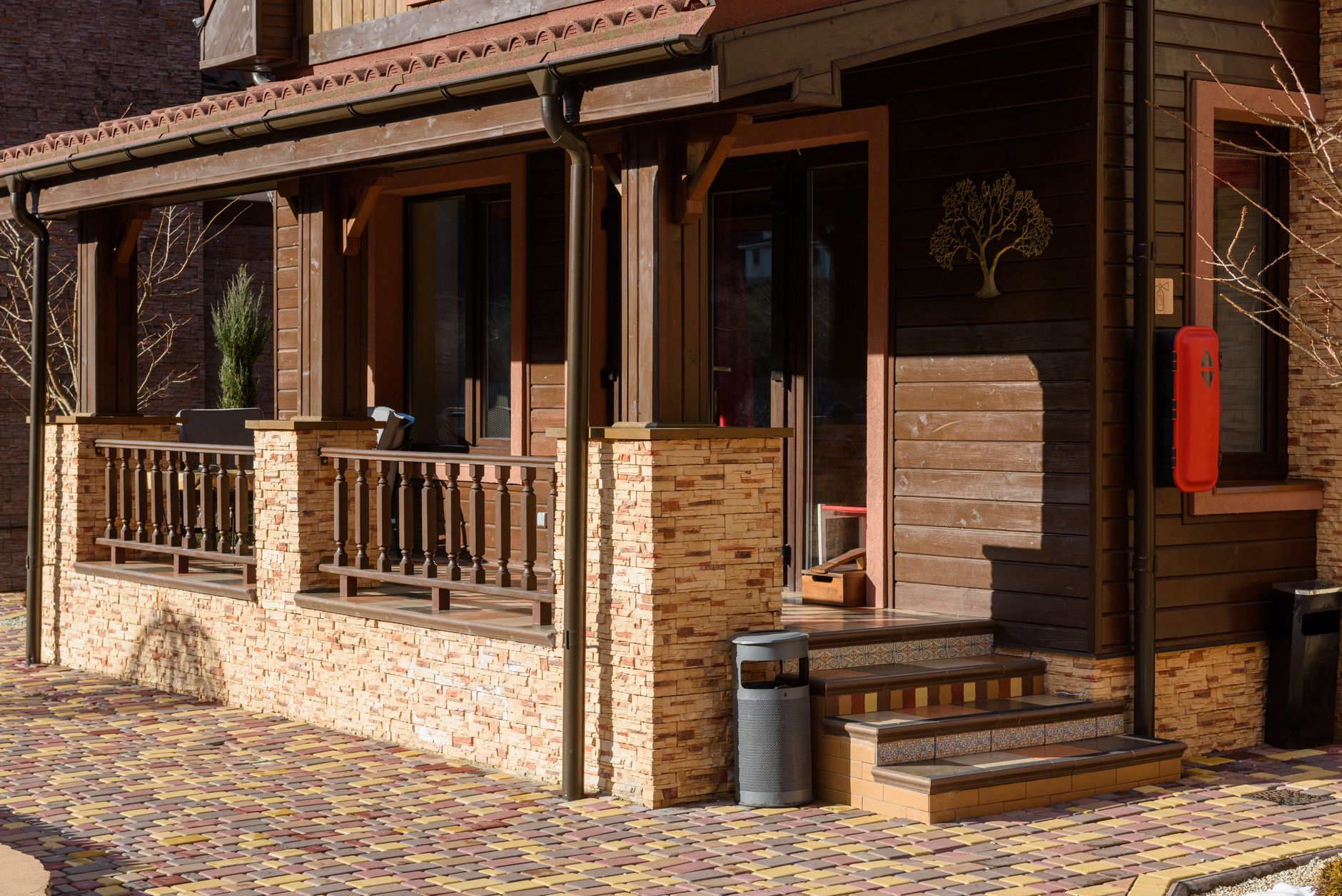
Furniture is usually where design ideas for a front porch start, since seating is what turns a walkway into a place people actually want to linger.
- Add a two-seat bench or loveseat. Even a compact porch usually has room for a small bench against the wall, which instantly makes the space feel like somewhere to sit rather than just pass through.
- Try a bistro set instead of a full sofa. Two chairs and a small round table take up less footprint than a sectional and work beautifully on narrow porches.
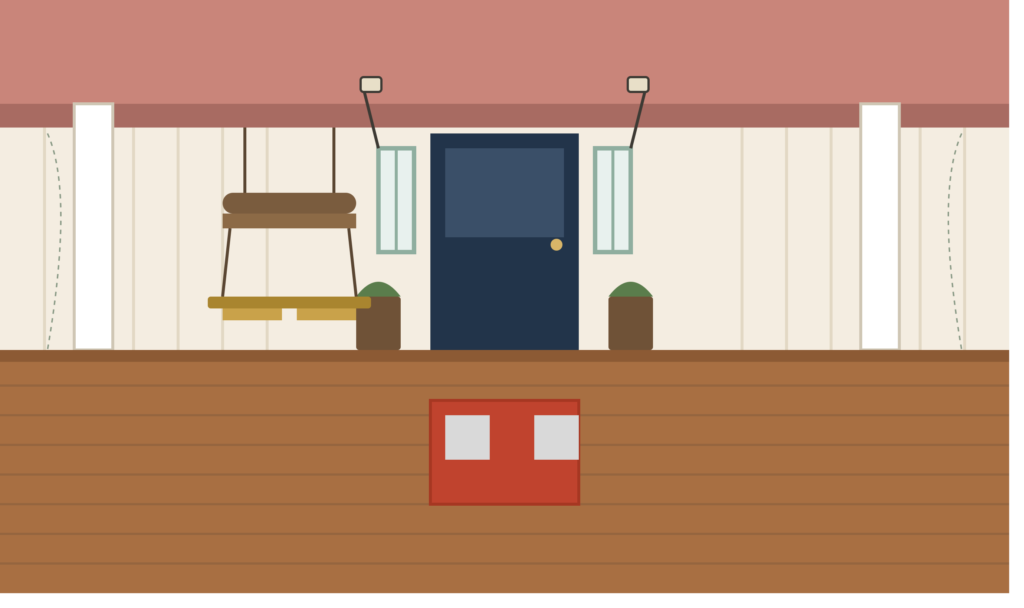
- Hang a porch swing. A classic swing, hung from ceiling hooks rated for the weight, adds movement and a nostalgic feel that photographs well and gets used constantly.
- Layer in a low coffee table. Whatever seating you choose, a small table for drinks or books makes the space feel finished rather than sparse.
- Choose weather-resistant materials. Teak, powder-coated aluminum, and resin wicker all hold up to sun and rain far better than untreated wood or fabric-heavy pieces.
- Add cushions in a durable outdoor fabric. Sunbrella and similar solution-dyed fabrics resist fading and mildew, which matters more than most people expect once summer hits.
Color and Paint Ideas
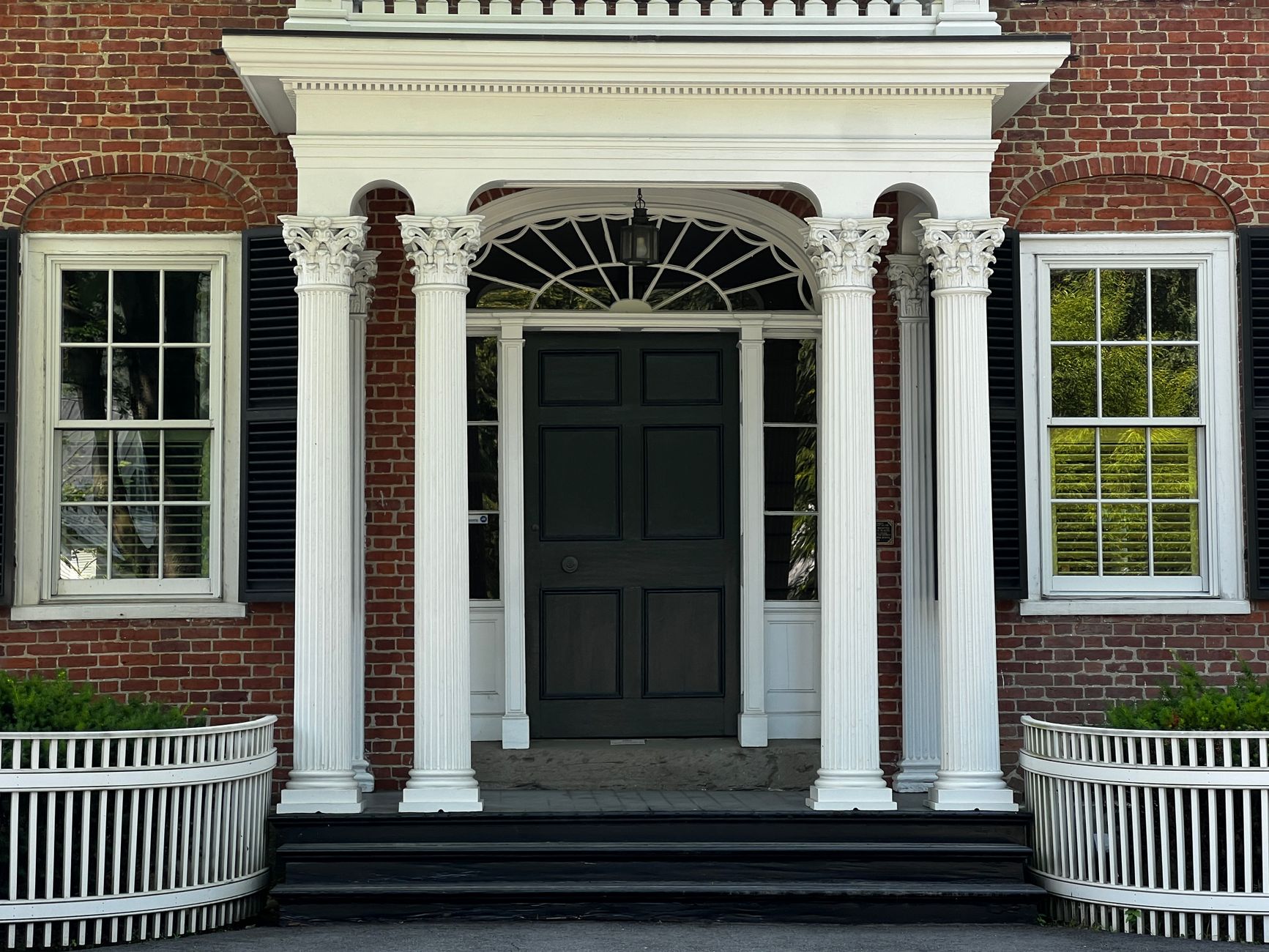
- Paint the front door a bold, saturated color. Black, deep green, navy, or a warm red instantly upgrades the entrance and gives the whole porch a focal point.
- Coordinate the ceiling with a soft “haint blue.” This Southern tradition of painting porch ceilings pale blue has a practical origin (it was believed to repel insects) and still looks fresh today.
- Update the trim. Crisp white trim against a colored door or siding makes everything read as more intentional, even if you change nothing else.
- Refresh the house numbers and mailbox. Small hardware updates in a matte black or brass finish tie the whole entrance together for very little cost.
- Paint or stain the porch floor. A painted floor in a soft gray, deep charcoal, or even a simple checkerboard pattern can transform tired concrete or wood decking.
Lighting Ideas
Some of the most effective design ideas for a front porch have nothing to do with furniture at all — lighting changes how the whole space feels, especially in the evening.
- Install a statement pendant or lantern. A single well-chosen fixture over the seating area does more for ambiance than several small lights scattered around.
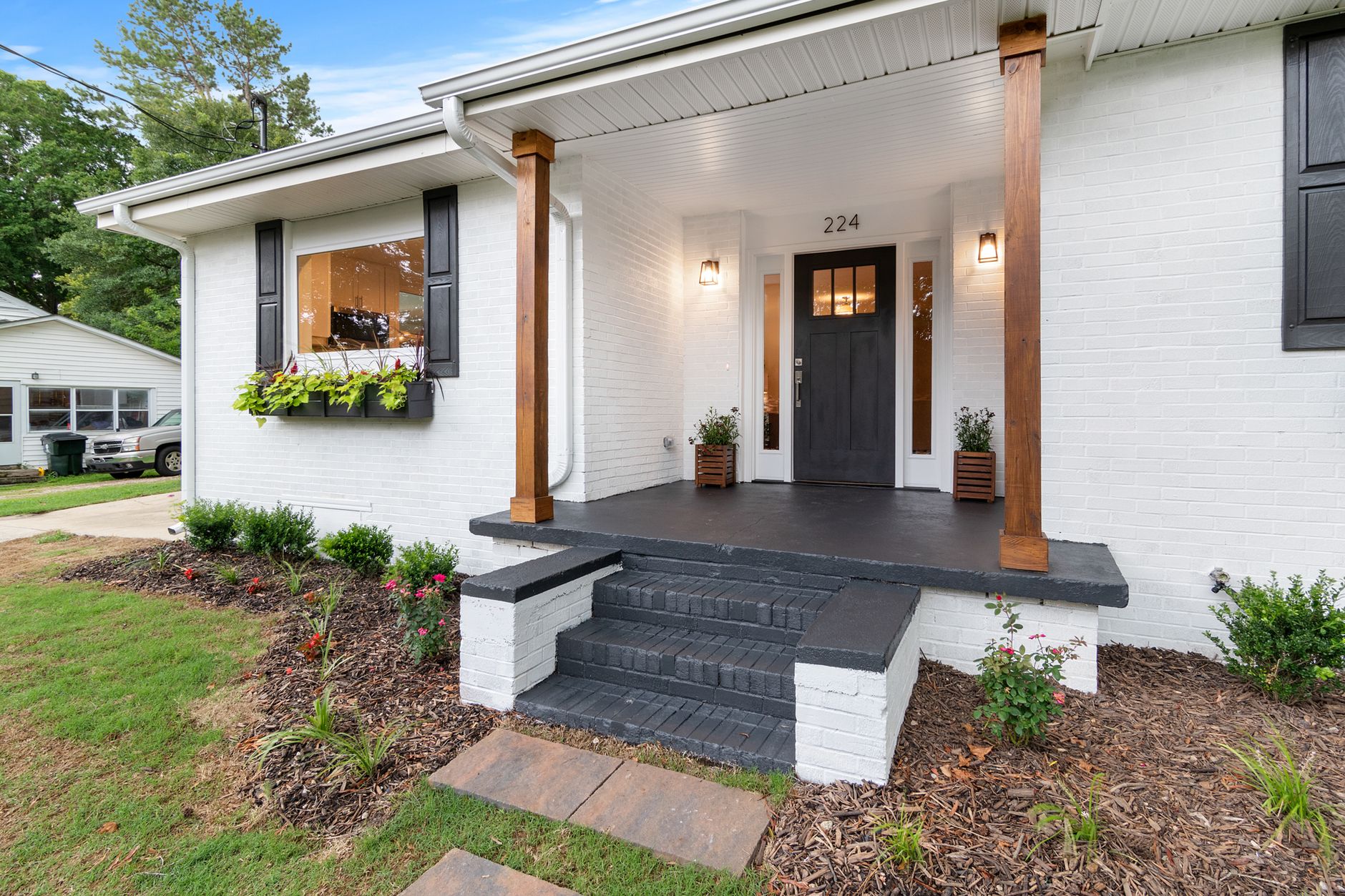
- Add wall sconces flanking the door. Symmetrical sconces are one of the most reliable ways to make an entrance feel balanced and welcoming.
- String warm-white bulb lights along the ceiling. Keep them tucked close to the ceiling rather than draped low, so the effect feels intentional rather than like leftover party decor.
- Light the steps. Small solar or low-voltage fixtures along the stairs improve both safety and curb appeal after dark.
- Use lanterns or candles on side tables. Battery-powered flameless candles are a simple way to add a warm glow without worrying about wind or safety.
Plants and Greenery Ideas
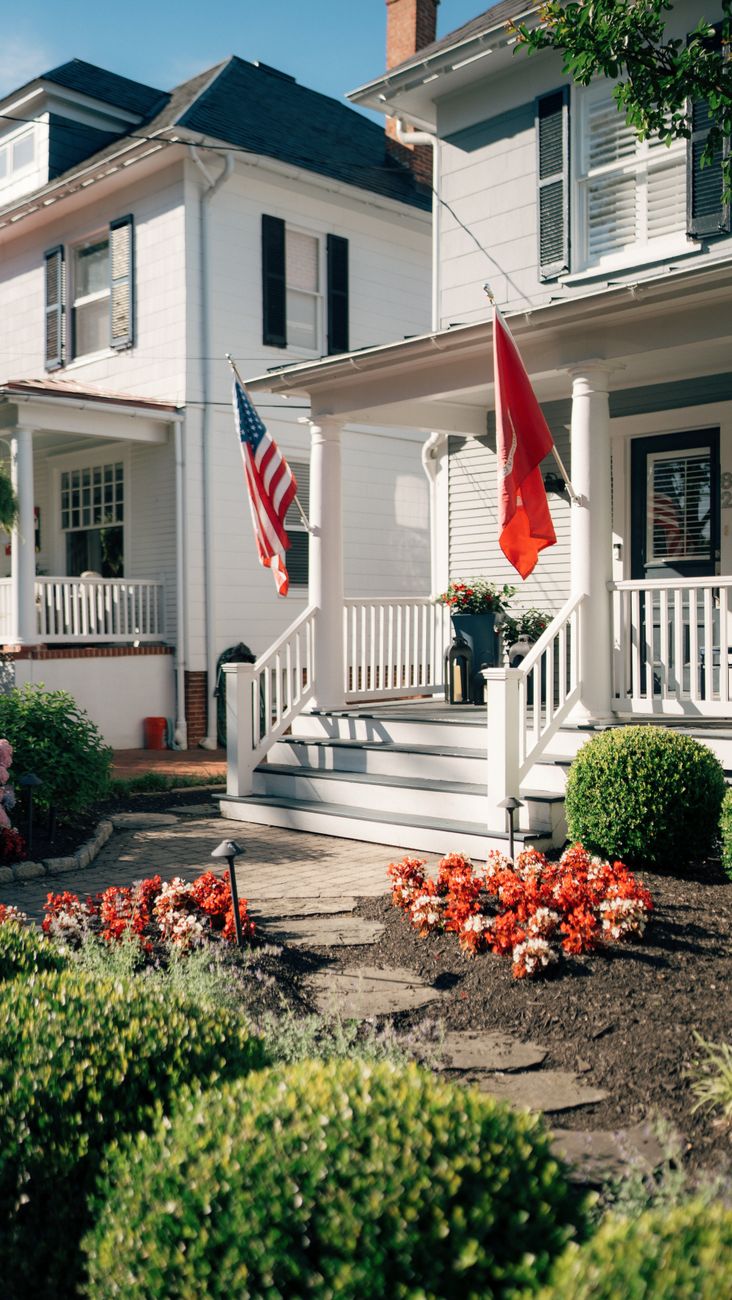
Greenery is one of the easiest categories of design ideas for a front porch to experiment with, since most plant-based changes are inexpensive and easy to undo if you change your mind.
- Flank the front door with matching planters. Symmetry at the entrance is one of the simplest ways to make a porch feel curated rather than accidental.
- Use window boxes on street-facing windows. They add color at eye level from the sidewalk, which is where most people will actually see them.
- Hang ferns or trailing plants from the porch ceiling. This classic look works especially well on covered porches with good indirect light.
- Add a trellis with a climbing vine. Clematis, climbing roses, or jasmine can soften a blank wall and add height without taking up floor space.
- Rotate seasonal blooms. Swapping pansies for summer annuals and then mums in fall keeps the porch feeling current throughout the year without a full redesign.
- Group pots in odd numbers at varying heights. Clustering three or five planters of different sizes reads as more polished than a single pot or an even, matchy pair everywhere.
Flooring, Rugs, and Textiles
- Add an outdoor rug. A rug anchors the seating area and adds color or pattern without any permanent commitment. Look for polypropylene or specifically outdoor-rated materials.
- Consider a herringbone or diagonal wood decking pattern. If you’re replacing flooring anyway, a patterned layout adds visual interest for a relatively small cost increase.
- Layer a smaller accent rug over a larger one. This is a favorite trick from interior design that works just as well outdoors and adds depth to the space.
Architectural and Finishing Touches
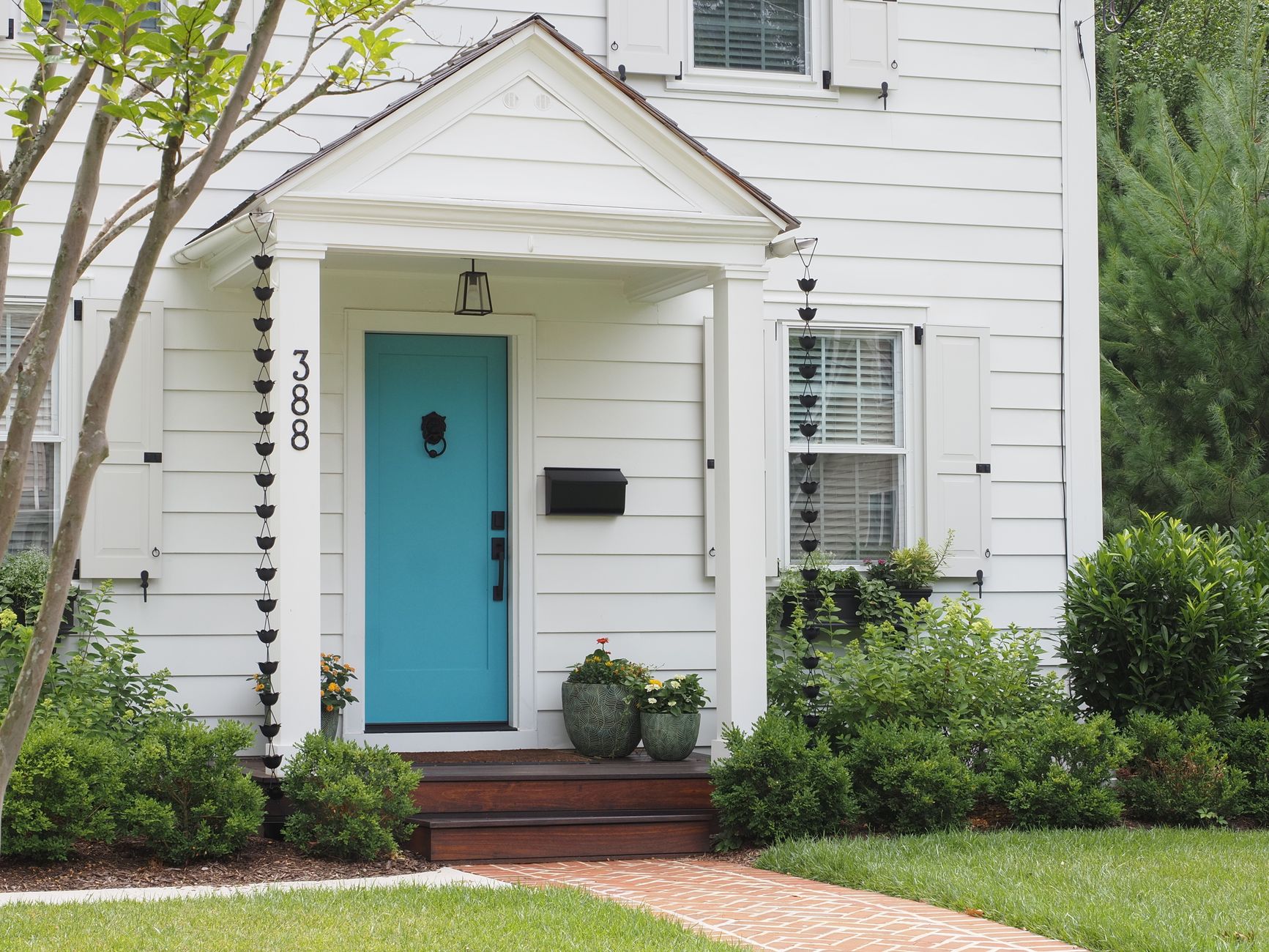
- Add porch columns or wrap existing posts. Simple square or tapered column wraps can modernize a dated porch without a structural remodel.
- Install a ceiling fan. On covered porches in warmer climates, a fan makes the space usable for far more months out of the year.
- Hang a seasonal wreath. It’s a small detail, but a fresh wreath signals that the home is cared for and updates easily with the seasons.
- Add a decorative screen door. A screen door with a wood or metal pattern adds texture and lets air circulate while keeping bugs out.
- Use a patterned door mat. It’s the least expensive item on this list and one of the highest-impact — a graphic mat instantly makes an entry feel styled.
Planning, Materials, and Styling Advice
Seasonal Design Ideas for a Front Porch
A porch that only looks good in one season is missing half its potential, so it’s worth thinking through how your setup adapts throughout the year. In spring, lean into fresh pastels, bulb flowers like tulips and daffodils in your planters, and a lighter, airier wreath on the door. Summer is the time for bold color, layered textiles, and taking full advantage of long evenings with good lighting and comfortable seating. Fall calls for warmer tones — mums, pumpkins, and richer textiles like plaid throw pillows — along with practical touches like a boot tray if you live somewhere with wet weather.
Winter design ideas for a front porch tend to focus on evergreen garlands, warm white lights, and simplified, weather-hardy plantings that can handle frost. Rather than redecorating from scratch each season, many homeowners keep a consistent base — the same furniture, rug, and door color — and simply rotate smaller, less expensive elements like planters, pillows, and the wreath. This approach keeps the porch feeling current without the cost or effort of a full seasonal overhaul.
Materials That Hold Up Outdoors
Because a porch is exposed to sun, rain, temperature swings, and in many regions genuine humidity, material choice matters more here than almost anywhere else in the home. Powder-coated metal and teak are two of the most reliable furniture materials, since both resist rust, rot, and warping far better than untreated softwoods. For textiles, solution-dyed acrylic fabrics (Sunbrella is the most recognizable brand) resist fading and mildew in a way that standard cotton or polyester blends simply can’t match outdoors.
When it comes to flooring, composite decking and sealed hardwoods both outperform basic pressure-treated lumber over the long run, even though the upfront cost is higher. Planters made from fiberglass or high-fired ceramic hold up to freeze-thaw cycles better than thin plastic or unglazed terra cotta, which can crack in colder climates. Spending slightly more upfront on weather-appropriate materials is almost always cheaper in the long run than replacing faded, warped, or cracked pieces every year or two.
Budget-Friendly vs. Bigger-Investment Projects
Not every one of these ideas requires the same commitment, so it helps to think in tiers when planning:
- Under $100: door mat, house numbers, throw pillows, a single statement planter, string lights.
- $100–$500: paint (door, trim, or floor), a small bistro set, window boxes, a new light fixture.
- $500–$2,000: an outdoor rug plus full seating set, a porch swing with hardware, professional-grade planters and landscaping.
- $2,000+: structural changes like column wraps, new decking, a ceiling fan with wiring, or a full roof extension.
Starting with the lower-cost tier is a smart way to test a direction — a new door color and a couple of planters — before committing to a larger renovation.
Small Porch Solutions
If your porch is more of a stoop than a room, most design ideas for a front porch still apply, just scaled down. A single bench instead of a full seating set, one large statement planter instead of a grouping, and a compact door mat with bold pattern can all make a small entrance feel intentional rather than empty. Vertical elements — window boxes, hanging plants, and tall narrow planters — are especially useful on small porches because they add presence without eating into your limited floor space. Mirrors are generally avoided outdoors, but a decorative piece of exterior art or a small architectural detail like a house-number plaque can fill a blank wall just as effectively.
How to Choose the Right Direction for Your Home
With so many possible design ideas for a front porch, and so many directions to take a refresh, it helps to narrow things down by style. A farmhouse home tends to lean into painted wood, galvanized metal accents, and layered textiles. A craftsman-style house often calls for tapered columns, earthy tones, and simple geometric patterns. Coastal and cottage homes lean toward light woods, blues and whites, and lots of natural texture like rattan and jute. Modern homes generally do best with a more restrained palette, clean-lined furniture, and fewer decorative accessories overall. Picking one clear direction — rather than mixing several styles at once — is usually what separates a porch that looks pulled-together from one that feels cluttered, regardless of how much money is spent.
Common Mistakes to Avoid
Even good design ideas for a front porch can fall flat if a few common pitfalls aren’t addressed first.
- Overcrowding a small space. More furniture doesn’t always read as more finished — leave room to actually walk and sit comfortably.
- Ignoring scale. Oversized furniture on a narrow porch, or tiny accessories on a deep one, throws off the proportions of the whole entrance.
- Skipping weatherproofing. Indoor fabrics and untreated wood will fade, warp, or mildew quickly once exposed to real weather.
- Forgetting nighttime. A porch that looks great at noon but disappears after dark misses half its potential — lighting should be planned, not an afterthought.
- Mismatching the home’s architectural style. A sleek modern bistro set can look out of place on a traditional colonial porch, and vice versa — let the house guide the aesthetic.
Frequently Asked Questions
What is the cheapest way to update a front porch?
A new door mat, a coat of paint on the front door, and one or two statement planters are the fastest and least expensive ways to noticeably improve a porch’s appearance.
What color should I paint my porch ceiling?
Pale blue, often called “haint blue,” is a traditional and still popular choice, but soft white, sage green, and warm cream also work well depending on your home’s exterior colors.
How do I decorate a small front porch?
Focus on a few well-chosen pieces rather than many small ones — a single bench, one or two large planters, a patterned door mat, and vertical elements like window boxes or hanging plants make the most of limited space.
What plants work best on a front porch?
That depends on sun exposure: ferns and hostas thrive in shadier covered porches, while geraniums, petunias, and succulents do well in sunnier, more exposed spots.
Do I need a professional to redesign my porch?
Cosmetic updates like paint, furniture, lighting, and plants are very doable as a DIY project. Structural work — new columns, decking, roof extensions, or electrical wiring for fans and fixtures — is best left to a licensed contractor.
How often should I update my front porch decor?
Many homeowners refresh seasonal elements like planters and wreaths four times a year, while furniture, paint, and lighting can reasonably last five to ten years with proper maintenance.
Conclusion:
A great front porch doesn’t require a full renovation — it requires a clear plan and a handful of choices that actually fit your home and how you use the space. Whether you start with something as simple as a new door mat and a pair of planters, or work through a bigger project involving furniture, lighting, and paint, the best design ideas for a front porch are the ones that match your budget, your climate, and your home’s architectural style. Pick a few ideas from this list, start with the highest-impact and lowest-cost changes, and build from there — your porch, and everyone who walks up to it, will notice the differenc
1 thought on “Design Ideas for a Front Porch: 30 Ways to Upgrade Your Entry”