

The best screened in porch ideas make everyday moments feel a little more special. Morning coffee tastes better with a garden view, an ordinary dinner becomes more relaxed outdoors, and a quiet evening feels peaceful when you can enjoy the breeze without constantly swatting insects. With thoughtful furniture, practical materials, and a few personal touches, this space can become one of the most inviting parts of your home.
You do not need a huge porch or a complete renovation to create that feeling. Sometimes, rearranging the chairs, replacing tired cushions, and adding gentle lighting makes an impressive difference. The key is designing around how you actually want to spend time there.
Whether your porch is narrow, spacious, traditional, or modern, the following suggestions will help you create a comfortable space that feels connected to both your house and your garden.
Plan Your Porch Around Everyday Life
Before choosing furniture or paint colors, decide what the porch should do. Will you use it for breakfast, reading, entertaining, or stretching out after work? A space designed around one clear purpose usually works better than one trying to accommodate everything.
Start by measuring the floor, door openings, and existing furniture. Notice where rain blows in and which areas receive direct sunlight. Visit the porch at different times of day; a pleasant morning corner may become uncomfortably bright by late afternoon.
When comparing screened in porch ideas, pay attention to the layout behind the attractive styling. Leave an easy route between doors, avoid blocking screen panels, and make sure chairs can move without hitting tables.
Choose your largest furniture pieces first. Smaller details become much easier once the main arrangement feels right.
1. Create an Outdoor Living Room
A comfortable seating arrangement gives the porch a clear purpose. Start with an outdoor sofa or loveseat, then add a pair of chairs if space allows. Position the seats close enough for conversation without crowding the walkway.
An outdoor rug helps define the seating area, while a coffee table gives everyone somewhere to place drinks and books. Choose a table that suits the seating height rather than selecting one purely for its appearance.
Repeat a few colors from your adjoining interior rooms. This creates a gentle transition through the doorway and makes the porch feel like an extension of the house.
Finish with cushions that have removable covers and somewhere dry to store them during prolonged wet weather.
2. Make a Small Porch Feel Spacious
The most useful screened in porch ideas for compact spaces begin with furniture that fits comfortably. A deep sectional may look inviting online, but two well-proportioned chairs often provide a better experience on a narrow porch.
Look for furniture with exposed legs and open sides. These details allow more of the floor to remain visible, helping the arrangement feel lighter.
A small round table is convenient between chairs and easier to move around than a bulky rectangular piece. Nesting tables also offer flexibility when guests arrive.
Keep the color palette simple. Soft neutrals with one stronger accent, such as navy or leafy green, give the room personality without making it feel busy.

3. Bring in Relaxed Farmhouse Style
Farmhouse screened in porch ideas work best when they feel comfortable and collected. White painted wood, simple furniture, checked cushions, and gently weathered finishes create an easygoing atmosphere.
Try a wooden bench with a seat cushion, a sturdy coffee table, and a few galvanized or ceramic planters. Mix textures while keeping the colors related.
You do not need decorative signs on every wall. A useful basket, an old watering can holding flowers, or a favorite handmade bowl can add more character than an assortment of matching accessories.
If your porch already has beautiful timber or brick, let those features remain visible. They provide warmth and help the room feel rooted in the house.

4. Choose a Calm Modern Look
Modern screened in porch ideas rely on clear shapes, balanced proportions, and a restrained mix of materials. Think slim furniture frames, comfortable neutral cushions, and one or two substantial planters.
Charcoal framing can look striking against pale upholstery, while warm wood prevents the space from feeling severe. Introduce texture through woven cushions or a subtly patterned outdoor rug.
Avoid filling every corner. A little breathing room around furniture makes individual pieces look more intentional.
Choose one visual focal point: a sculptural chair, a generous coffee table, or a grouping of plants. Keep the surrounding accessories quieter so the arrangement remains restful.

5. Design a Porch Dining Area
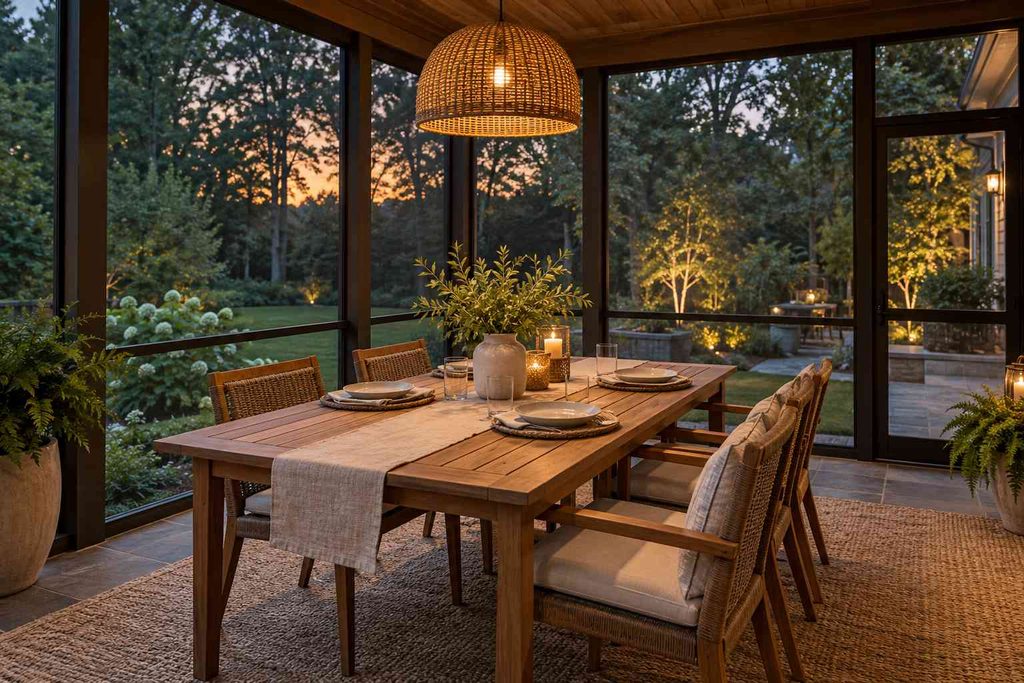
For families who enjoy eating outside, screened in porch ideas centered on dining can make the space useful throughout the week.
Choose the table according to the number of people who normally eat together. An oversized table used occasionally can make everyday movement frustrating.
Allow room to pull chairs out comfortably. If the porch is narrow, a bench along the house wall may help, provided it does not obstruct doors or necessary access.
Keep table styling practical. A washable runner, a low centerpiece, and durable dishes are enough for a welcoming setting.
A nearby cabinet can hold napkins and serving trays, but keep moisture-sensitive items indoors when the porch is exposed to damp conditions.

6. Add a Porch Swing
A swing introduces gentle movement and gives the porch an immediately inviting focal point. It can work especially well at one end of a long space, where it creates a separate place to relax.
Measure the full movement area before choosing a model. The swing needs clearance from walls, screens, tables, and passing traffic.
Suspended seating requires suitable structural support and correctly rated hardware. Have the mounting location checked rather than assuming decorative ceiling boards can carry the load.
Keep the surrounding arrangement simple. A small side table, a washable cushion, and a lightweight throw are usually all this corner needs.
7. Build a Comfortable Reading Corner
A reading corner does not require much floor space. One supportive chair, a footstool, and a small table can turn an overlooked end of the porch into a favorite spot.
Test the chair before buying if possible. Deep lounge seating can look luxurious while offering little support for sitting upright with a book.
Position the chair where daylight falls comfortably across the page. Avoid facing directly into strong afternoon glare.
Add a reading light suitable for the conditions in that location. Keep books in a lidded container or bring them indoors afterward, since screened spaces remain exposed to outdoor humidity.
8. Refresh the Space on a Modest Budget
Affordable screened in porch ideas usually start with improving what is already there. Clean the screens, wash suitable cushion covers, and remove furniture that makes the room difficult to use.
Consider refinishing a sound wooden table or replacing the covers on an existing outdoor sofa. Always check whether secondhand furniture can tolerate the porch’s exposure before bringing it home.
Spend first on comfort and function. Supportive seating and useful lighting make a bigger everyday difference than a large collection of accessories.
Choose one inexpensive update with noticeable impact: a new rug, coordinated cushions, or freshly painted furniture. Add the remaining pieces gradually.
9. Use Color to Set the Mood
Color can make the porch feel connected to the landscape or give it a distinctive personality. Begin with a neutral foundation, then introduce two supporting shades.
For a gentle garden look, combine cream, sage, and warm wood. For something brighter, try soft white with denim blue and small touches of sunny yellow.
Repeat each accent in a few places rather than scattering unrelated colors around the room. A cushion, planter, and table accessory can create enough repetition.
Test paint samples in the actual space. Screen shadows, roof cover, and reflected greenery can change how a color appears throughout the day.
10. Layer Lighting for Evening Comfort
A single bright ceiling fixture can make a relaxing porch feel harsh after sunset. A few smaller sources usually create a more comfortable atmosphere.
Combine general lighting with a lamp near seating and a gentle decorative glow. Battery-operated lanterns are useful where a cord would create clutter.
Choose fixtures and electrical accessories rated for their location and exposure. Keep cables away from walkways, and use a qualified electrician for permanent electrical changes.
Warm light suits quiet evenings, but provide enough brightness around steps, doors, and dining surfaces. Decorative lighting should support safe movement as well as atmosphere.
11. Add Plants Without Overcrowding
Plants soften the boundary between the porch and the garden. A few thoughtfully placed containers can make the room feel established without sacrificing useful floor space.
Choose plants according to the light your porch actually receives. A roof and insect screening can reduce direct sunlight, even when the garden outside is bright.
Use a mixture of heights. One taller plant, a medium container beside a chair, and a small tabletop pot often look more balanced than many identical pots.
Protect the floor with suitable saucers and empty standing water. Check plant suitability carefully if pets or young children share the space.
12. Introduce Privacy Where You Need It
The most successful screened in porch ideas for privacy target specific sightlines. You may only need to soften the view from a neighboring window rather than cover an entire side.
Outdoor curtains can add movement and softness, while a slatted panel offers a more structured appearance. Place either option so it does not interfere with doors or essential airflow.
Consider plants outside the enclosure as part of the solution. A carefully positioned shrub or freestanding trellis can improve the view while providing separation.
Avoid attaching heavy decorations or planters directly to screening. Use suitable structural framing and appropriate fixings instead.
13. Select a Practical Floor Finish
The floor has a major influence on how the porch looks and how much maintenance it needs. Start by assessing the existing surface before covering it.
If the boards are sound, cleaning and refinishing may be enough. Check that any coating suits the substrate and the conditions it will experience.
For a covered concrete porch, a suitable exterior finish can create a cleaner appearance. Tile choices require attention to moisture exposure, slip resistance, and the supporting surface.
An outdoor rug can soften the room, but it should not conceal damaged flooring. Lift it periodically so the surface underneath can dry and be inspected.
14. Give the Ceiling Some Attention
The ceiling occupies a large visual area, yet it is often treated as an afterthought. A simple improvement overhead can make the whole porch feel more finished.
Painted boards create a clean appearance, while natural wood adds warmth. A pale color may help a shaded porch feel brighter; a deeper tone can make a large space feel more intimate.
Keep ceiling details consistent with the house. Ornate trim may feel out of place beside simple modern windows, while rustic boards can complement a traditional exterior.
If you add a fan, select one rated for the location and follow its mounting and clearance requirements.
15. Divide a Larger Porch into Zones
A generous porch often works better as two smaller arrangements than as one oversized seating area. You might combine a dining table near the kitchen door with lounge seating at the far end.
Use rugs, furniture direction, and lighting to establish each zone. Keep a clear route between them rather than forcing people through the middle of a conversation area.
Repeat materials or colors so the sections belong together. Matching every piece is unnecessary, but a shared wood tone or cushion palette helps.
Leave some open floor space. It gives the layout flexibility when you need to move chairs for visitors or family activities.
16. Include Storage That Earns Its Space
Practical storage keeps a porch inviting after the initial decorating is finished. Think about the objects that repeatedly appear: gardening gloves, throws, toys, coasters, and spare cushions.
A storage bench can provide seating and conceal small items. A narrow cabinet may work better where the floor area is limited.
Choose storage according to exposure. A covered porch still experiences moisture, dust, and temperature changes, so ordinary indoor furniture may deteriorate.
Avoid filling storage with items that belong elsewhere. Keeping only what supports porch activities makes it easier to maintain a calm, useful room.
17. Make Seasonal Changes Simple
Flexible screened in porch ideas let you refresh the atmosphere without replacing the main furniture. Keep the larger pieces neutral and change smaller textiles or accessories.
In warmer months, use lightweight cushion covers and a simple arrangement of greenery. During cooler weather, bring out washable throws and richer accent colors.
Store textiles indoors when they are not being used. Leaving blankets and cushions outside through damp weather can lead to unpleasant smells and extra cleaning.
A screened porch remains an outdoor space. Decorative changes can improve comfort, but they do not provide the insulation or weather protection of a fully enclosed room.
18. Finish with Personal Details
The final layer should reflect the people who use the porch. A handmade pottery bowl, a favorite color, or a small collection of interesting planters gives the room personality.
Choose a few things you enjoy seeing every day. Avoid buying accessories simply to fill empty surfaces.
Keep the coffee table usable by grouping smaller objects on a tray. Leave room for an actual cup of coffee, a snack, or the book you are reading.
Then spend time in the space before adding anything else. You will quickly discover whether you need another side table, a softer cushion, or simply fewer objects.
Common Decorating Mistakes to Avoid
The most common mistake is buying furniture before measuring. Mark the proposed footprint on the floor and walk around it before placing an order.
Another is treating insect screening as complete weather protection. Wind-driven rain, humidity, and dust can still reach furniture and textiles.
Do not overlook the screens themselves. Tears, loose edges, and poorly closing doors can reduce the comfort of an otherwise beautiful porch.
Finally, avoid making every decision from a photograph. A room can look impressive while lacking comfortable seats, useful lighting, or a convenient place to put a drink. Let daily use guide the final arrangement.
Frequently Asked Questions
What are the best screened in porch ideas for a small home?
Start with two comfortable chairs, a compact table, and a simple outdoor rug. Keep the route between doors clear and limit accessories to a few useful pieces. Furniture with open frames often feels less bulky than solid-sided seating.
Can regular indoor furniture be used on a screened porch?
It depends on the material and exposure. Screening does not keep out humidity or all rain. Outdoor-rated furniture is generally a more practical choice. Indoor upholstery, delicate veneers, and moisture-sensitive finishes may deteriorate even beneath a roof.
How can I make my porch feel cozy?
Arrange seating for conversation, add comfortable cushions, and introduce gentle lighting. A restrained color palette and a few plants help the space feel settled. Cozy does not have to mean crowded; room to move comfortably matters too.
How do I keep the porch cleaner?
Sweep regularly, clean screens according to their care instructions, and address small gaps or tears. Choose washable textiles and use a doormat near the entrance. Store loose cushions and throws during extended damp weather.
Does a screened porch provide privacy?
Insect mesh provides limited visual privacy, especially when the porch is brightly lit at night. Curtains, suitable panels, and carefully placed planting can help. Check the view from outside after dark before deciding how much coverage you need.
Can I decorate the porch gradually?
Yes. Begin with seating, a useful table, and lighting. Live with that arrangement before adding rugs, plants, and decorative details. Buying slowly gives you time to understand the space and reduces the chance of spending money on unsuitable pieces.
Conclusion
The best screened in porch ideas begin with a clear understanding of how you want to use the space. Comfortable seating, sensible furniture placement, suitable materials, and thoughtful lighting provide the foundation. Color, plants, and personal details then make the room your own.
Start with the change that will improve daily life most, whether that means creating a breakfast corner, making room for family dinners, or adding a comfortable reading chair. A well-designed porch does not need to be elaborate. It needs to feel welcoming enough that stepping outside becomes part of your everyday routine.