
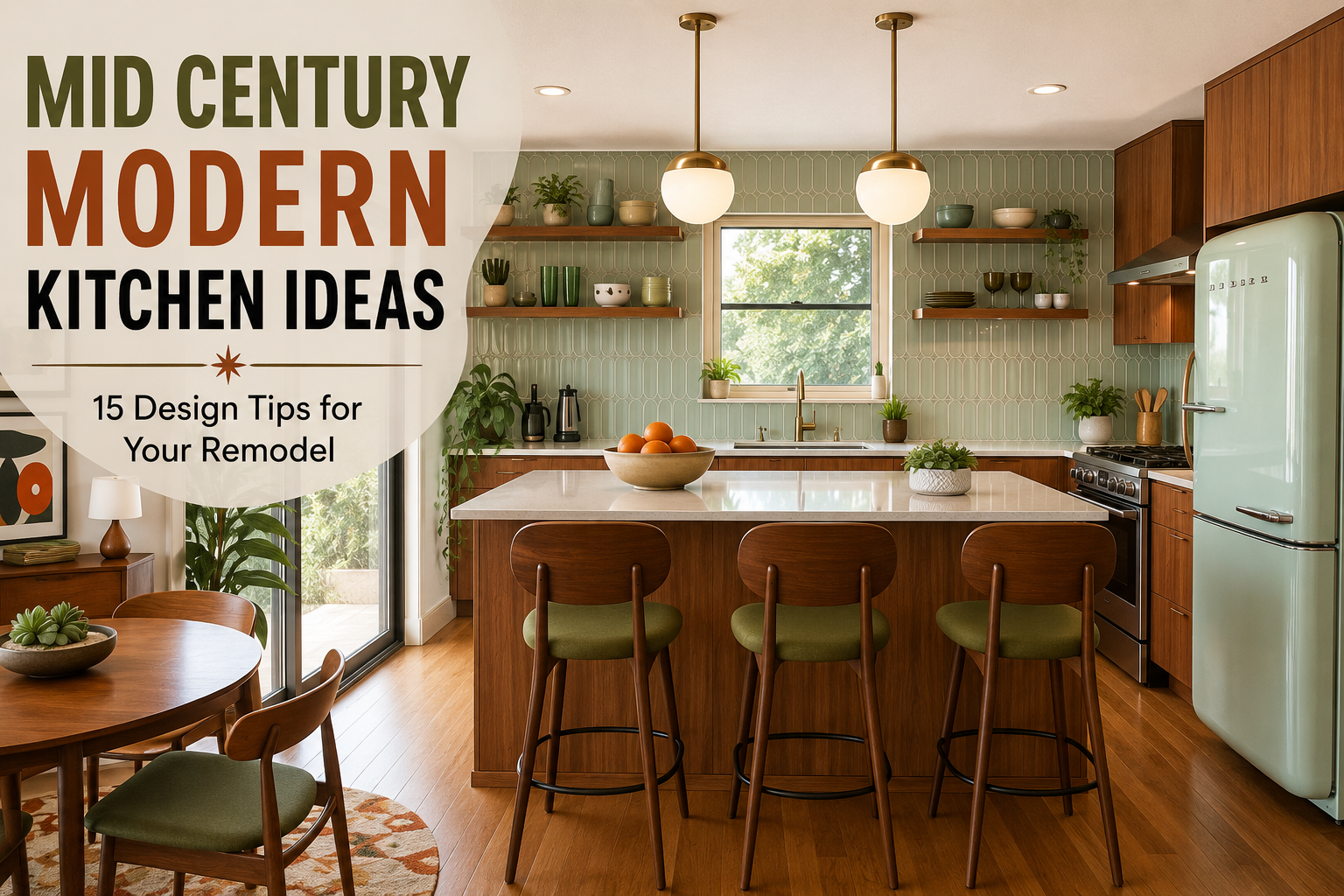
If you’re planning a remodel and want a space that feels timeless rather than trendy, a mid century modern kitchen is one of the smartest directions you can take. Born in the 1950s and 60s, this style blends clean lines, natural materials, and warm minimalism into a look that has never really gone out of style. Whether you’re working with a small galley space or a wide-open floor plan, the principles behind this design style are easy to apply and endlessly adaptable to today’s homes.
In this guide, we’ll walk through 15 practical design tips to help you plan, budget, and style your own space — from cabinetry and countertops to lighting, color, and finishing touches.
Defining the Style & Layout
What Defines a Mid Century Modern Kitchen?
Before diving into design tips, it helps to understand what actually makes a kitchen “mid century modern.” The style emerged in postwar America and Scandinavia, prioritizing function, simplicity, and an honest use of materials. A few defining traits show up again and again:
- Flat-panel (slab) cabinetry instead of ornate raised panels
- Warm wood tones like walnut, teak, and oak
- Clean, horizontal lines that emphasize openness
- Organic and geometric shapes in furniture and accents
- Minimal, often hidden, hardware
- Bold but restrained color accents — mustard, olive, burnt orange, deep teal
- Integration with nature through large windows and natural materials
Understanding these fundamentals will help every decision you make feel cohesive rather than like a random collection of retro pieces.
Planning an Open, Functional Layout
Function was just as important as form to the original mid century designers, and that principle should guide your layout decisions today. Many homes from this era used a fairly compact galley or L-shaped kitchen, often opened up to an adjoining dining or living area rather than closed off as a separate room.
If you’re renovating an older home, consider whether removing a non-structural wall could create that same sense of connection between the kitchen and the rest of the house. An island or peninsula is a great modern addition that wasn’t always present in original designs but fits naturally into the aesthetic, especially when finished in the same flat-panel style as the surrounding cabinetry. Keep walkways clear, group appliances close to their related work zones, and resist the urge to overfill the room with cabinetry — part of what makes this design feel calm is the negative space around each element.
15 Essential Design Tips
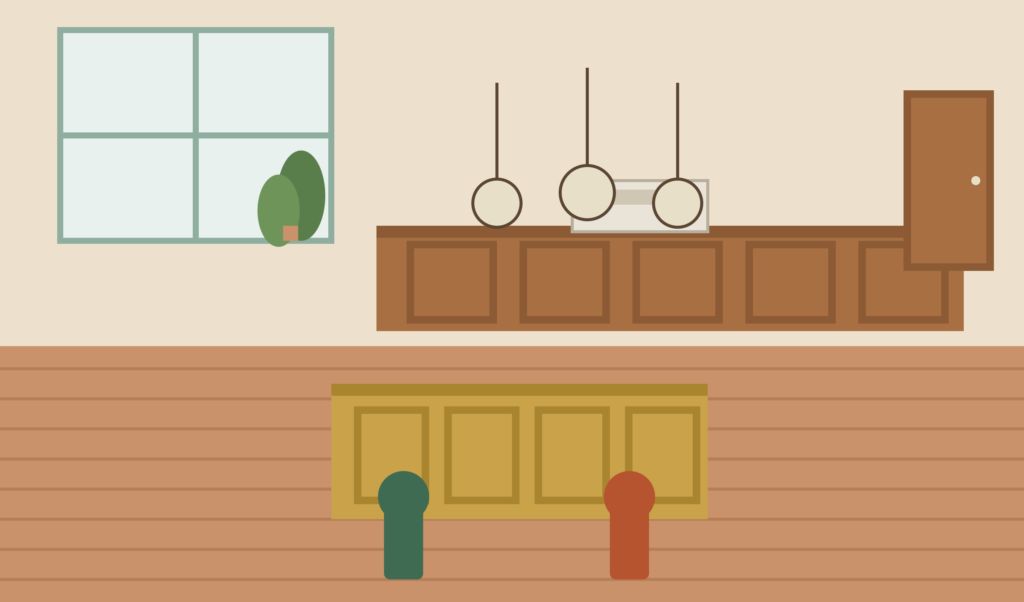
1. Start With Flat-Panel Cabinetry
Cabinets are the backbone of any kitchen renovation, and nowhere is that more true than in a mid century modern kitchen. Skip the raised panels and ornate trim in favor of flat, slab-style doors. Walnut and oak veneers are classic choices, but a two-tone approach — wood on the lower cabinets with a painted color on the uppers — is a popular modern twist that still respects the original aesthetic.
2. Choose Warm, Natural Wood Tones
Wood is arguably the single most important material in this style. Look for warm-toned woods with visible grain, such as walnut, teak, or white oak. These materials add texture and richness without feeling heavy, which is part of what makes this kitchen style feel so inviting compared to an all-white contemporary space.
3. Keep Countertops Simple and Functional
Quartz, laminate, and butcher block all work beautifully in this style. The goal is a countertop that complements the cabinetry without competing with it — think solid colors or subtle veining rather than dramatic, busy patterns. Practicality was a core value of the original mid century movement, and your material choices should reflect that.
4. Embrace Bold Color in Small Doses
One hallmark of a mid century modern kitchen is the confident use of color as an accent rather than a whole-room statement. A mustard yellow backsplash, an olive green island, or a set of burnt-orange bar stools can inject personality while keeping the overall palette grounded in neutral wood tones and white or cream walls.
5. Add Retro-Inspired Lighting
Lighting fixtures do a lot of heavy lifting in this style. Globe pendants, sputnik chandeliers, and arc floor lamps are period-appropriate choices that instantly signal mid century influence. Position pendant lighting over an island or peninsula to create a focal point that ties the whole room together.
6. Prioritize Horizontal Lines
Mid century design leans heavily on horizontal orientation — think long, low cabinetry runs, wide windows, and streamlined hardware-free drawers. When planning your layout, look for opportunities to emphasize width and openness rather than height, which reinforces the calm, grounded feel associated with the era.
7. Use Geometric Patterns Thoughtfully
Geometric tile, whether on the backsplash or floor, is a great way to introduce mid century character without a full renovation. Hexagons, chevrons, and simple grid patterns in muted tones work particularly well and pair nicely with the clean cabinetry lines found in most kitchens of this style.
8. Select Sculptural, Comfortable Seating
Bar stools and dining chairs are an easy way to bring in authentic mid century flair. Look for pieces with tapered wood legs, molded seats, and organic curves. Iconic silhouettes from the era — think Eames-style shells or wishbone chairs — pair naturally with the rest of the kitchen’s design language.
9. Keep Hardware Minimal or Hidden
Hardware in this style tends to be understated. Many flat-panel cabinets skip pulls altogether in favor of finger grooves or integrated channels. If you do want visible hardware, choose slim, simple pulls in brass or matte black rather than ornate or oversized designs.
10. Let Natural Light Do the Work
Large windows were a defining feature of mid century architecture, and kitchens designed in this style often lean into as much natural light as possible. If your layout allows, consider enlarging a window over the sink or adding a sliding glass door that connects the kitchen to an outdoor living space.
11. Mix Materials for Texture
Rather than sticking to one material throughout, mid century design encourages a thoughtful mix: wood cabinetry, stone countertops, metal fixtures, and woven textiles can all coexist in a single space. The key is restraint — choose two or three complementary materials rather than layering in too many at once.
12. Hide Appliances Where Possible
Bulky stainless steel appliances can pull a kitchen out of the mid century era and into a more industrial or contemporary look. Panel-ready refrigerators and dishwashers that blend into the cabinetry help preserve the clean, uninterrupted lines that define this style.
13. Choose an Understated Backsplash
Rather than an elaborate mosaic, many kitchens of this style use a simple tile backsplash in a single color or a subtle geometric pattern. This keeps the visual weight on the cabinetry and lighting, which tend to be the real style statements in the room.
14. Add Vintage or Vintage-Inspired Accents
A few carefully chosen accessories — a vintage clock, ceramic canisters, or a retro-style toaster — can reinforce the era without tipping into costume territory. The goal is a lived-in, curated feel rather than a themed museum display.
15. Balance Old and New
Perhaps the most important tip: a successful mid century modern kitchen today rarely recreates the 1950s exactly. Instead, it borrows the era’s best ideas — clean lines, natural materials, functional layouts — and combines them with modern conveniences like smart appliances and energy-efficient lighting. This balance is what keeps the style feeling fresh rather than dated.
Materials, Space & Sustainability
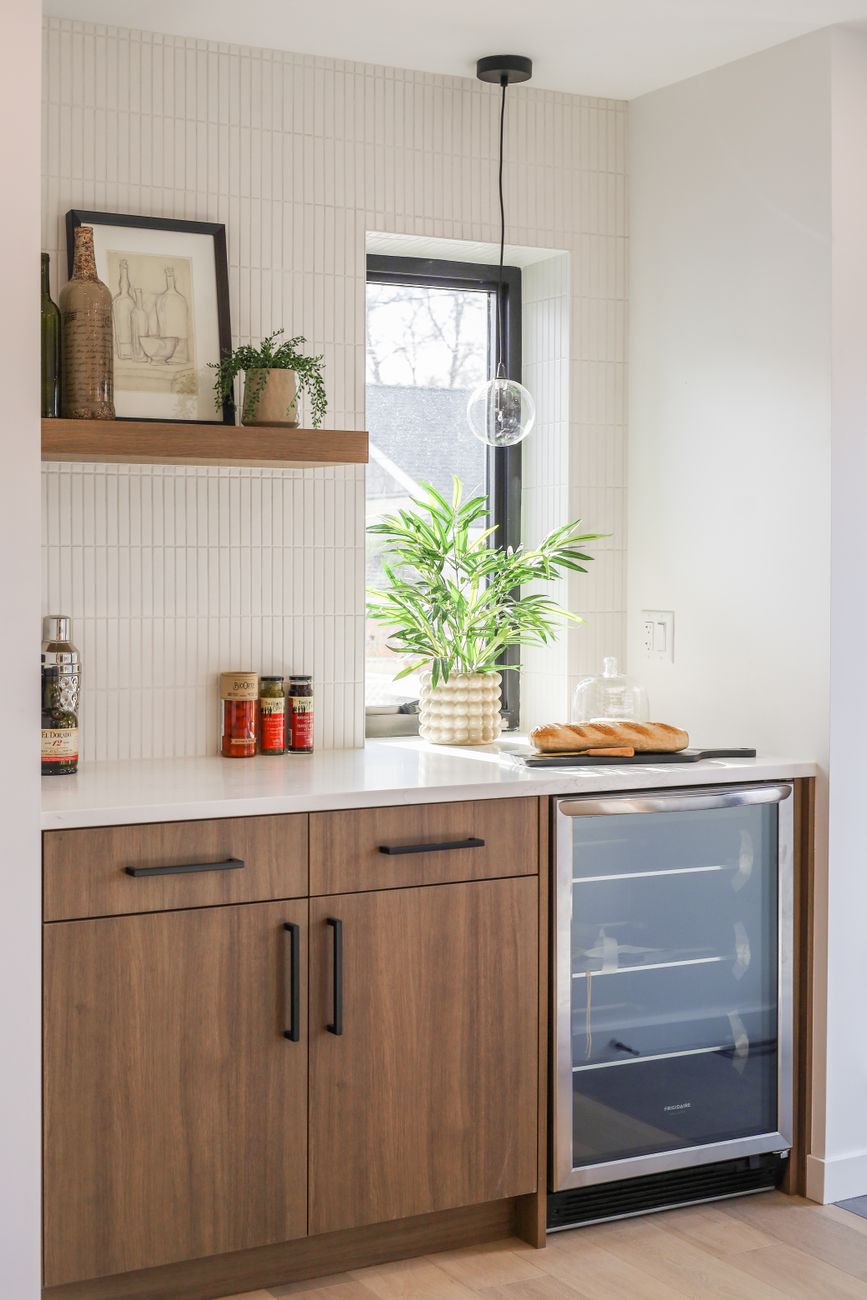
Best Flooring Choices for This Style
Flooring plays a bigger role than most homeowners expect. In the original era, wood floors, cork, and linoleum were all common choices, and each still works well today. Wide-plank white oak or walnut flooring creates continuity with wood cabinetry and adds warmth underfoot.
If you prefer something more budget-conscious, cork is having a genuine resurgence — it’s soft, sound-absorbing, and was actually a popular choice in the 1950s and 60s, so it reads as authentic rather than trendy. For a punchier look, checkerboard vinyl or linoleum tile in two contrasting neutrals (think black and white, or cream and walnut brown) can anchor a space with a playful retro edge without overwhelming the rest of the room. Whatever material you choose, keep the pattern simple — busy or high-contrast flooring tends to compete with the horizontal lines that define the cabinetry and furniture above it.
Adapting the Style for a Small Kitchen
Not every home has room for a sprawling open-concept layout, and the good news is that this design style translates well to compact spaces. Flat-panel cabinetry already reads as clean and uncluttered, which helps a small galley kitchen feel less boxed in than it would with ornate, traditional cabinet doors.
Light wood tones like white oak or ash can make a tight footprint feel airier than darker walnut, so consider your square footage when choosing a primary wood finish. Open shelving in place of upper cabinets is another period-appropriate trick that adds visual breathing room while still offering storage for everyday dishware. If floor space is limited, skip the island altogether and instead add a narrow peninsula or a fold-down countertop extension that can be tucked away when not in use. Mirrored or glass-front cabinet inserts, paired with under-cabinet lighting, can also help a small room feel larger without straying from the material palette that defines the look. Even in a modest footprint, one well-chosen retro light fixture and a single confident color accent can carry the whole design.
Sustainability Considerations
Because the original movement prized honest, natural materials, a mid-century-inspired remodel pairs naturally with sustainable choices. Solid wood cabinetry, when properly maintained, lasts far longer than particleboard alternatives, reducing the need for replacement down the road. Choosing FSC-certified wood or reclaimed lumber for cabinetry and flooring keeps the material sourcing in line with the era’s emphasis on quality over disposability.
Energy-efficient LED versions of classic globe and sputnik fixtures are now widely available, letting you keep the retro look while cutting electricity use. If you’re sourcing furniture or accessories, vintage and secondhand shops are often a better fit for this aesthetic than big-box retailers, and buying original or well-made reproduction pieces tends to reduce both cost and environmental impact over time.
Project Planning & Execution
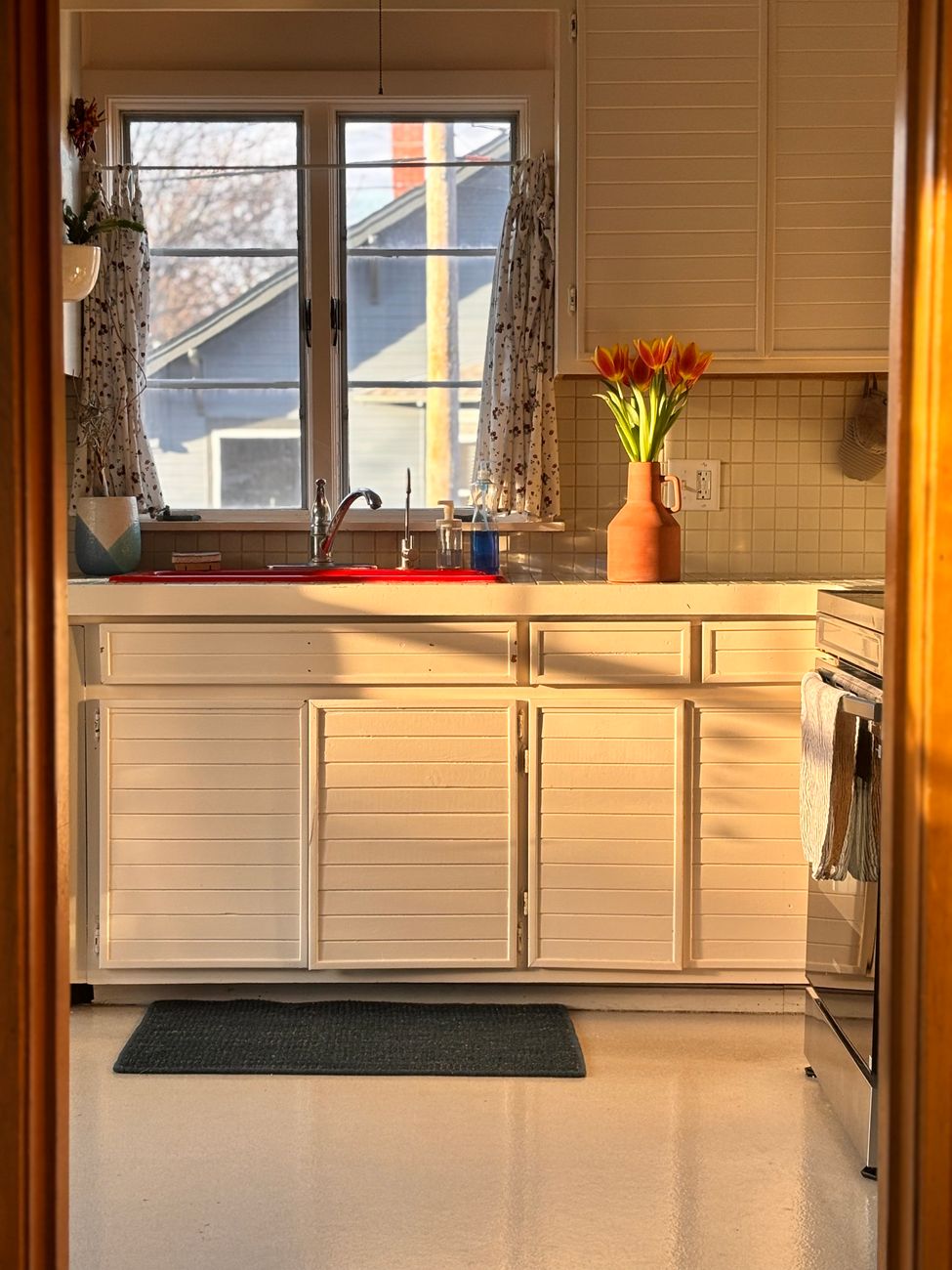
Budgeting for a Mid Century Modern Kitchen Remodel
Costs vary widely depending on scope, but a few general guidelines can help with planning:
- Cabinetry is usually the largest expense, with custom flat-panel walnut cabinets running roughly $200–$350 per linear foot.
- Countertops in quartz or butcher block typically range from $50–$120 per square foot installed.
- Lighting fixtures, especially designer or reproduction pieces, can range from $100 for simple globe pendants to $1,000+ for statement chandeliers.
- Flooring, if updated, often falls between $8–$20 per square foot depending on the material.
A full remodel of a mid century modern kitchen can range from a modest $15,000 refresh (new cabinet fronts, hardware, and lighting) to $75,000 or more for a complete gut renovation with custom cabinetry and high-end finishes.
Common Mistakes to Avoid
- Overdoing the color: A single accent wall or a set of stools is usually enough; too many bold colors can feel chaotic rather than curated.
- Ignoring function for aesthetics: The original mid century movement valued practicality — don’t sacrifice storage or workflow just to chase a look.
- Mixing too many eras: Blending in too much farmhouse or industrial styling can dilute the cohesive feel that makes this style work.
- Skipping natural materials: Laminate and veneer can work, but leaning entirely on synthetic materials often reads as a generic “retro” theme rather than authentic mid century design.
Real-World Inspiration to Study
If you want a clearer sense of how these elements come together, it helps to look at real remodels rather than working from theory alone. Search for projects that pair walnut cabinetry with quartz countertops and a single bold accent color, or look for homes in Palm Springs, Southern California, and parts of the Pacific Northwest, where the original architectural movement took strong root and many preserved or restored kitchens still exist.
Interior design platforms and remodeling galleries often let you filter by style, which makes it easy to save reference images for cabinetry profiles, lighting fixtures, tile patterns, and color palettes you want to bring into your own project. Building a simple mood board before you start sourcing materials will save time and help keep every decision — from hardware to paint color — working toward the same cohesive look.
Maintaining the Look Over Time
Once your remodel is complete, a few habits will help the space age well rather than feeling dated within a few years. Stick to your chosen wood tone across future furniture or accessory purchases rather than introducing a new finish every time you buy something.
Rotate accent colors sparingly through smaller, less expensive items like dish towels, planters, or a single piece of art, so the big-ticket elements — cabinetry, countertops, flooring — stay timeless while smaller details evolve with your taste. Regularly oiling or conditioning wood cabinetry and furniture will also preserve the warm, natural finish that’s so central to the style, and avoiding harsh cleaning chemicals on natural stone or wood surfaces will keep them looking original for decades.
Frequently Asked Questions
What makes a kitchen “mid century modern”?
A mid century modern kitchen is defined by flat-panel cabinetry, warm wood tones, clean horizontal lines, minimal hardware, and restrained pops of bold color, all rooted in the design principles of the 1950s and 60s.
Is mid century modern still popular in 2026?
Yes. The style has remained consistently popular for decades because its focus on simplicity, natural materials, and function translates well to contemporary homes and modern lifestyles.
What colors work best in a mid century modern kitchen?
Neutral bases like white, cream, and warm wood tones pair well with accent colors such as mustard yellow, olive green, burnt orange, and deep teal, used sparingly rather than throughout the whole room.
Can I get the look on a budget?
Yes. Swapping hardware, adding a geometric backsplash, updating light fixtures, and introducing a few vintage-inspired accessories can transform a kitchen without a full renovation.
What’s the difference between mid century modern and modern farmhouse styles?
Modern farmhouse leans on shiplap, apron sinks, and a more rustic, cozy palette, while a mid century modern kitchen emphasizes sleek lines, warm woods, and a more streamlined, minimalist approach.
Do I need custom cabinetry to achieve this look?
Not necessarily. Many stock and semi-custom cabinet lines now offer flat-panel doors in walnut or oak finishes that closely replicate the mid century aesthetic at a lower cost than fully custom work.
Conclusion:
A mid century modern kitchen offers a rare combination: a design style that feels nostalgic and fresh at the same time. By focusing on flat-panel cabinetry, warm natural wood, clean lines, and thoughtfully placed color, you can create a space that feels both timeless and entirely suited to how you live today. Whether you’re planning a full gut renovation or a budget-friendly refresh, the tips above will help you build a space that stands the test of time — just like the design movement it’s inspired by.
3 thoughts on “Mid Century Modern Kitchen Ideas: 15 Design Tips for Your Remodel”