
How to clean soapstone countertops in your own home? Many homeowners do not know the proper guidelines for washing and cleaning soapstone countertops. In this guide, you can get all the essential information about cleaning Soapstone countertops. These countertops also bring a cozy warmth to a new kitchen that few other surfaces match.
Soapstone countertops are a popular choice for people looking for a unique, durable, and aesthetically pleasing kitchen area. Moreover, soapstone is also known for its resistance to heat, stains, and chemicals. On the other hand, soapstone is a stylish material that can sustain a lifetime with proper care.
However, this type of soapstone provides top-quality countertops, and we want to help you keep them looking their best.
Here’s how we can properly clean and maintain a kitchen’s soapstone countertops.
Meanwhile, this type of surface is soft to the touch and matte instead of glossy. It deepens in character with every year you may use it. However, this blog walks you through what soapstone is, how it holds up day to day, what it costs, and how to keep it looking its best, so we can decide whether it belongs in our home. Let’s begin:
What are soapstone countertops?
As we all know, Soapstone is a natural metamorphic rock, and it’s made mostly of talc, with chlorite, dolomite, and other minerals mixed in. Moreover, soapstone takes its name from the soft, soapy feel of the surface.
Moreover, many of us have fashioned soapstone into countertops, sinks, hearths, and carvings for centuries because it can easily handle heat and remains polished under daily wear.
Furthermore, this type of soapstone has been fabricated for countertops and is sometimes called architectural soapstone. Therefore, this type of material holds more quartz than the softer artist’s grade used for carving.
Where to get soapstone for your kitchen?
You can easily get soapstone slabs or counters in North America, and they come from quarries in Brazil. Also, many countertop distributors that may display slabs don’t make the slabs. Moreover, we can easily find soapstone in most places where we may find granite, as it’s a less common stone.
How to take care of Soapstone countertops?
When we are searching for cleaners and we won’t find a perfect one, then it’s for Soapstone. Actually, if we look at a good shop or website, they say you don’t have to use ANY special soapstone cleaners. Moreover, we can use some cleaners with citric acid.
Furthermore, you should clean countertops with dish soap once a week. Also, you can use a daily granite cleaner.
None of these dishwashing steps take a long time so we can wipe the counters down easily. However, granite cleaner and polish work best when you apply them with a microfiber towel.
So, you don’t need any special mineral oil, which has not required to protect soapstone countertops. We can easily apply them to darken the counters.
What are the precautions of soapstone cleaning?
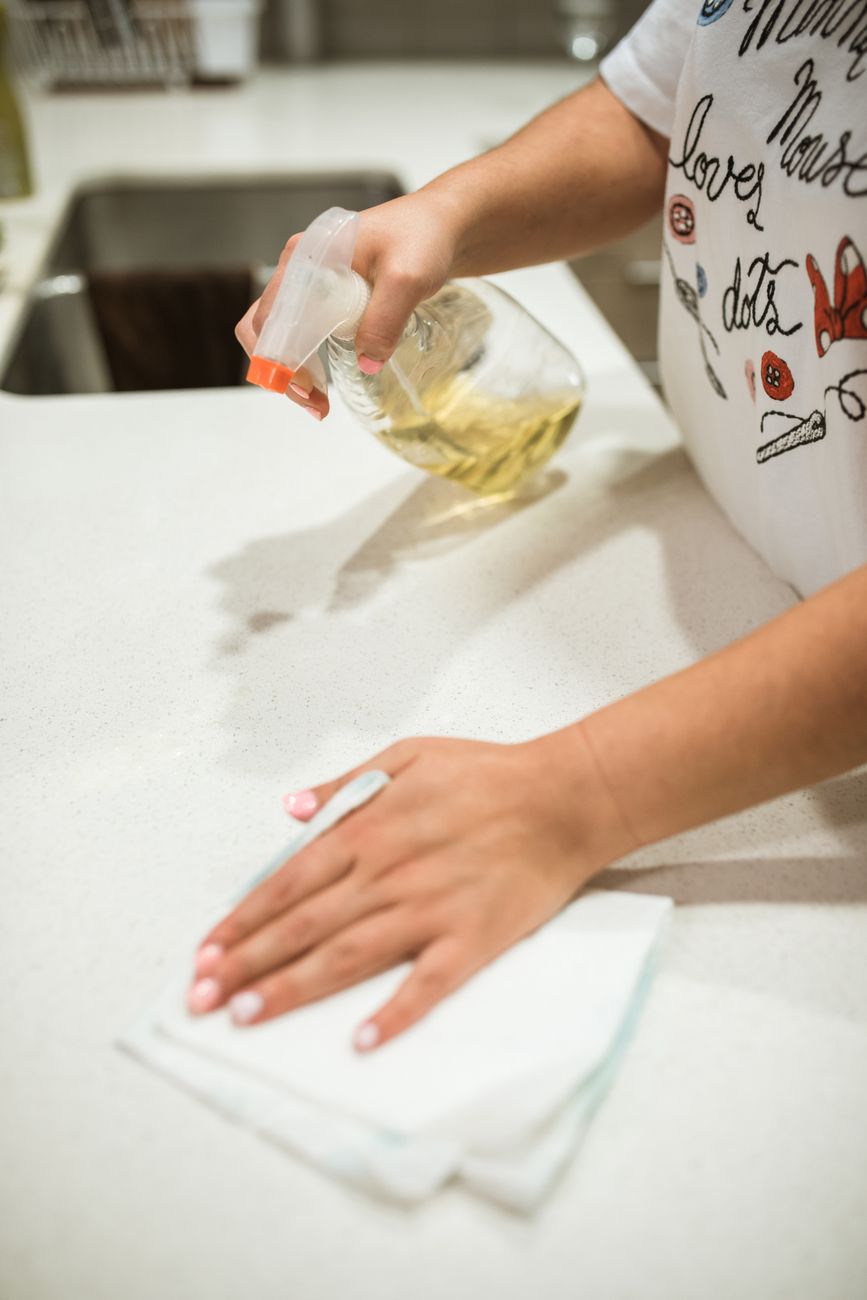
There are some precautions below:
1: For regular cleanup, you should use warm water and then mild dish soap with a soft cloth or microfiber towel.
2: Wipe down the slab with warm water and then a drop of pH-neutral dish soap or liquid.
3: You can easily use a microfiber cloth, soft sponge, or terry cloth.
4: You can easily dry with a towel to prevent water spots.
5: We can easily skip abrasive scrubbers, scouring pads and steel wool because they scratch the surface.
Meanwhile, soapstone doesn’t trap bacteria, so the same warm soapy liquid that handles the dishes can easily handle kitchen countertops.
Furthermore, after raw chicken or fish, you should quickly wipe it, followed by a 50/50 isopropyl alcohol rinse, which covers the food safety side.
How to clean Soapstone countertops?
There are some top picks for you:
1: For sticky spills, dried food, or weekly upkeep, you can easily mix lukewarm water with a small amount of mild soap, and thus you can easily clean your kitchen counters. Also, you should use a stone-safe cleaner.
2: More homeowners can easily wipe off debris first with a damp cloth.
3: We should add a few drops of mild dishwashing liquid to a bucket of warm water for cleaning the surface.
4: Wipe in circular motions and pay attention to corners where grime hides easily.
5: House helpers can easily rinse with plain water and then dry with a soft towel.
Furthermore, a deep-cleaned surface looks very neat and super hygienic. Washing and wiping out the surfaces every two to three weeks is plenty for most kitchens.
6: For tougher messes, for example, dried tomato sauce or oil spills, let warm soapy water sit on that spot for a few minutes before wiping out.
Then the water softens the spots, and you can easily wipe them out with a scrub.
Oiling and conditioner method:
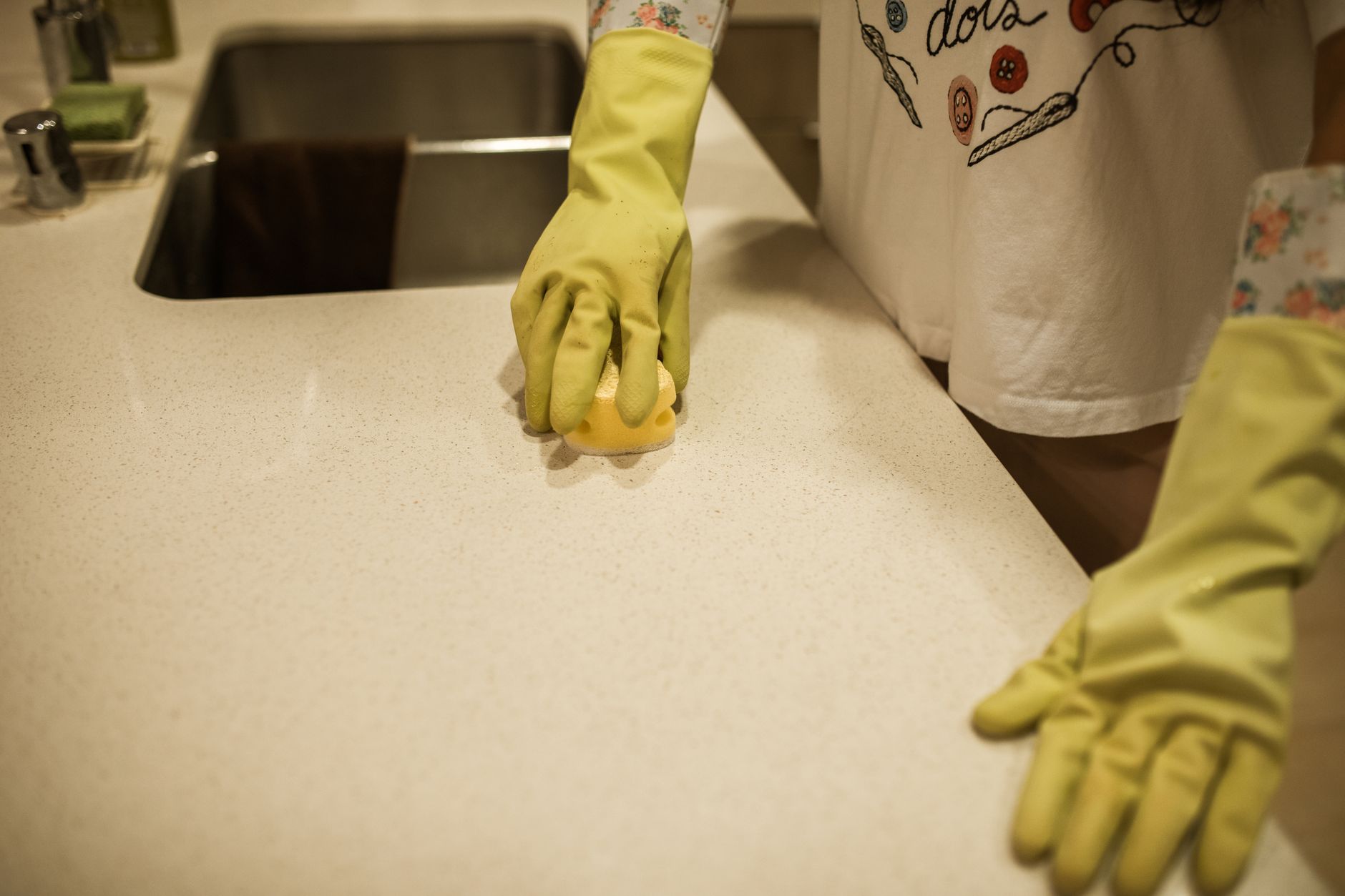
Homeowners can apply mineral oil or beeswax to deepen soapstone’s natural colour and then even out the stain that develops over time.
1: Using a food-grade mineral oil is a simple choice, and for this purpose, you can easily buy a small bottle that costs under $10, which lasts a year.
2: You should use Beeswax or carnauba wax, which gives a longer-lasting finish than oil alone.
3: Apply with a clean cloth, let it sit five to ten minutes, then you should wipe off the excess dirt.
4: Repeat this process monthly for the first six months and then every few months when needed.
A homeowner can easily skip the oiling surface entirely if they prefer the natural, lighter, weathered look. Both finishes are good, and it’s a good choice. However, they don’t require maintenance.
Removing stains and scratches:
Soapstone stops stains because it’s a non-porous material. Also, if scratches happen, buff them out with fine sandpaper and reapply oil in that area.
1: Warm soapy water removes most of the stain from the surface in the kitchen.
2: For deep organic stains like coffee, wine and cooking oil, you can use 3% hydrogen peroxide or a baking soda paste, which may be left to sit for a few hours.
3: For light scratches: You can rub the stain gently with 220-grit sandpaper or a Scotch pad in a circular motion.
4: After sanding, homeowners wipe away dust and reapply mineral oil to restore its finish.
Most scratches we see are surface marks from metal pots or knives. However, they look worse than they are; a quick pass with sandpaper and re-oiling makes them disappear.
Types and colour of Soapstone for the countertops:

Various soapstones come in three colour varieties: gray, blue, and green. Because of this, soapstone is much more consistent in its colour and look than granite.
However, soapstone does not have consistent names across the market. Also, we will see many names floating around on the internet.
Moreover, these soapstones are often given by specific traders to differentiate their varieties, and you will not be helped when looking for a particular type of that soapstone.
The best way to find a slab we like is to ask local traders to show homeowners what they have in stock.
Here are some common names and their colours. Just remember that the easiest way to look for soapstone slabs is to focus on gray, green, or blue soapstone.
1: Gray Soapstone
It is the super-simple Barocca Soapstone, and it has a smooth light-gray background with thin white veins. Also, this grey soapstone has quarried in Brazil. Brazilian grey stone looks very elegant in the kitchen, and it is very famous and dominant in the market.
It also has some varieties:
1: Black Venata Soapstone:
Black Venata has a dark gray background and a mix of long veins and dappled colour distribution. Moreover, this type also comes from Brazil.
2: Porto Allegre Soapstone:
Porto is a light blue-gray Brazilian soapstone and has strong veins.
3: Python Soapstone:
Python stone has a raw and mixed gray colour. It also has extremely subtle patterning. Moreover, Python has quarried in India.
2: Green Soapstone:
Green soapstone is not as trending in the market, but it can be a great option for your ideal home. For those looking for soapstone countertops, they come in various variations.
Moreover, green soapstone has heightened colour intensity through mineral oil applications. Furthermore, traders commonly source this material from India or Brazil. It is popular for “rainforest green” or “green soapstone.”
3: Black Soapstone:
If you want your kitchen’s top counter with a classic finish, choose black soapstone for your counters. Also, there is nothing wrong with keeping it classic. Moreover, this black Barroca soapstone takes a traditional and vintage approach with understated white and gray veining.
Black stone is an ideal option for homeowners who’d prefer minimal veining, but the simplicity shouldn’t fool them. The Brazilian-sourced black stone embarks on a truly colour-changing journey, starting as a light gray and slowly accruing a darker hue.
4: White Soapstone:
White Soapstone is not a soapstone. But it has often been sold as such because white soapstone resembles an inverted version in colour and pattern. However, the white background is a give-away for natural tone. Indeed, it is actually a marble.
What not to use on soapstone countertops?
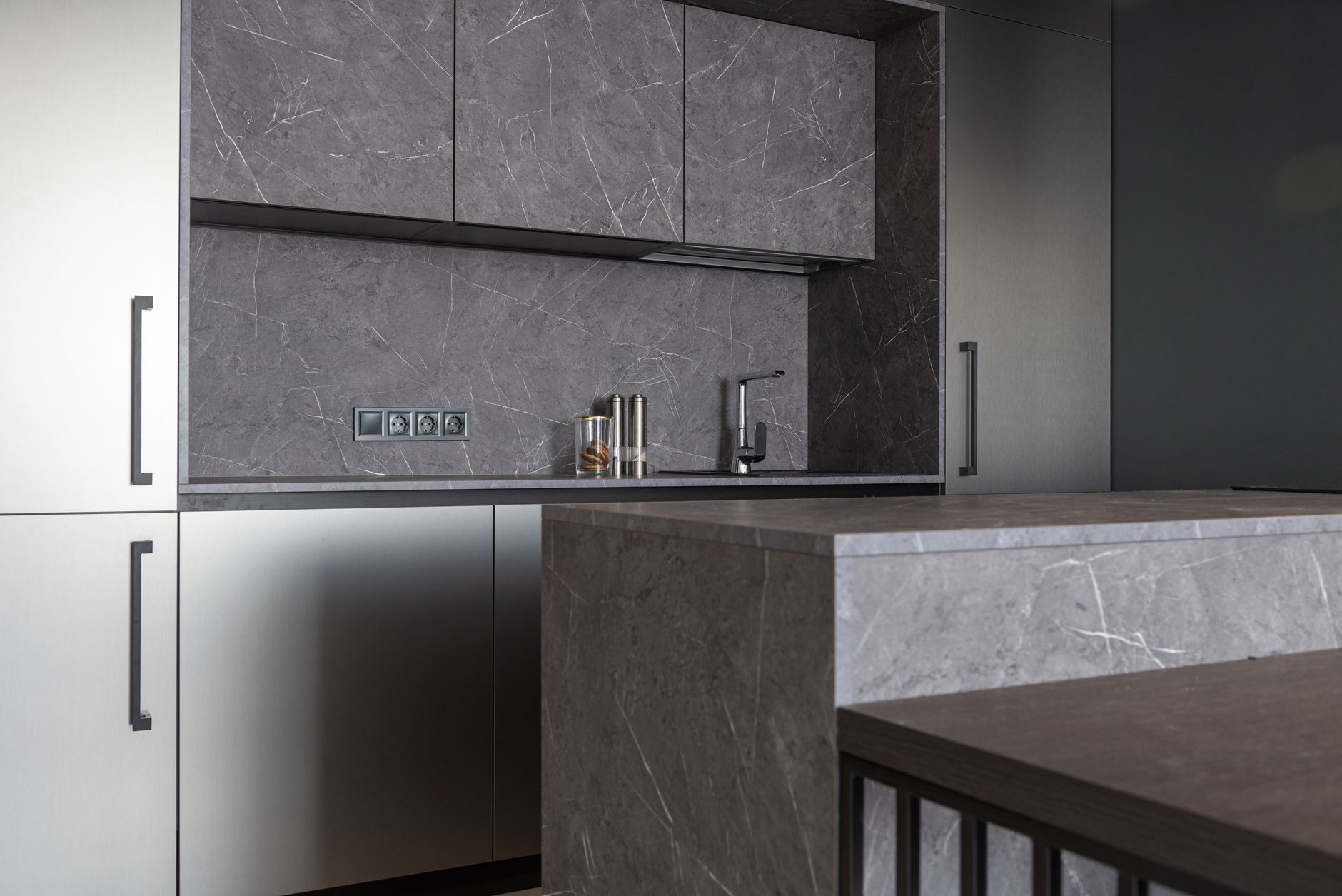
1: Bleach and chlorine cleaners:
These types of bleach won’t damage soapstone at once, but they dull the surface over time with repeated use.
2: Vinegar and lemon flavour cleaners:
Soapstone handles acid better than marble; however, daily use of acid still wears the finish of the countertops.
3: Comet, Ajax and abrasive powders:
You will scratch the soft surface with these available chemicals and abrasive powders.
4: Steel wool or rough pads:
Don’t use scouring and abrasive materials on the slabs and countertops.
5: Acetone or paint thinner:
These paint strippers remove oils from the stone, leaving it looking dry and patchy.
If you stick with mild dish soap and then wash with warm water, that’s almost all you need for cleaning. Moreover, the exceptions above are easy to avoid once you know them.
Common soapstone countertop care mistakes:
1: Skipping the dry-down:
Water or liquid spots show up faster on soapstone countertops than on granite slabs.
2: Over-oiling spills:
When you use too much oil on the countertops, it leaves a sticky residue that attracts dust, and it is not better for slabs.
3: Wrong sandpaper grit:
Don’t use anything coarser than 220, as it leaves visible marks on the slab.
4: Cross-contamination:
There is a sponge that’s used on other surfaces, and it can transfer harsh or abrasive chemical materials.
5: Don’t treat soapstone like marble:
Marble is another type of material and etches from a single acid spill; otherwise, soapstone doesn’t differ from other stones, but it has some different rules.
Most Frequently Asked Questions
1: Can we use dish soap on soapstone?
Ans: Yes, we can easily use dishwashing soap, and it is safe on soapstone. Also, dishwashing soap is pH-balanced and recommended for daily cleaning. Moreover, you can use a few drops in hot water with a soft cloth and then dry with a cloth to prevent water splashes.
2: What products not to use on soapstone countertops?
Ans: Avoid bleaching, vinegar, abrasive powders like Comet or Ajax, steel wool, and acetone. Moreover, these chemicals will not damage the stone instantly, but repeated use of them will dull the finish or scratch the soft surface.
3: Which type of dishwasher damages soapstone?
Ans: Soapstone’s softness makes it vulnerable to scratches from metal pots, knives and abrasive scrubbers. Moreover, these products must be chemically resistant, so we don’t use such strong and abrasive chemicals on the top. The most common surface damage is scratching from dragging cookware.
4: Does soapstone need to be sealed with any material?
Ans: No. Soapstone is a non-porous material. However, it is not unlike granite or marble. Also, it never needs any sealing process. Moreover, mineral oil can boost the colour, but it is not a sealer.
The Final Words:
To clean soapstone countertops properly, you may need to put in some effort. You should take as much care as you want your kitchen’s countertop to last long. Also, you should take brief cleanliness precautions for everyday use.
These soapstone countertops require proper care to preserve their beauty and durability. By following the above guidelines, you can ensure that your soapstone countertops remain in good condition for years to come.
Moreover, you can remove stains with appropriate methods and then perform periodic maintenance using mineral oil.
2 thoughts on “How to Clean Soapstone Countertops: Easy Cleaning, Care, and Maintenance Guide”