
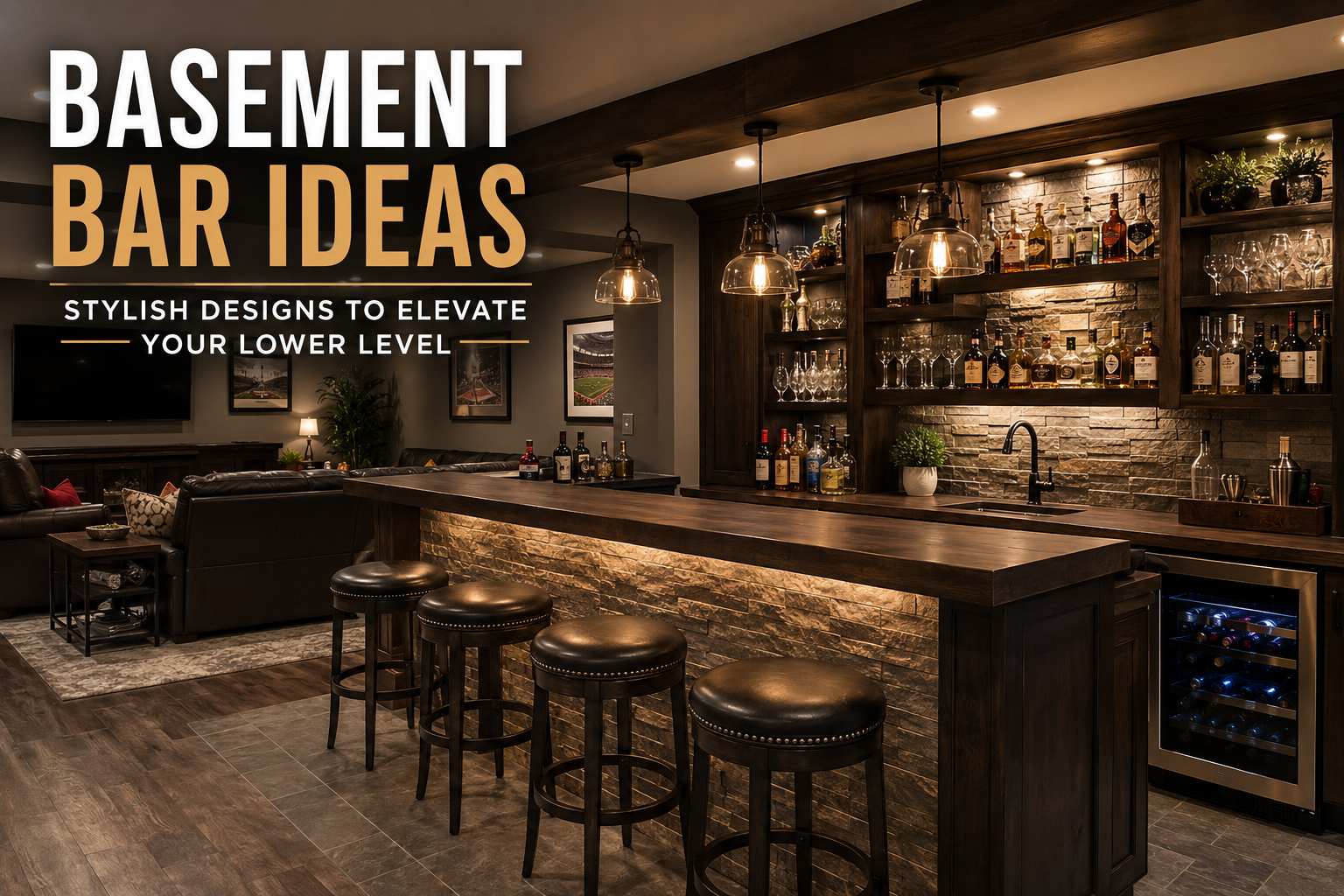
If you are looking for basement bar ideas, you can turn a lower-level space into a stylish, comfortable, and entertaining destination for family and friends. A basement bar does not have to be large or expensive to make an impact. With the layout, lighting, materials, storage, and seating, even a compact basement can become a welcoming spot for relaxing, watching sports, enjoying drinks, or hosting guests.
A designed basement bar can also add personality and functionality to your home. Whether you prefer a wet bar, a rustic pub-inspired space, a sophisticated cocktail lounge, or a simple beverage station, there are countless ways to customize the design.
In this guide, we explore stylish ideas to help you create a basement bar that fits your space, lifestyle, and budget.
1. Create a Classic Basement Wet Bar
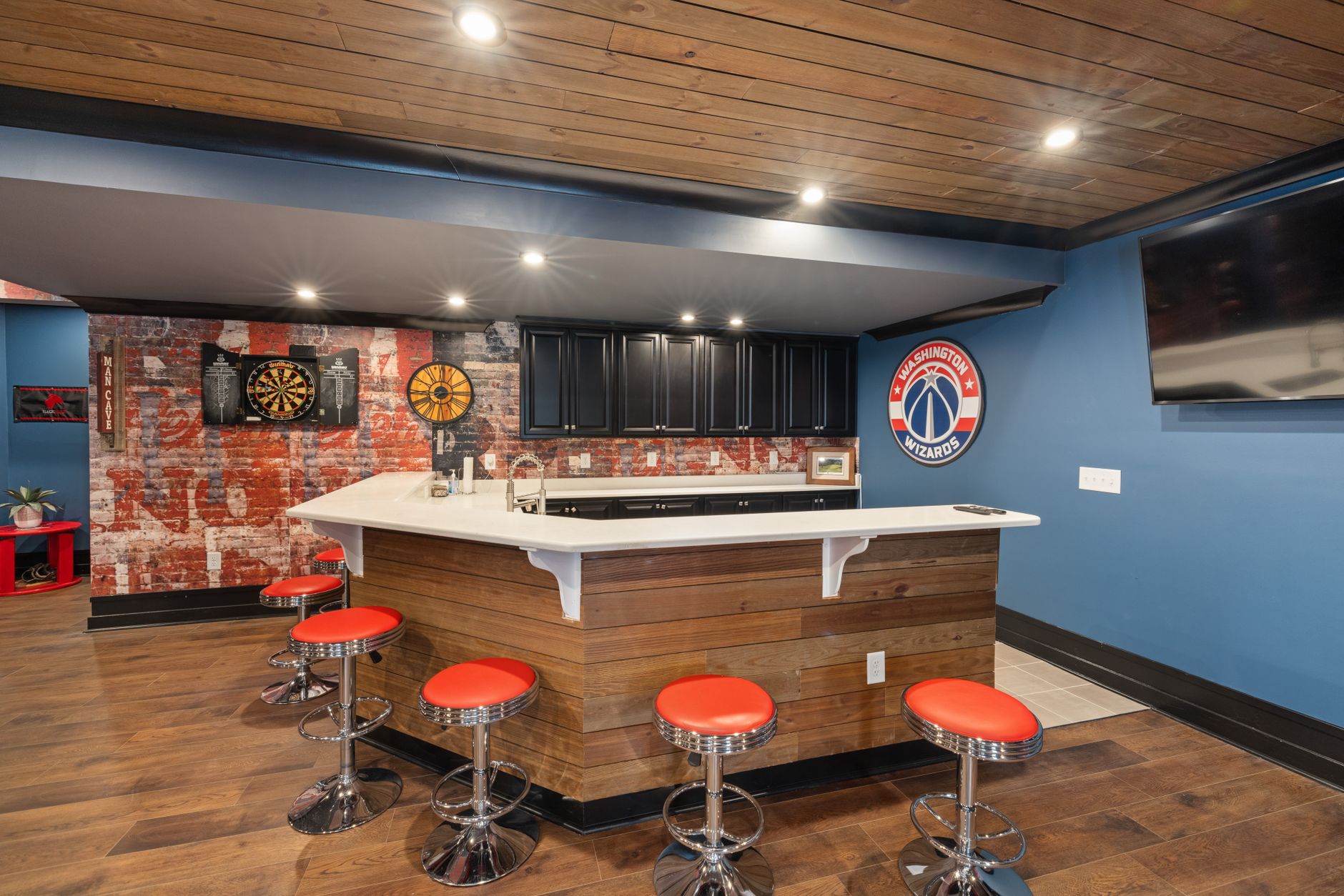
A wet bar is one of the most popular choices for a finished basement. It typically includes a countertop, sink, cabinets, shelving, and space for a refrigerator or beverage cooler.
Choose durable countertop materials such as quartz, granite, or butcher block. Add cabinets or open shelves for glassware and accessories. If plumbing is available nearby, installing a sink can make entertaining much easier.
For an appearance, combine dark cabinetry with a lighter countertop. You can also use a backsplash to create a focal point behind the bar.
2. Try a Modern Minimalist Bar
Minimalist design works well when your basement is small. Instead of filling the room with furniture, focus on clean lines, simple cabinetry, and carefully selected accessories.
Flat-panel cabinets, a countertop, recessed lighting, and neutral colors can create a sophisticated look. Keep countertops clear and use hidden storage to maintain the uncluttered appearance.
This approach is ideal for homeowners who want an entertainment area without making the basement feel crowded.
3. Add a Rustic Wood Bar
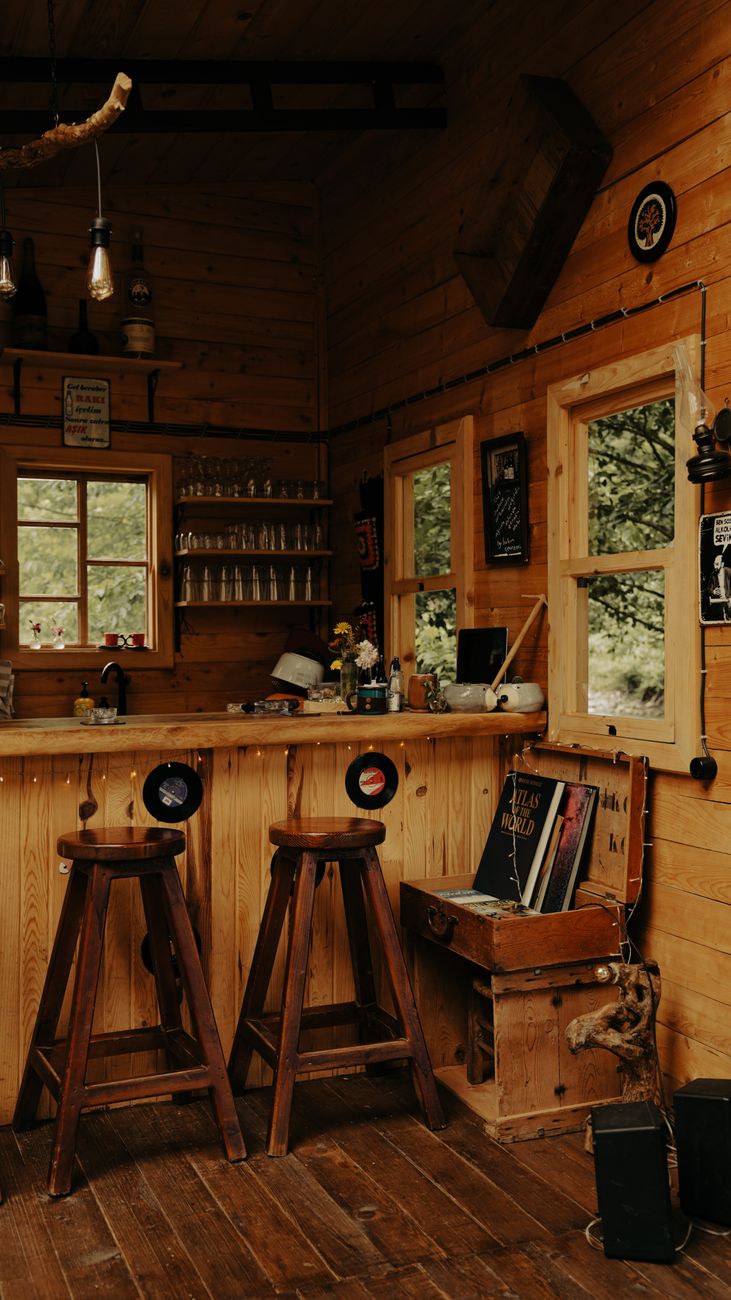
Wood can give a basement bar a warm and inviting atmosphere. Reclaimed wood, oak, walnut, and pine are choices for cabinetry, countertops, accent walls, and shelving.
Consider combining wood with stone, brick, or metal elements. Industrial-style pendant lights can complement materials beautifully.
A wooden countertop paired with black metal bar stools can create a pub-inspired aesthetic without requiring a huge renovation.
4. Build an Industrial-Style Basement Bar
Industrial design combines materials with a bold appearance. Exposed brick, black metal, concrete, reclaimed wood, and visible hardware can all contribute to the look.
Install metal shelving above the counter. Use Edison-style bulbs for warm accent lighting. Dark cabinets and a concrete-look countertop can further enhance the character.
This style is particularly attractive in basements because it works naturally with exposed elements and darker surroundings.
5. Use a Small Basement Bar Nook
You do not need a room for a bar. A small, unused corner can become a beverage station.
Install a countertop along one wall and add compact cabinets underneath. Floating shelves can provide storage without taking up floor space.
Choose bar stools that can slide underneath the counter when not in use. This helps preserve walking space and makes a small basement feel more open.
6. Install a Home Sports Bar
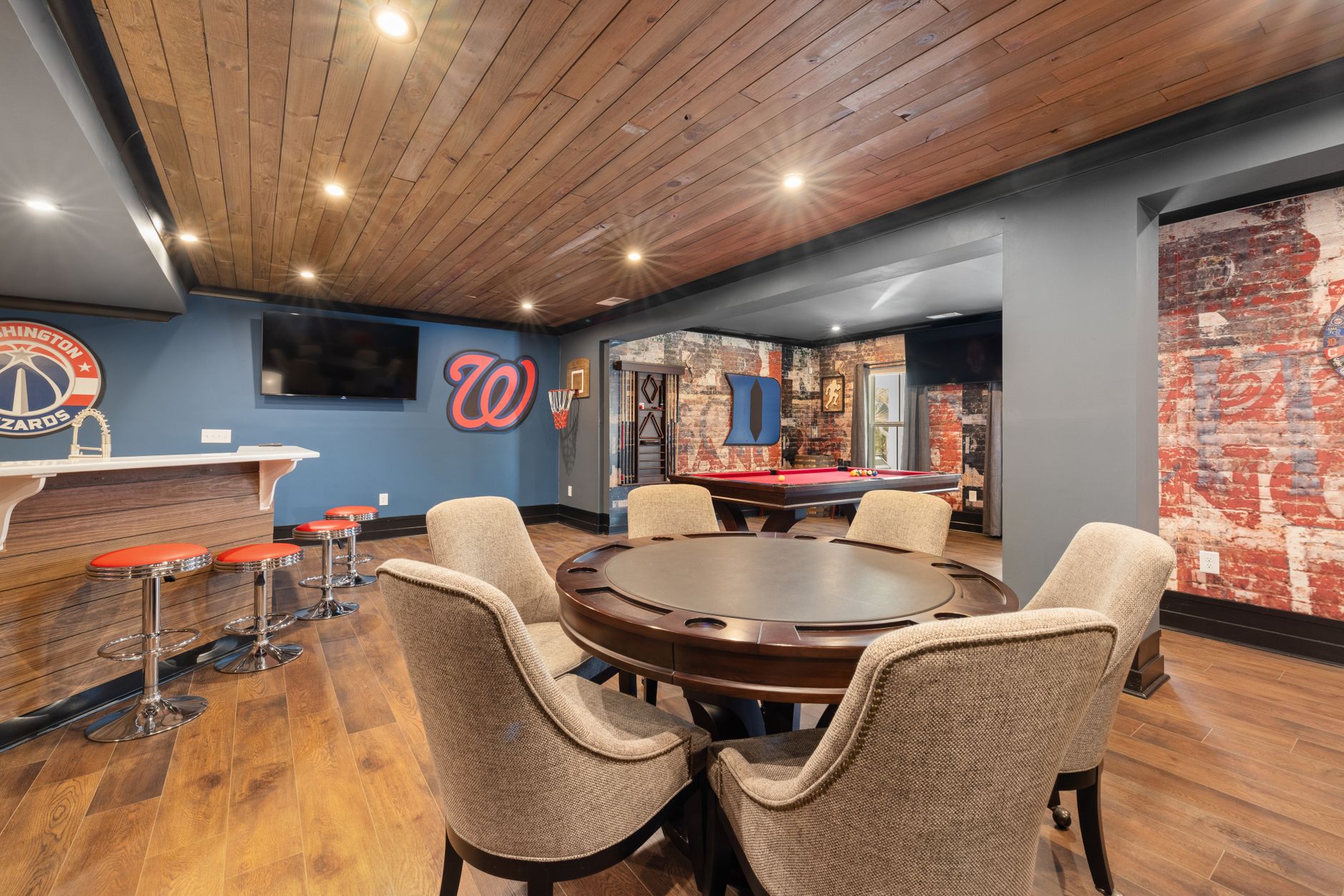
If your basement is the place where your family watches games, consider creating a sports-bar atmosphere.
Mount a television opposite the seating area and position the bar so guests can easily see the screen. Add team-inspired artwork, framed sports memorabilia, or a scoreboard-style decoration.
Comfortable stools, a beverage refrigerator, and snack storage can make the area ideal for game nights.
Avoid overcrowding the walls, however. A few selected pieces usually look more sophisticated than covering every surface with memorabilia.
7. Choose a Sophisticated Cocktail Lounge
For an elegant atmosphere, design the basement bar like an upscale cocktail lounge.
Use cabinetry, a stone countertop, glass-front cabinets, and warm pendant lighting. Mirrors can help reflect light and make the room appear larger.
A combination of green, navy, charcoal, or deep wood tones can create a luxurious appearance. Add lounge chairs nearby for guests who want to sit and talk.
8. Add a Statement Backsplash
The backsplash is a way to introduce personality into your bar area.
Popular choices include subway tile, marble-look tile, geometric patterns, natural stone, and metallic finishes. A bold backsplash can serve as the centerpiece while keeping the rest of the design simple.
For example, neutral cabinets can be paired with a patterned backsplash. Alternatively, colorful tile can brighten a basement that receives natural light.
9. Use Open Shelving for Display
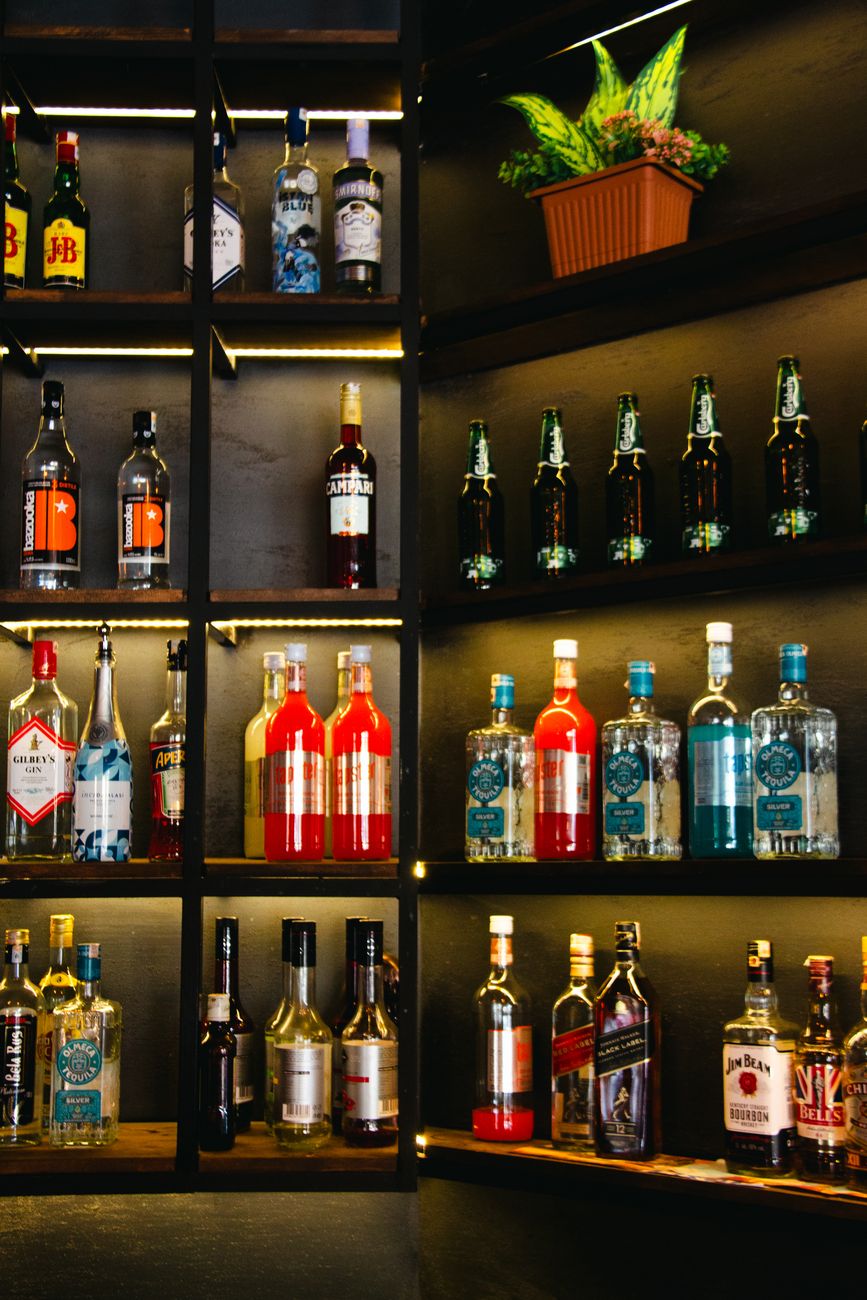
Shelves are both decorative and practical. They allow you to display glassware, mugs, bottles, bar accessories, and decorative objects.
Wooden shelves create an appearance while metal shelves work well with industrial interiors.
Keep displays organized by grouping items together. Leaving some space between objects prevents the shelves from appearing cluttered.
10. Install Under-Counter Refrigeration
An under-counter refrigerator can make your basement bar significantly more convenient.
Rather than walking to the main kitchen for beverages, you can keep drinks, mixers, and snacks close to the seating area.
If you are designing a bar, plan the location of electrical outlets and ventilation requirements before purchasing an appliance. The refrigerator should also have clearance for proper operation.
11. Create a Coffee and Beverage Station
A basement bar does not have to focus on alcoholic beverages. A coffee and beverage station can make the area useful throughout the day.
Add a coffee maker, espresso machine, mugs, syrups, tea, bottled water, and other drink supplies. Cabinets below the counter can store items.
This is especially useful for families because children and guests can use the beverage area without accessing the kitchen.
12. Add a Custom Bar Counter
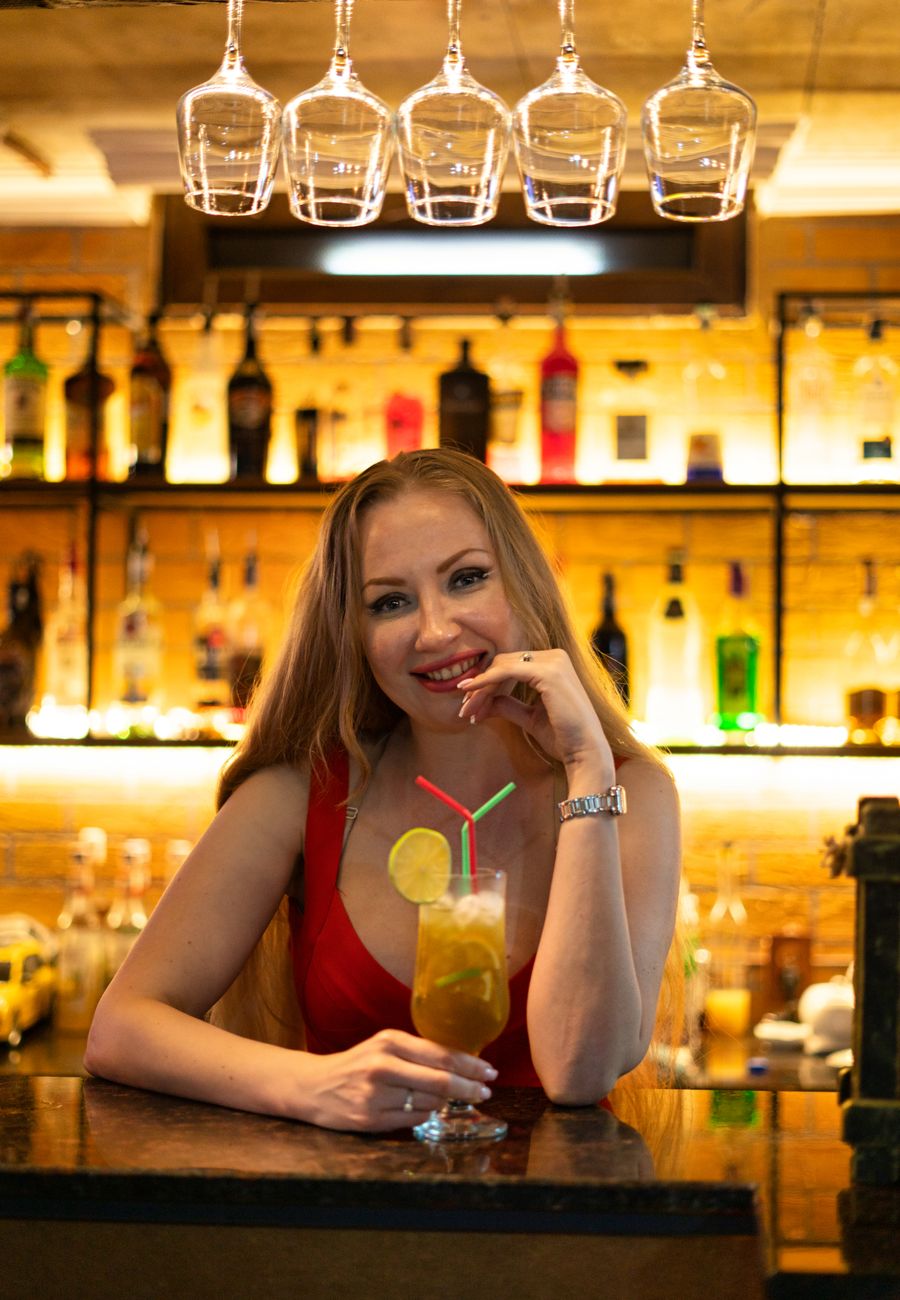
A custom counter can become the centerpiece of your basement entertainment area.
The ideal height and depth depend on your layout and seating choices. Before construction, consider how many stools you want and how much clearance guests need to sit comfortably.
Quartz is a countertop option because it offers a wide variety of colors and patterns and is relatively easy to maintain.
13. Incorporate a Built-In Wine Storage Area
If wine storage is part of your design, consider incorporating a rack or temperature-controlled wine refrigerator.
A built-in wine rack can occupy an unused section of cabinetry. For a touch, install diagonal or cubby-style storage beneath the countertop.
If you collect wine, make sure your storage solution is appropriate for your collection and climate rather than treating a decorative rack as long-term wine storage.
14. Add Pendant Lighting
Lighting can completely change the appearance of a basement bar.
Pendant lights above the countertop provide task lighting while also creating a focal point. Choose fixtures that complement the style of the room.
For spaces, consider simple geometric fixtures. Rustic designs can benefit from metal or wood details, while traditional bars may look better with glass shades.
Use layers of lighting—including ambient, task, and accent lighting—for the most flexible atmosphere.
15. Use LED Accent Lighting
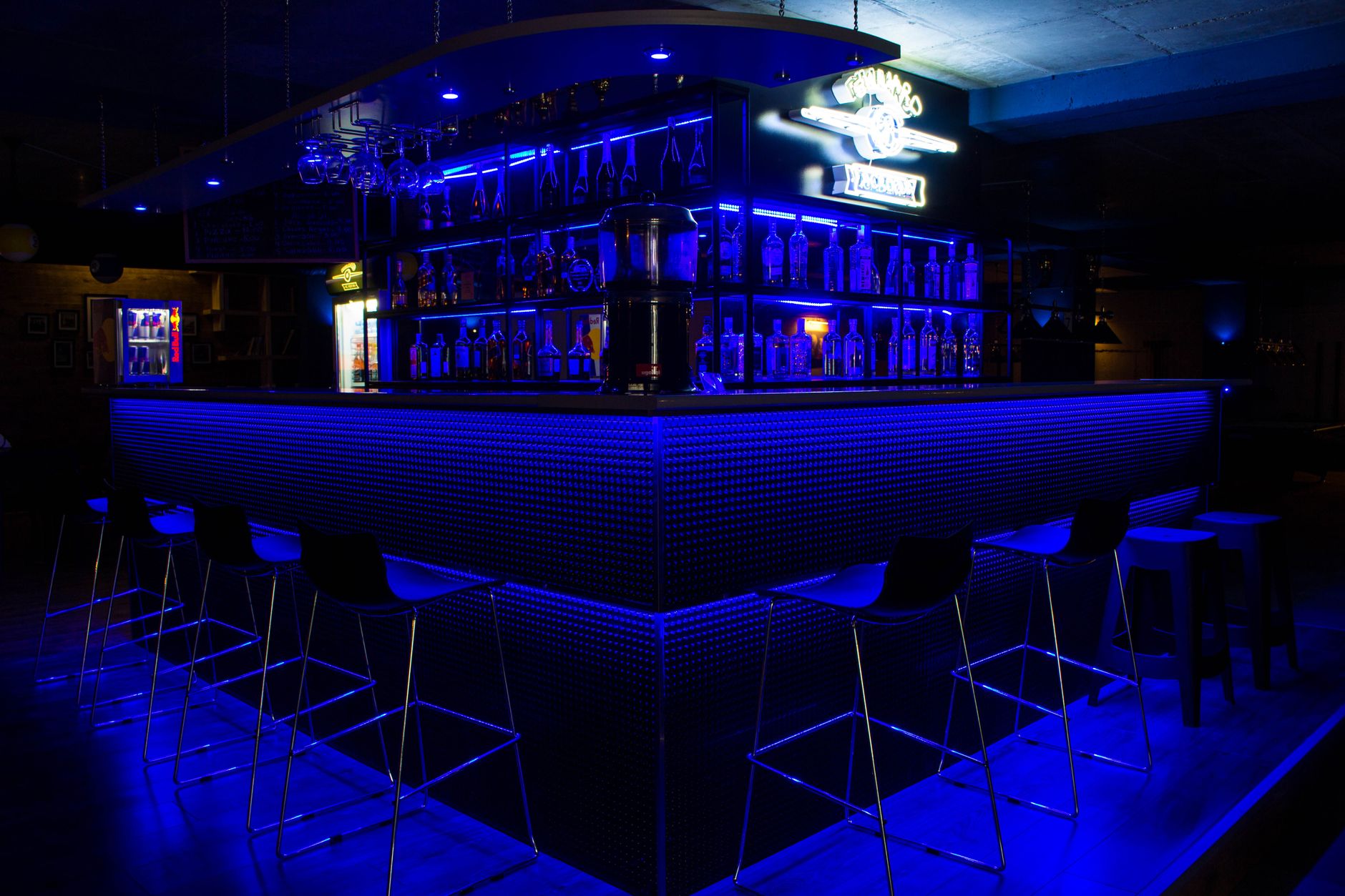
LED lighting can add an effect to shelves, cabinets, and countertops.
Install strip lighting beneath floating shelves or inside glass-front cabinets. You can also use lighting beneath the bar counter.
Warm-white LEDs generally create a comfortable atmosphere, while adjustable lighting allows you to change the mood for different occasions.
16. Create a Basement Pub Atmosphere
If you enjoy the neighborhood-pub aesthetic, bring some of that character into your basement.
Use wood, leather-style seating, decorative signs, warm lighting, and classic bar stools. A wood-paneled wall behind the counter can strengthen the theme.
The goal should be to capture the feeling of a pub without making the room feel like a themed set. Mixing elements with modern conveniences can produce a more timeless result.
17. Make the Bar Multi-Functional
Your basement bar can serve purposes beyond entertaining.
Consider incorporating a dining table, game area, television zone, or lounge seating nearby. A flexible floor plan allows the basement to function as a family gathering space during use and an entertainment area when guests visit.
Use furniture that serves purposes whenever possible. Storage benches, movable stools, and nesting tables can make the room easier to reconfigure.
18. Design a Basement Bar Around a TV
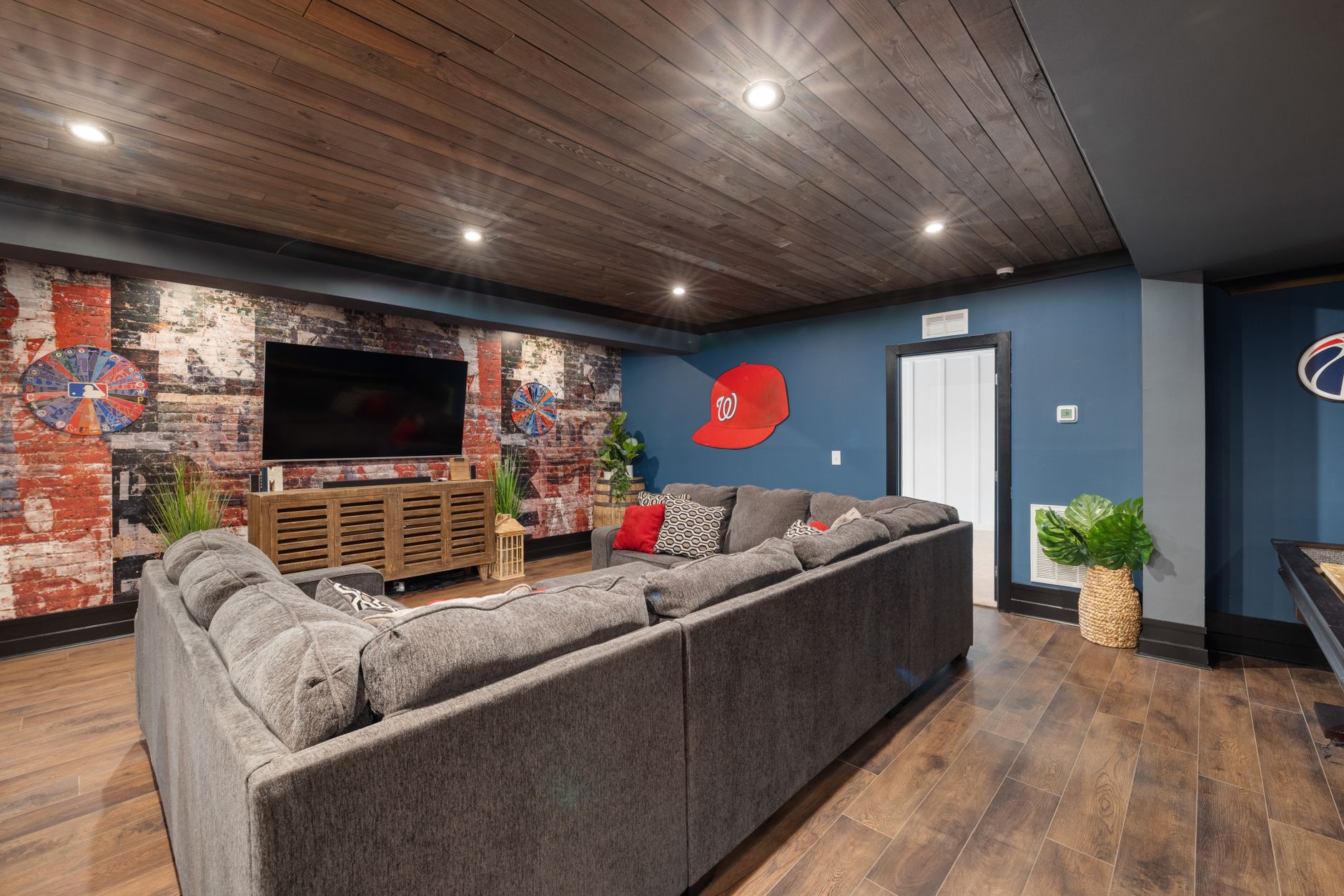
If entertainment is a priority, orient the entire space around your television.
Place the TV where it can be viewed from both the bar stools and lounge seating. Avoid placing the screen where glare from windows or bright fixtures will make viewing difficult.
A wall-mounted television can save floor space. Built-in cabinets around the screen can provide storage while creating a finished appearance.
19. Add Comfortable Bar Seating
Bar stools should be comfortable as well as attractive. Since guests may sit for hours, consider stools with supportive backs and adequate cushioning.
Choose seating that matches the countertop height and leaves room between stools.
For a design, coordinate the stool materials with other elements in the room. For example, leather-style stools can complement wood, while upholstered stools can soften a contemporary design.
20. Use Mirrors to Make the Basement Feel Larger
Many basements have limited natural light, which can make them feel smaller than the rooms upstairs.
A mirror placed in the right spot can reflect the light that is there and make the space look bigger. A mirror behind the bar can also look nice and stylish.
Don’t use too many mirrors. One big mirror or a designed mirrored wall may work better than several small ones.
21. Add a Brick Accent Wall
Brick can add texture and a sense of design to a basement.
If real brick is not available, try a brick-look finish or panels meant for interior use. Pair the brick with wood shelves, metal fixtures, and warm lights for a look that’s industrial or rustic.
One wall with brick can give a lot of interest without taking over the whole room.
22. Build a Small Hidden Bar
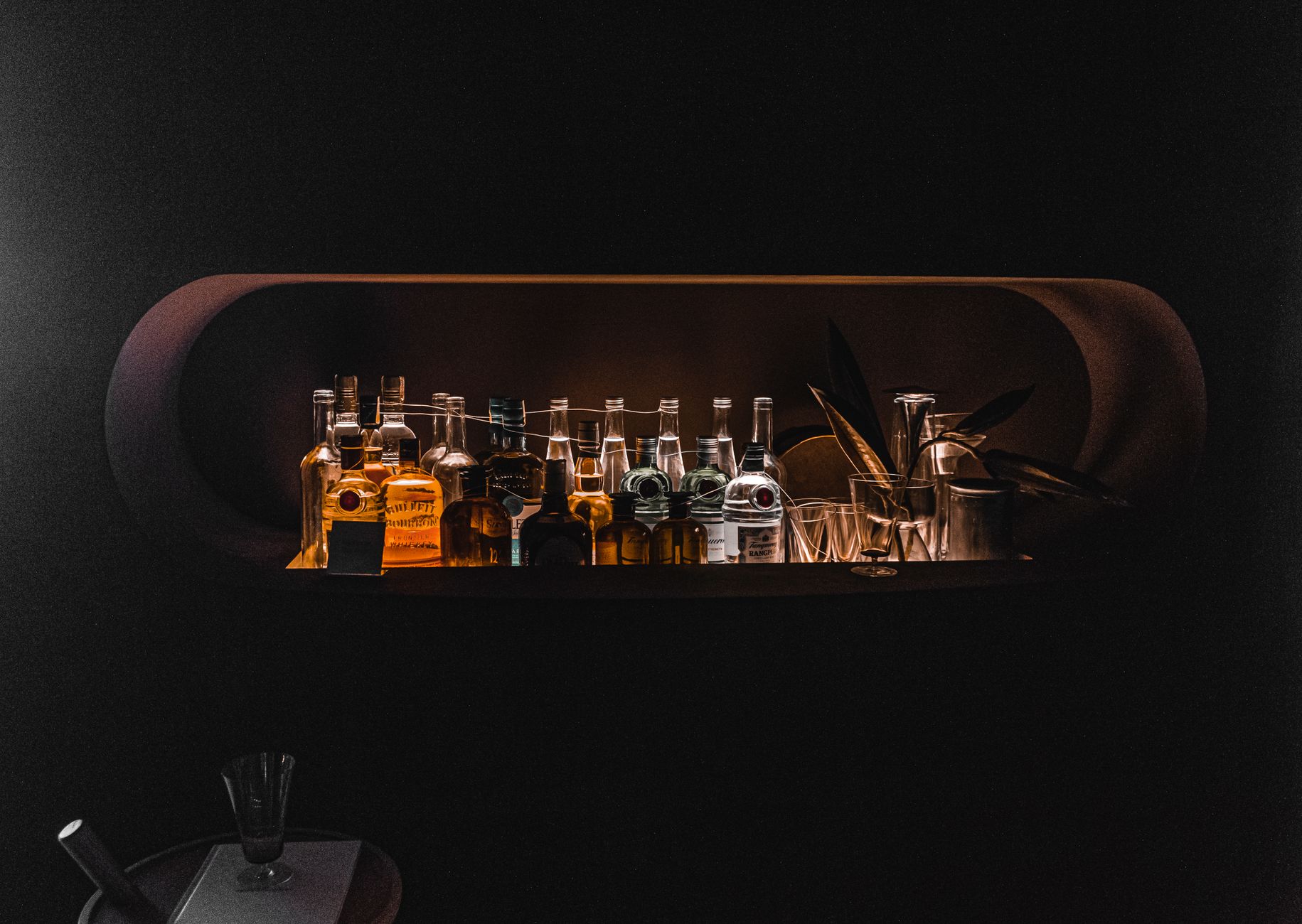
A hidden bar is a good idea if you want a place to serve drinks without it taking up space all the time.
Cabinet doors can hide shelves, machines, and drinks when the bar is not being used. This is great for basements that have more than one use.
When the doors are closed, the cabinets look like built-ins. When they are open, they show an equipped place to serve drinks.
23. Use a Strong Paint Color
Paint is a way to change the mood of your basement bar.
Dark colors like navy, black, green, or warm brown can create a cozy feeling. If the basement is small or has no windows, balance the dark walls with lighter countertops, shiny surfaces, and lights that come in layers.
If you want a brighter look, try white, beige, soft gray, or light green.
24. Add Personal Decor
Your basement bar should show who you are.
Art, pictures, signs, items from trips, family pictures, and collections can all make the place feel like it belongs to you.
Pick a theme that goes together instead of mixing random items. A few chosen things can make the room look planned and neat.
25. Plan Good Storage
Storage is very important for a basement bar that works well.
Use drawers for small items, cabinets for bigger items, and shelves for things you use often. Think about storage for napkins, trays, glasses, coffee supplies, and snacks.
If you have room, add a pantry near the bar. This helps keep things organized and makes the counter look cleaner.
How to Plan Your Basement Bar
Before you start building, measure the space carefully. Find out where the pipes, electricity, heating, windows, doors, and other parts are.
Then decide how you will use the room. A person who often hosts parties may need more seats and cooling, while someone who wants a quiet place may care more about comfortable furniture and nice lights.
Draw a plan before buying cabinets or machines. Make sure doors and drawers can open all the way and that there is room for people to move around.
Choosing Materials for a Basement Bar
Basements can be different from upper floors in how wet or cold they are, so the materials you pick are important.
Use materials that do not get ruined by moisture where needed, and make sure the basement has been treated for any water problems before adding finishes.
For the counter, materials like quartz, granite, solid surfaces, and properly treated wood can all be options depending on what you need and how much you want to spend.
For the floor, options could be tile, luxury vinyl, or other materials that work well in basement conditions.
Basement Bar Ideas for Small Spaces
A small basement can still have a nice bar. The key is to use all available space efficiently.
Think about a bar on the wall instead of a big island. Floating shelves can take the place of upper cabinets, and under-counter appliances save floor space.
Light colors, mirrors, glass doors, and good lighting can also help the room feel bigger.
A counter that folds down or a hidden bar cabinet can be a choice for very small areas.
How Much Does a Basement Bar Cost?
The price of a basement bar can vary greatly depending on its size, the materials you use, the appliances you choose, whether you need plumbing or electrical work, and if you hire professionals.
A simple place to serve drinks might not cost much. A custom bar with cabinets, plumbing, cooling, special lights, and high-end finishes can be a major project.
Make a budget before starting and save a contingency fund for unexpected expenses. If you need plumbing or electrical work, hire licensed contractors and follow local building codes.
Common Mistakes to Avoid
One mistake is planning the bar before considering the overall basement layout. A nice counter won’t help if it blocks a door or restricts movement.
Another mistake is picking style over functionality. Make sure there is enough storage, seating, counter space, and lighting for how you intend to use the room.
Poor lighting is another common issue. Basements often need multiple light sources to avoid feeling dim or cave-like.
Finally, don’t ignore moisture. Before installing flooring, cabinets, or furniture, ensure the basement is properly waterproofed and any dampness issues are resolved.
FAQ About Basement Bar Ideas
What should every basement bar have?
A basic basement bar should have a counter, storage, seating, good lighting, and a refrigerator for drinks. A sink is helpful if plumbing is available.
Does a basement bar add value to a house?
A well-designed basement bar can make a finished basement more attractive to buyers. The return on investment depends on your location, the market, the quality of work, and buyer preferences.
What is the best counter for a basement bar?
Quartz is a popular choice because it is durable, non-porous, comes in many designs, and is easy to clean. Granite, solid surfaces, and properly treated wood are also great options.
Can I have a basement bar in a small space?
Yes. A wall-mounted counter, a cabinet setup, or a hidden bar can provide a functional drink station without taking up much floor space.
How can I make a basement bar look high-end?
Focus on quality details like ambient lighting, solid cabinetry, a stylish backsplash, sleek hardware, and carefully curated decor. Staying organized also gives any bar a more luxurious feel.
Should a basement bar have a sink?
A sink is useful for rinsing glasses and prepping drinks, but it is not strictly required. Whether you need one depends on your budget, layout, and access to plumbing lines.
What colors work best for a basement bar?
There is no single best color. Dark colors like navy, forest green, and rich wood tones create a cozy, pub-like feel, while lighter shades help a small or windowless basement feel brighter and larger.
Conclusion:
The best basement bar ideas mix style, comfort, storage, and usefulness. No matter if your basement is spacious or compact, you can create an entertaining area that fits your lifestyle.
Start by considering how you will use the space, then choose a design that aligns with your needs. From rustic wood counters to modern sleek cabinets, there are options for almost every home.
Focus on lighting, seating, storage, materials, and traffic flow. Most importantly, make sure your basement is properly sealed and prepared before adding permanent fixtures and furniture.
With careful planning, your lower level can become more than just extra space—it can become the favorite gathering spot in your home.