
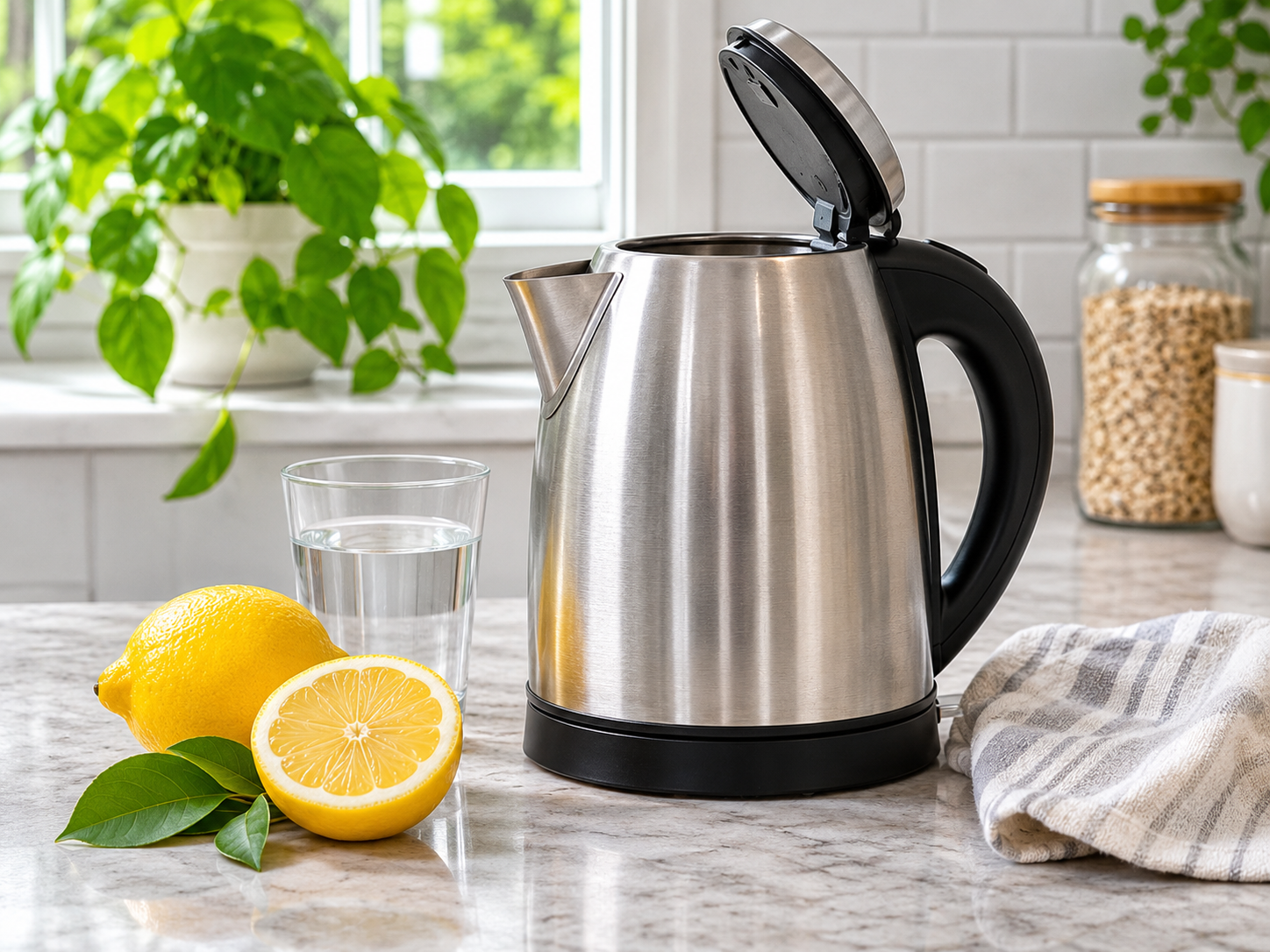
Learning how to descale a kettle with lemon is an easy and affordable way to remove mineral buildup without relying on harsh cleaning products. If you have noticed white deposits inside your kettle, floating flakes in your hot water, or a longer boiling time, limescale may be responsible. Fortunately, fresh lemon contains natural citric acid that can help dissolve these stubborn deposits and restore your kettle’s cleanliness.
Whether you use an electric kettle or a traditional stovetop model, regular descaling can help maintain its appearance and performance. Lemon is a convenient household ingredient that works particularly well for light to moderate limescale buildup. In this guide, you will discover a simple step-by-step cleaning method, useful maintenance tips, common mistakes to avoid, and practical ways to prevent mineral deposits from returning.
Why Does Limescale Build Up Inside a Kettle?
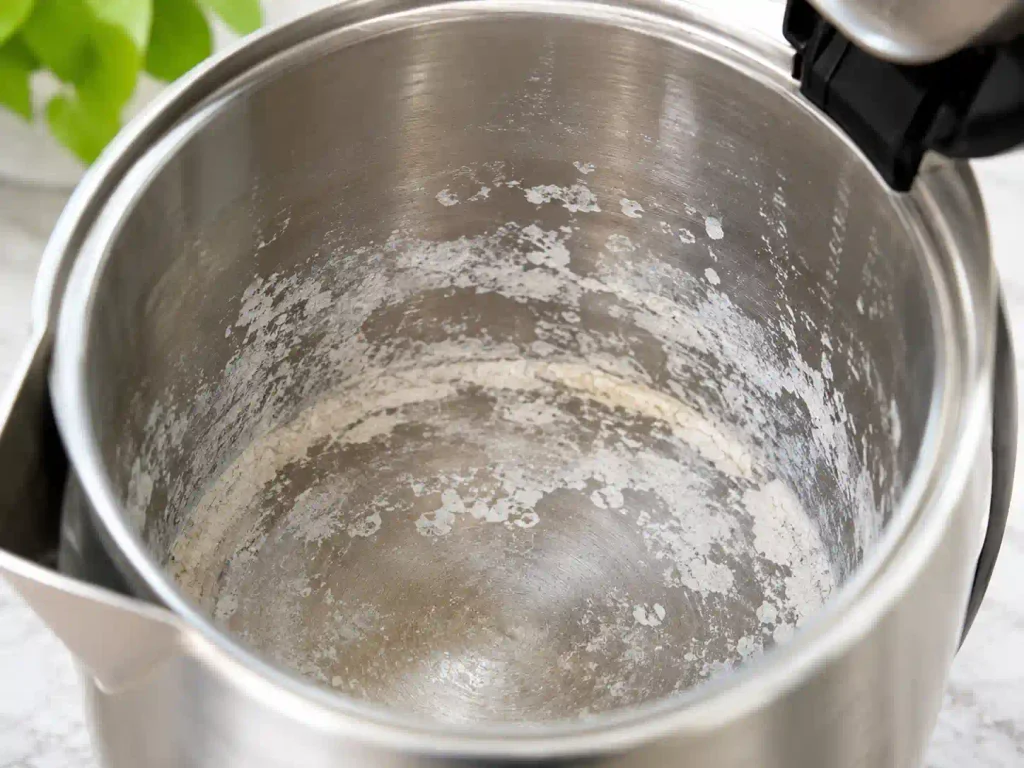
Limescale is a chalky mineral deposit that forms when hard water is heated. Hard water contains dissolved minerals, primarily calcium and magnesium, which can contribute to deposits on heating surfaces. As water boils, some dissolved calcium compounds can form solid calcium carbonate. Over time, these deposits accumulate around the kettle’s base, heating element, and interior walls. The amount of buildup depends on your local water hardness and how frequently you use your kettle.
Common signs of limescale include:
- White or yellowish deposits inside the kettle.
- Small chalky flakes appearing in boiled water.
- Rough mineral buildup around the heating surface.
- Increased noise during boiling.
- A kettle that takes longer to heat water.
Although ordinary limescale is generally not considered harmful, excessive buildup can reduce heating efficiency and affect the quality of your daily tea or coffee experience. Removing these deposits regularly helps keep your kettle clean and functioning properly.
Why Use Lemon to Descale a Kettle?
Lemon is a popular natural cleaning ingredient because it contains citric acid, a weak organic acid capable of dissolving calcium carbonate deposits. When acidic lemon juice contacts limescale, it reacts with mineral buildup and helps loosen deposits from the kettle’s interior. This makes lemon particularly useful for routine kettle maintenance.
Benefits of Cleaning a Kettle With Lemon
1. Natural Cleaning Ingredient
Fresh lemon provides a simple alternative to many commercially prepared descaling solutions.
2. Affordable and Accessible
Most grocery stores sell lemons, making this method convenient and inexpensive.
3. Helps Dissolve Mineral Deposits
Citric acid reacts with limescale, helping remove white deposits from heating surfaces.
4. Suitable for Routine Maintenance
Lemon works well for light deposits before they develop into thick layers.
5. Pleasant Citrus Aroma
The natural citrus fragrance can make the cleaning process more pleasant, although proper rinsing is still essential. Before using lemon, always check your kettle manufacturer’s cleaning recommendations. Some models require specific descaling products or cleaning procedures.
What You Need to Descale a Kettle With Lemon
One advantage of this method is that it requires only a few common household items.
Essential Cleaning Supplies
- One or two fresh lemons.
- Clean water.
- A sharp kitchen knife.
- A chopping board.
- A soft sponge or microfiber cloth.
- A small cleaning brush, if necessary.
For a typical kettle, one medium lemon is often sufficient for light buildup. Larger kettles or heavier mineral deposits may require additional lemon juice or repeated treatments. Avoid abrasive scrubbers, metal brushes, and harsh cleaning powders because they may scratch interior surfaces. Always ensure your kettle is suitable for acidic descaling before beginning.
How to Descale a Kettle With Lemon: Step-by-Step Instructions
Understanding how to descale a kettle with lemon correctly helps you remove mineral deposits while protecting your appliance.
Follow these simple steps for effective cleaning.
Step 1: Empty and Inspect Your Kettle
Begin by switching off your kettle, unplugging it if it is electric, and allowing it to cool completely. Pour out any remaining water. Examine the inside carefully to identify areas where limescale has accumulated. Pay particular attention to the bottom, interior walls, and exposed heating surfaces. Remove any loose mineral flakes with a gentle rinse. Never place an electric kettle under running water in a way that wets its electrical connections, base, or external electronic components.
Step 2: Prepare Fresh Lemon Juice
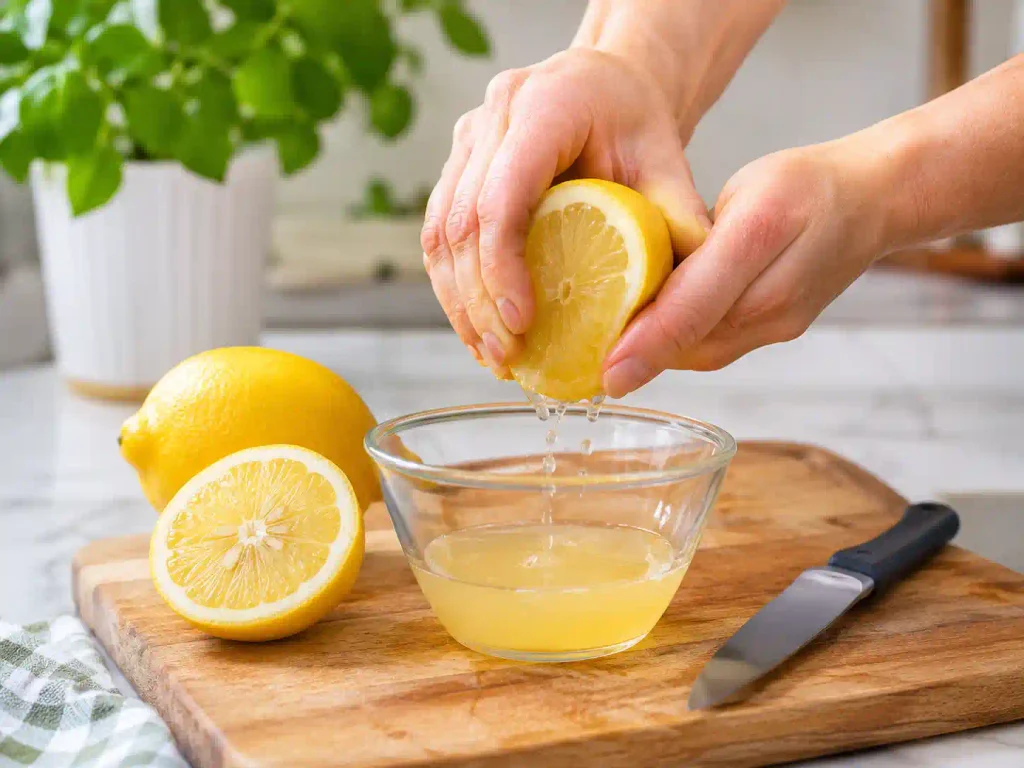
Take one fresh lemon and cut it into two halves. Squeeze the juice into a small container, removing seeds if necessary. You can also cut the lemon into several thin slices. Fresh lemon juice provides the acidic component responsible for loosening mineral deposits. For a standard kettle, begin with the juice of one lemon. If the kettle contains stubborn buildup, you may need a stronger solution or an additional cleaning cycle.
Step 3: Add Lemon and Water
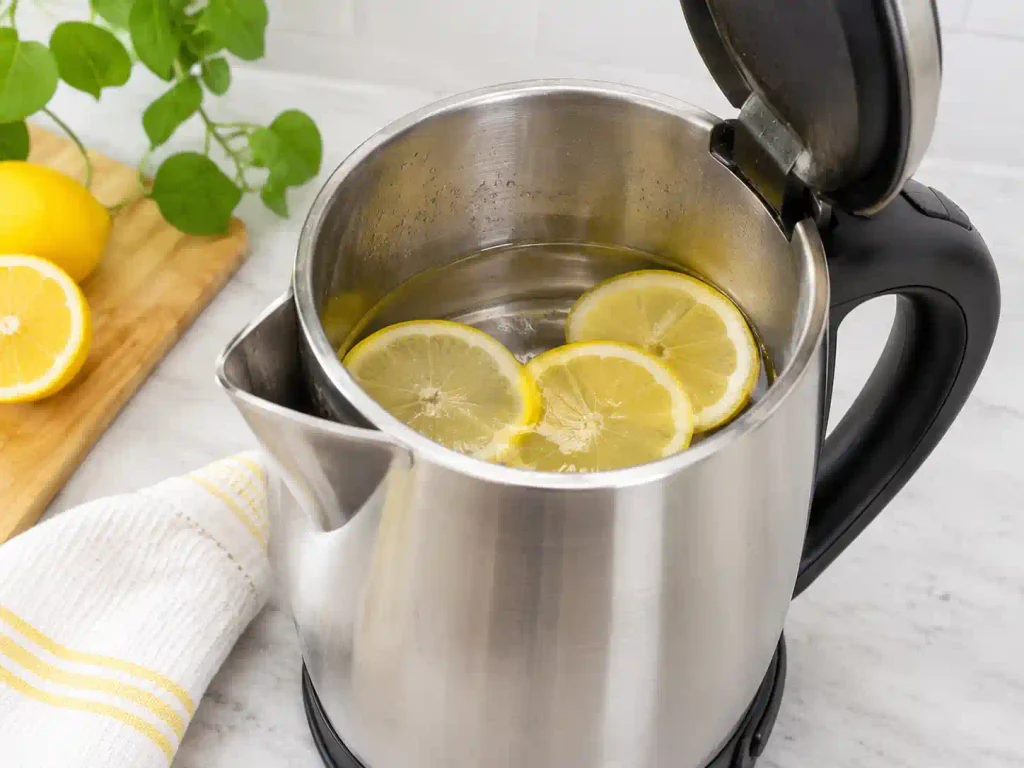
Pour the lemon juice into your kettle. Add enough clean water to cover the areas affected by limescale while remaining within the kettle’s minimum and maximum fill markings. For many kettles, approximately 500–750 ml of water is sufficient, depending on capacity and the location of the deposits. You may add a few lemon slices if desired, but juice alone is generally easier to rinse away. Avoid overfilling your kettle because boiling liquid can spill and cause burns.
Step 4: Heat the Lemon Solution
If your kettle’s manufacturer permits acidic descaling by heating, switch it on and bring the lemon-water solution to a boil. Heating can help accelerate the descaling process. Once the kettle switches off, leave the solution inside for approximately 15–30 minutes. This resting period allows the citric acid to react with the mineral deposits. Some kettles may have manufacturer-specific instructions that require a different temperature or prohibit boiling descaling solutions. Always follow those instructions.
Step 5: Allow the Solution to Cool
After the soaking period, allow the liquid to cool until it is safe to handle. Do not immediately attempt to scrub or empty boiling water. The limescale may appear softer, partially dissolved, or detached from the kettle’s interior. For thicker deposits, an additional soaking period may be helpful. Avoid leaving acidic solutions inside the appliance for extended periods unless permitted by the manufacturer.
Step 6: Empty and Gently Clean
Carefully pour the cooled lemon solution into the sink. Inspect the interior to see whether the deposits have loosened. Use a soft sponge or suitable cleaning brush to remove remaining residue. Do not use sharp tools or steel wool to scrape mineral deposits. If significant buildup remains, repeat the treatment instead of applying excessive force. Gentle cleaning protects the kettle’s finish and reduces the likelihood of damage.
Step 7: Rinse Thoroughly
Rinse the interior several times with fresh water. Make sure no lemon pieces, mineral flakes, or cleaning residue remain. Fill the kettle with clean water and bring it to a boil if the manufacturer recommends a rinse-boil cycle. Discard that water and repeat if any lemon flavor or odor remains. Your kettle should now be cleaner and ready for regular use.
How Long Does Lemon Take to Remove Limescale?
The time required depends on the thickness of the buildup, the concentration of lemon juice, and the kettle’s condition. For light mineral deposits, a 15–30-minute soak after heating may be enough. Moderate deposits might require a second treatment. Thick, hardened limescale can be more difficult to dissolve because fresh lemon juice contains varying amounts of citric acid. A heavily scaled kettle may respond better to a measured food-grade citric acid solution or a manufacturer-approved descaler. Do not assume that leaving lemon inside overnight will always produce better results. Prolonged acid contact may be unsuitable for certain kettle materials.
Can You Descale an Electric Kettle With Lemon?
Yes, many electric kettles can be descaled with lemon, provided the manufacturer allows this method. Electric kettles commonly have stainless steel or coated interiors, but their construction varies considerably. Before cleaning, read the appliance’s care instructions. Never immerse an electric kettle, its power base, or electrical connections in water. Keep liquid inside the designated water chamber and respect the fill markings. Some electric kettles feature concealed heating elements, making their interiors easier to clean. Other models contain exposed elements or materials that require special treatment. If the manual recommends a specific descaler, follow that guidance instead of assuming lemon is suitable.
Can You Use Lemon to Clean a Stovetop Kettle?
Traditional stovetop kettles may also benefit from lemon descaling. However, compatibility depends on the material and finish. Many stainless steel stovetop kettles tolerate appropriately diluted acidic cleaning solutions. Certain aluminum, copper, coated, or specialty kettles may require different care. Before proceeding, check the manufacturer’s instructions. When cleaning a compatible stovetop kettle, prepare the lemon-water mixture and heat it according to the recommended procedure. Allow the kettle to cool before emptying and rinsing. Avoid aggressive scrubbing, particularly around decorative finishes and interior coatings.
Lemon Juice vs. Vinegar: Which Works Better?
Both lemon juice and white vinegar contain acids capable of reacting with calcium carbonate. However, their cleaning performance depends on acid concentration, contact time, and the amount of limescale present.
Lemon Juice
Lemon contains citric acid and has a recognizable citrus aroma. It is convenient for regular cleaning and small amounts of mineral buildup. Its acidity varies naturally between lemons, making results less predictable.
White Vinegar
Household white vinegar contains acetic acid, commonly at a concentration of approximately 5%. It is widely used for household descaling and can be effective when properly diluted according to appliance instructions. However, its strong smell may require additional rinsing.
Which Should You Choose?
Lemon is a convenient choice for routine maintenance when your kettle’s manufacturer permits it. Vinegar may be an alternative for compatible models. For difficult deposits, a measured citric acid solution or appliance-specific descaler can provide more consistent results. Never combine multiple cleaning chemicals in an attempt to make the process stronger.
How Often Should You Descale Your Kettle?
The ideal cleaning frequency depends on your water hardness and how often you boil water. Households with hard water may notice deposits developing within a few weeks. Homes with softer water may require less frequent descaling.
Use the following general schedule as a starting point.
| Water Condition | Suggested Inspection and cleaning |
| Soft water | Inspect monthly;descale when deposits appear |
| Moderately hard water | Check every 2-4 weeks |
| Very hard water | Check weekly and descale as needed |
These are practical guidelines rather than fixed requirements. Visible buildup is usually a better indication than following an unnecessarily strict calendar. Regular light cleaning is often easier than removing thick deposits after several months.
Common Mistakes to Avoid When Descaling a Kettle
Although how to descale a kettle with lemon is relatively simple, several mistakes can reduce effectiveness or damage your appliance.
Using Too Little Lemon Juice
A weak solution may struggle to dissolve substantial mineral deposits. Consider repeating the process or using an approved descaler rather than relying on excessive soaking.
Leaving Lemon Inside Too Long
Long soaking periods are not always necessary. Some materials may react poorly to prolonged acid exposure.
Using Abrasive Cleaning Tools
Steel wool and sharp scrapers can scratch interior surfaces and damage protective finishes. Use soft cleaning materials instead.
Forgetting to Rinse Properly
Residual lemon juice can affect the taste of boiled water. Rinse thoroughly and perform a clean-water boil when appropriate.
Ignoring Manufacturer Instructions
Not every kettle supports the same cleaning methods. Always prioritize the manufacturer’s recommendations.
How to Prevent Limescale From Building Up
Prevention can make routine cleaning easier and reduce the amount of mineral buildup inside your kettle.
1. Empty Unused Water
Avoid repeatedly boiling the same leftover water throughout the day. Emptying unused water and allowing the kettle to dry when practical can help reduce prolonged mineral contact with internal surfaces.
2. Consider Water Hardness
If your area has very hard water, a suitable water-softening system may reduce calcium and magnesium levels. Ordinary carbon water filters do not necessarily remove hardness minerals, so check the filter’s specifications before purchasing.
3. Clean Mineral Deposits Early
Inspect the kettle regularly. Small deposits are generally easier to dissolve than thick, hardened layers.
4. Keep the Kettle Dry When Appropriate
After cooling, empty the kettle if it will not be used for an extended period. Leave the lid open temporarily only when safe and appropriate for the appliance.
5. Follow a Regular Maintenance Routine
Consistent care helps maintain heating performance and reduces the need for intensive cleaning.
Is Lemon Safe for All Kettle Materials?
Lemon is a household ingredient, but that does not mean it is automatically compatible with every appliance. Stainless steel interiors are often compatible with brief, diluted acid treatments when approved by the manufacturer. However, aluminum, certain coatings, specialty metals, seals, and decorative finishes may require different cleaning methods. Repeated or prolonged acid exposure can damage some materials. If your kettle has peeling coatings, corrosion, damaged seals, or exposed electrical components, avoid experimenting with cleaning solutions. Consult the appliance manual or contact the manufacturer.
How to Remove Stubborn Limescale Naturally
Sometimes ordinary lemon cleaning does not remove all the buildup. This commonly happens when hard-water deposits have accumulated over a long period. Begin by repeating the standard lemon treatment once, provided your kettle’s instructions allow it. Make sure the affected surfaces are covered by the solution. Allow the recommended contact time and gently loosen softened residue with a suitable nonabrasive tool. If mineral deposits remain thick and firmly attached, consider using a manufacturer-approved descaler. Food-grade citric acid can also be effective in compatible kettles, but the dilution should follow the appliance or descaling product instructions. Avoid combining citric acid, vinegar, lemon juice, and other cleaners unnecessarily. Stronger solutions are not always safer or better.
Additional Tips for Keeping Your Kettle Clean
Good kettle maintenance involves more than removing mineral deposits. Wipe the exterior with a slightly damp microfiber cloth after disconnecting the appliance and allowing it to cool. Avoid letting water enter buttons, electrical connections, or the power base. Check any removable limescale filter near the spout. Clean it according to the manufacturer’s instructions to remove trapped mineral flakes. Avoid storing lemon slices or other food ingredients inside the kettle after cleaning. Inspect the lid, handle, and power cord periodically for damage. A clean kettle, combined with safe handling and regular maintenance, can provide reliable performance for everyday hot drinks.
Frequently Asked Questions
1. Does lemon really remove limescale from a kettle?
Yes. Lemon contains citric acid, which reacts with calcium carbonate deposits. It can effectively remove light to moderate limescale when used correctly. Heavy deposits may require repeated cleaning or an approved descaling product.
2. Can I use bottled lemon juice instead of fresh lemon?
Bottled lemon juice may work if it contains sufficient citric acid. However, its ingredients and acidity can vary. Fresh lemon is convenient, while measured citric acid products may produce more predictable results.
3. Can I leave lemon water in my kettle overnight?
Overnight soaking is generally unnecessary and may be unsuitable for certain kettle materials. Follow manufacturer instructions and begin with a shorter soaking period of approximately 15–30 minutes.
4. Will lemon damage a stainless steel kettle?
Brief exposure to properly diluted lemon juice is often tolerated by compatible stainless steel kettles. However, product construction and surface finishes vary. Always follow the manufacturer’s cleaning guidance.
5. Why is there still white residue after cleaning?
Remaining white deposits usually indicate that some limescale has not completely dissolved. Repeat an approved descaling cycle or use a suitable commercial descaler for stubborn buildup.
6. Can I drink water immediately after descaling?
You should rinse your kettle thoroughly before using it for drinking water. Where recommended, boil fresh water and discard it to remove remaining lemon residue and loosened mineral particles.
7. Is lemon better than chemical descalers?
Lemon offers a convenient cleaning option for compatible kettles with light buildup. Commercial descalers may be more effective for thick deposits because their ingredients and concentrations are specifically formulated for the task.
Conclusion
Knowing how to descale a kettle with lemon can make everyday kitchen maintenance easier, more affordable, and more convenient. The natural citric acid in lemon helps dissolve mineral deposits, making it useful for cleaning many compatible kettles. The process involves preparing a diluted lemon solution, heating it when permitted, allowing adequate soaking time, and rinsing thoroughly.
For the best results, inspect your kettle regularly, follow manufacturer recommendations, and remove small deposits before they become difficult to clean. With a little routine care, you can maintain a cleaner kettle, reduce unwanted mineral flakes, and enjoy fresh hot drinks without unnecessary buildup.