
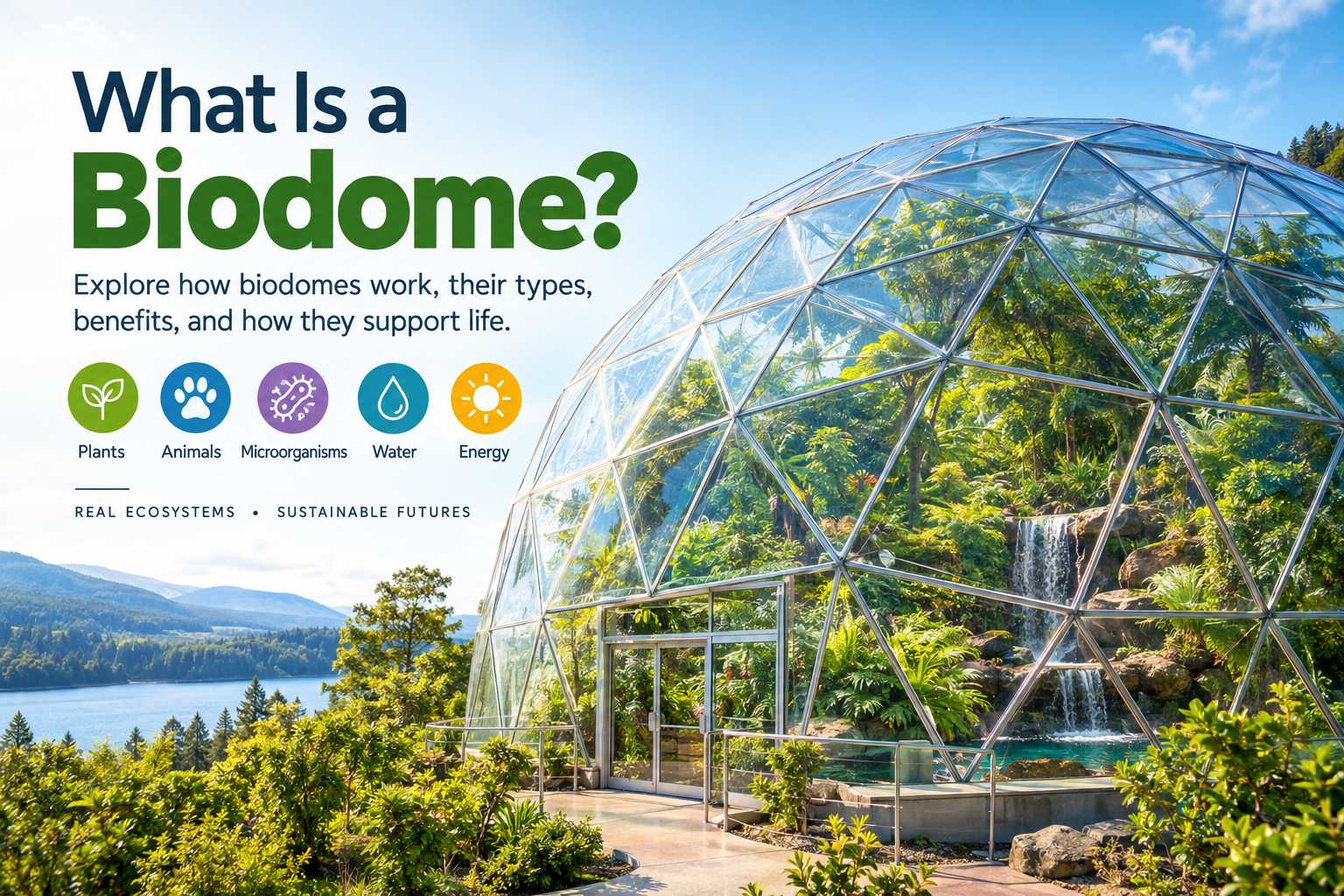
A biodome is an enclosed environment designed to support plants, animals, and other living organisms by recreating the conditions of a natural ecosystem. Biodomes can range from small glass enclosures and educational greenhouses to large, technologically advanced structures that contain entire ecosystems. They are used for education, scientific research, conservation, sustainable agriculture, and exploring how life can survive in controlled environments.
In this comprehensive guide, we will explain what a biodome is, how it works, the different types of biodomes, their benefits, and how you can create a biodome at home or in a school setting. Whether you are a student, nature enthusiast, gardener, or someone interested in sustainable living, understanding biodomes can help you appreciate the relationship between living organisms and their environment.
What Is a Biodome?
A biodome is a controlled or partially controlled enclosure that recreates the environmental conditions of a natural habitat. It typically includes living organisms such as plants, microorganisms, and sometimes animals, along with nonliving elements such as soil, water, air, sunlight, and temperature controls.
The main purpose of a biodome is to create a self-contained or carefully managed ecosystem where living things can grow, interact, and survive.
Unlike a regular greenhouse, which is primarily designed to help plants grow, a biodome often focuses on reproducing the interactions between different parts of an ecosystem. For example, a biodome might include plants that produce oxygen, microorganisms that break down organic matter, and water that circulates through the environment.
The design and complexity of a biodome depend on its intended purpose. A small home biodome may fit inside a glass container, while a large research biodome may require advanced climate-control systems, artificial lighting, and water-management technology.
How Does a Biodome Work?
A biodome works by bringing together living organisms and environmental conditions that support life. Its operation depends on the interaction of several important components, including sunlight, water, air, soil, temperature, and nutrient cycles.
The goal is to maintain conditions suitable for the organisms living inside while allowing natural processes to take place.
1. Sunlight and Energy
Plants need energy to grow, and most biodomes use sunlight as their primary energy source. Plants absorb sunlight through photosynthesis, converting light energy into chemical energy.
During photosynthesis, plants use carbon dioxide and water to produce sugars and release oxygen.
In indoor or research biodomes, artificial lighting may supplement or replace sunlight. The type of lighting depends on the plants and organisms being cultivated.
2. Water Cycle
Water is essential for almost every living organism inside a biodome. It supports plant growth, helps maintain humidity, and participates in natural biological processes.
In some biodomes, water evaporates from soil and plant surfaces, condenses on cooler surfaces, and returns to the soil. This process resembles a small water cycle.
However, not every biodome is completely self-sustaining. Many require additional water, drainage, filtration, or humidity management to maintain suitable conditions.
3. Air and Gas Exchange
Plants, animals, and microorganisms interact with gases such as oxygen and carbon dioxide. Plants absorb carbon dioxide during photosynthesis, while many organisms release carbon dioxide through respiration.
A biodome must maintain suitable gas concentrations for the organisms inside. Sealed systems can experience changes in oxygen, carbon dioxide, and humidity, so larger or more complex biodomes may need ventilation or environmental monitoring.
4. Soil and Nutrient Cycling
Soil provides support for plants and may contain nutrients and microorganisms that help maintain ecosystem processes.
Decomposers, including fungi and bacteria, break down organic material and contribute to nutrient cycling. These nutrients can become available to plants again.
A biodome’s nutrient system depends on its design. Some systems use natural soil, while others rely on hydroponics, artificial substrates, or carefully managed nutrient solutions.
5. Temperature and Humidity Control
Different organisms need different temperature and humidity levels. A tropical biodome may require warm, humid conditions, while a desert biodome needs dry conditions and plants adapted to limited water availability.
Temperature can be influenced by sunlight, insulation, ventilation, heating, cooling, and shading. In advanced biodomes, sensors and automated systems help regulate environmental conditions.
Types of Biodomes
Biodomes come in different forms, depending on their size, purpose, climate, and the organisms they contain. Some are designed for simple educational projects, while others support complex research or conservation activities.
Here are several common types of biodomes.
1. Tropical Biodome
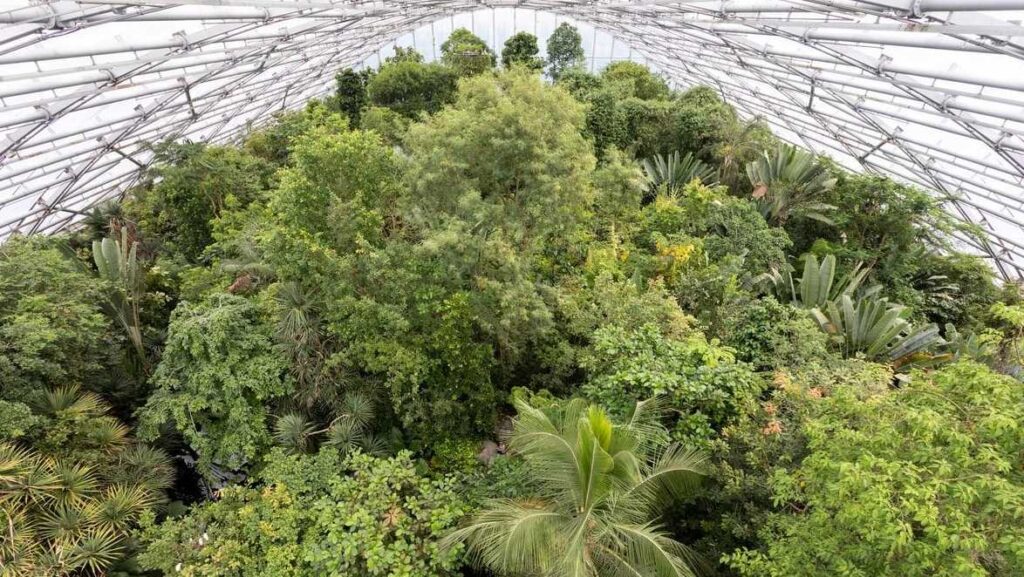
A tropical biodome recreates the warm and humid conditions found in tropical rainforests. It may contain plants such as ferns, palms, orchids, vines, and other species adapted to tropical environments.
Typical features include:
- Warm temperatures.
- High humidity.
- Abundant plant life.
- Moist soil or growing media.
- Water-management systems.
- Controlled ventilation.
Tropical biodomes are useful for botanical education, conservation research, and demonstrating rainforest ecosystems.
Because tropical plants often require specific conditions, temperature and humidity management can be important for long-term success.
2. Desert Biodome
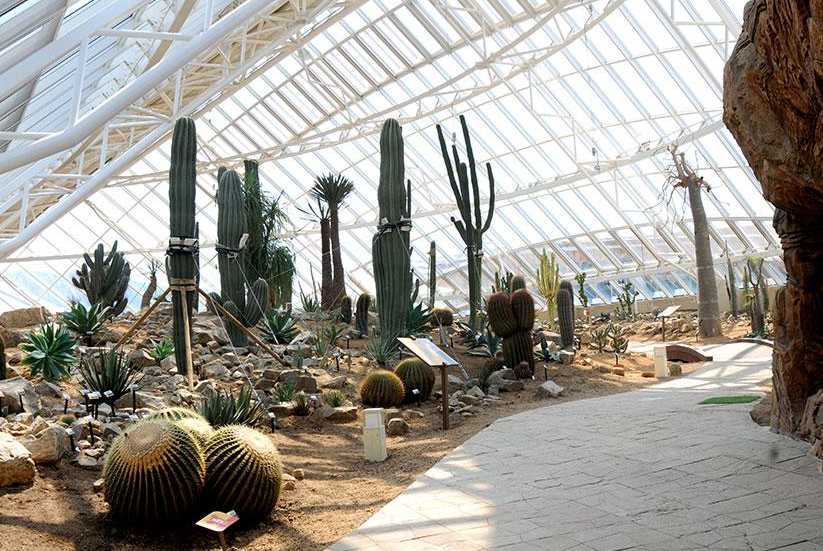
A desert biodome recreates environmental conditions associated with arid regions. It may contain cacti, succulents, drought-tolerant plants, and microorganisms suited to dry environments.
Common characteristics include:
- Low humidity.
- Limited water availability.
- Sandy or rocky substrates.
- Strong lighting.
- Temperature variations.
- Drought-adapted plants.
Desert biodomes demonstrate how organisms adapt to environments where water is scarce. They can also be used in educational settings to explore water conservation and plant survival strategies.
3. Aquatic Biodome
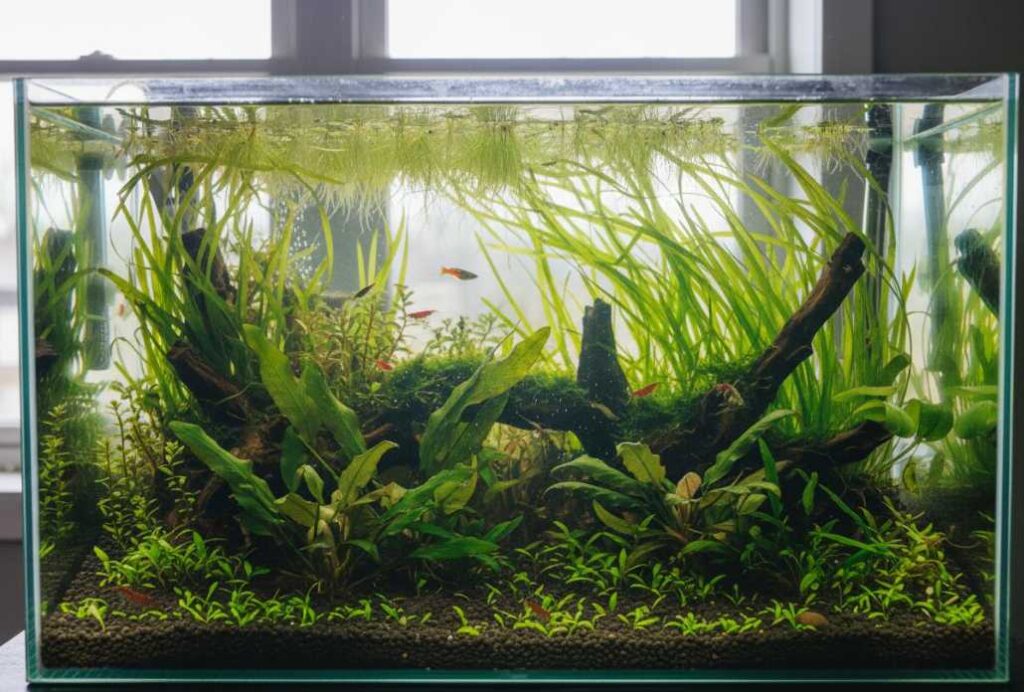
An aquatic biodome is designed to recreate an underwater or water-based ecosystem. It may contain aquatic plants, microorganisms, and selected aquatic animals.
These systems can include freshwater or marine environments, depending on their design.
Important elements may include:
- Water quality management.
- Oxygen availability.
- Appropriate lighting.
- Filtration.
- Aquatic plants.
- Organisms suited to the water conditions.
Aquatic biodomes can help students and researchers understand food chains, water chemistry, photosynthesis, and interactions between aquatic organisms.
A closed aquatic ecosystem requires careful planning because waste buildup, oxygen changes, and nutrient imbalances can affect the organisms inside.
4. Forest Biodome
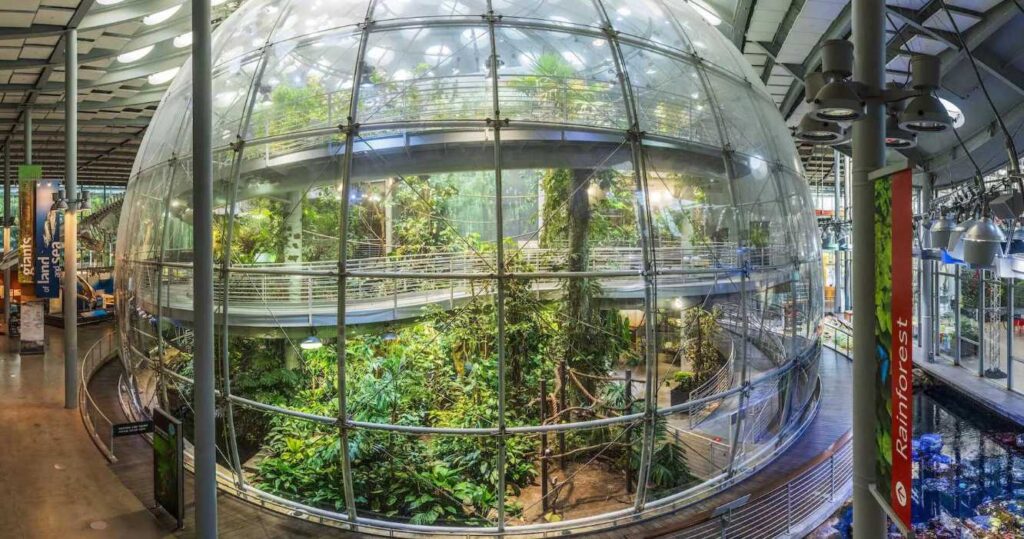
A forest biodome recreates some of the environmental characteristics of a forest ecosystem. Depending on its size, it may include trees, shrubs, mosses, ferns, soil organisms, and other species.
A forest biodome may focus on:
- Plant biodiversity.
- Forest nutrient cycles.
- Humidity and temperature.
- Soil ecosystems.
- Habitat relationships.
Large forest biodomes can support research and education about forest ecology. Small versions may be designed as terrariums or classroom projects.
5. Educational Biodome
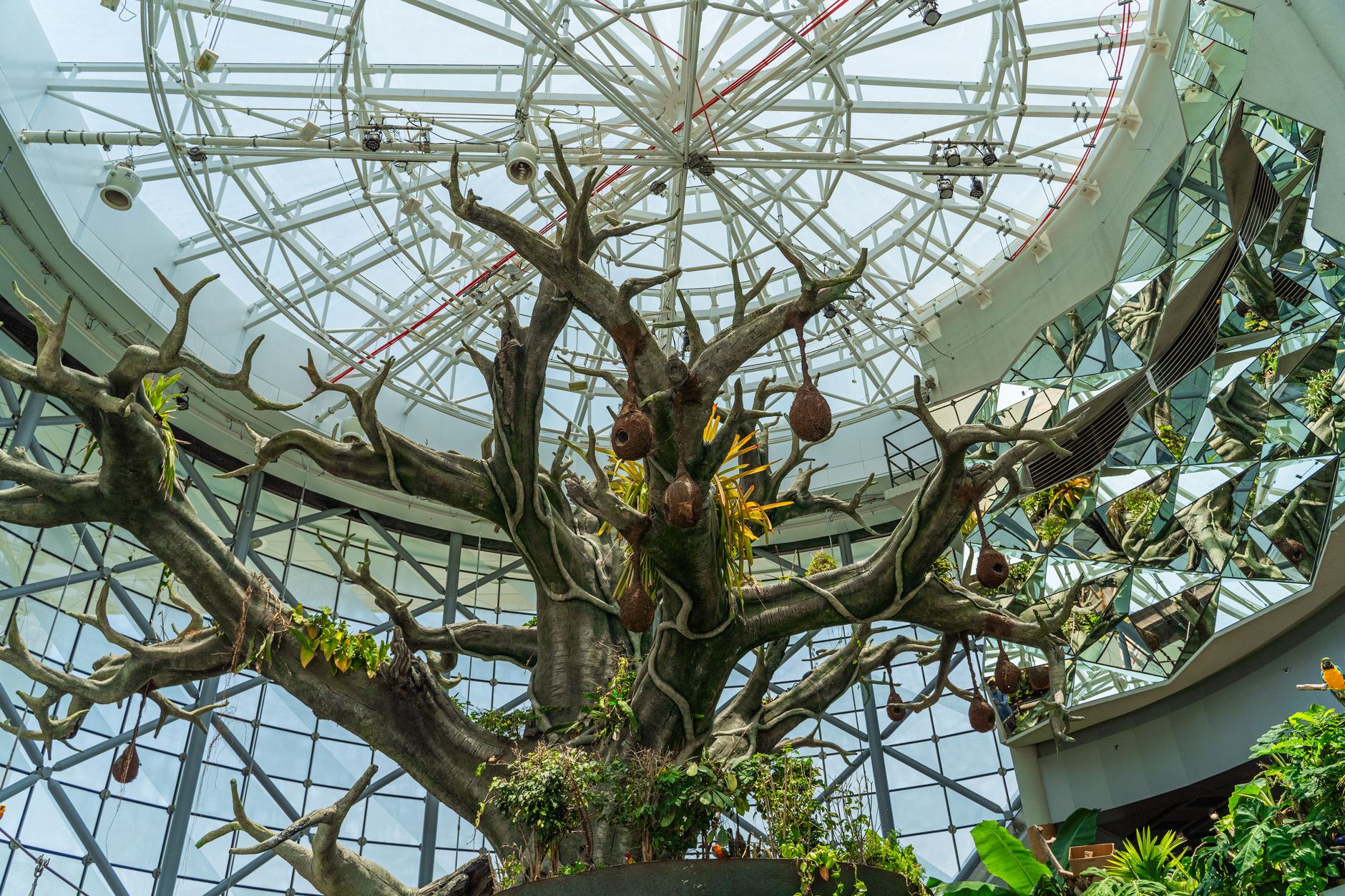
An educational biodome is designed to teach people about ecosystems, biology, environmental science, and sustainability.
These biodomes are often used in schools, museums, universities, and science centers. They can range from a simple sealed container containing plants and soil to a larger habitat with multiple species.
Students may observe:
- Plant growth.
- Water movement.
- Decomposition.
- Photosynthesis.
- Ecosystem interactions.
- Changes in environmental conditions.
Educational biodomes offer a practical way to understand concepts that can be difficult to learn through textbooks alone.
6. Research Biodome
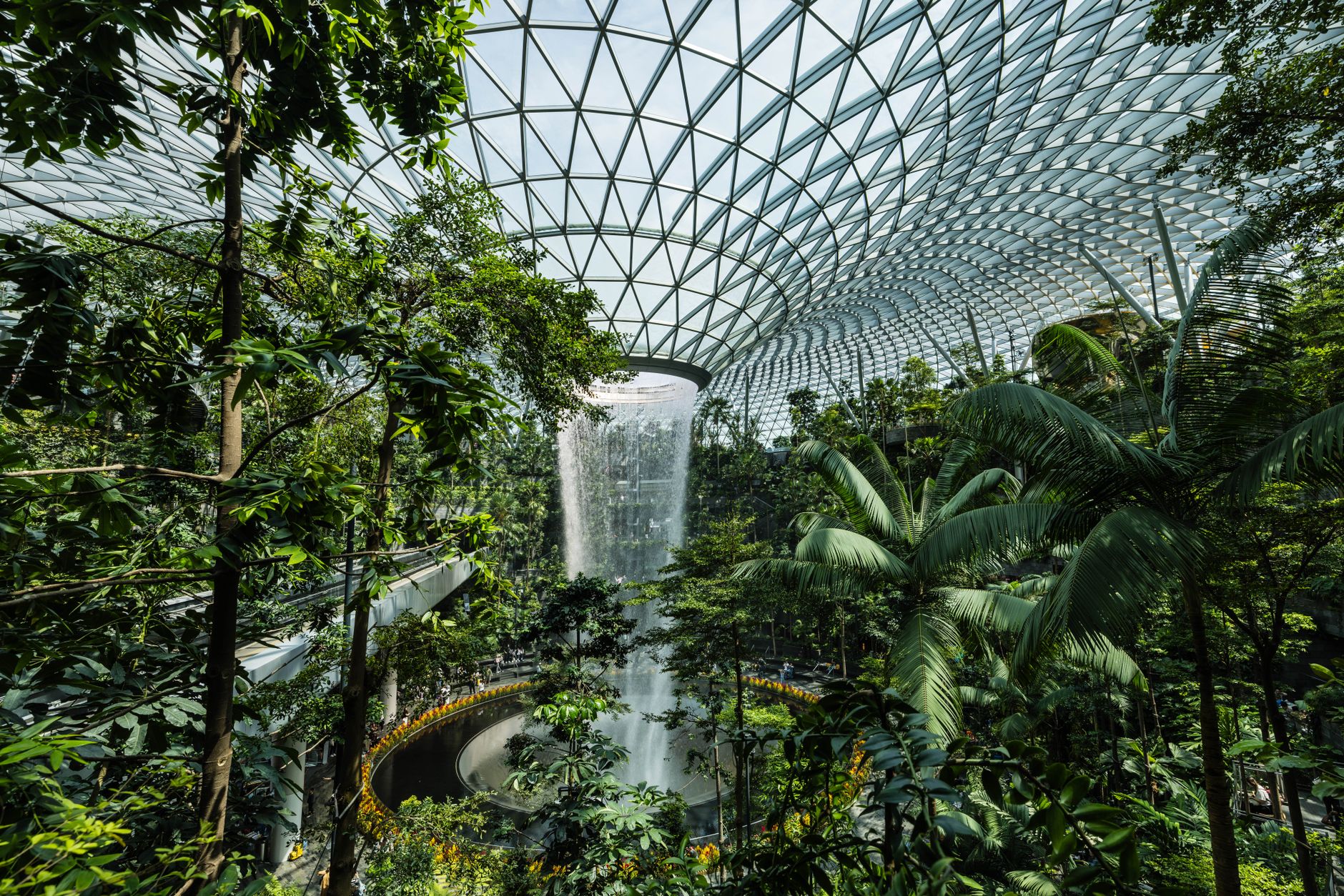
Research biodomes are specialized environments used to study living organisms under controlled conditions.
Scientists may use them to investigate plant growth, environmental responses, ecosystem interactions, and agricultural systems. Some research facilities use enclosed environments to examine how organisms respond to changes in temperature, humidity, light, and nutrient availability.
Research biodomes can also contribute to the study of controlled-environment agriculture and the challenges of supporting life in unusual or isolated environments.
What Are the Main Components of a Biodome?
The components of a biodome vary depending on its size and purpose. A basic home biodome may need only a transparent container, soil, plants, and moisture. A large facility may require extensive engineering and environmental monitoring.
1. Enclosure
The enclosure creates a defined space for the ecosystem. Common materials include:
- Glass.
- Transparent plastic.
- Polycarbonate panels.
- Specialized architectural materials.
The enclosure must be suitable for the organisms and environmental conditions inside. For example, tropical systems may need materials and ventilation arrangements that manage moisture and condensation.
2. Plants
Plants are often central to a biodome because they provide primary production through photosynthesis. They also create habitats and influence humidity, gas exchange, and nutrient cycling.
Plants should be selected according to the climate and available space. Mixing species with very different environmental requirements can make the system difficult to maintain.
3. Soil or Growing Medium
Soil or another growing medium supports plant roots and may provide nutrients. It can also contain microorganisms that contribute to decomposition and nutrient cycling.
Some biodomes use natural soil, while others use gravel, sand, coco coir, or specialized growing media.
4. Water
Water supports plant growth and other biological processes. Depending on the biodome, it may be supplied manually or circulated through a managed water system.
Water requirements vary significantly among different ecosystems.
5. Light
Light supports photosynthesis and influences the growth and behavior of many organisms. Biodomes may use natural sunlight, artificial lighting, or a combination of both.
Lighting needs depend on the species being grown and the design of the enclosure.
6. Temperature and Humidity Controls
More advanced biodomes may use sensors, fans, heaters, cooling systems, humidifiers, or ventilation systems.
These controls help maintain environmental conditions within the required range.
7. Microorganisms and Decomposers
Microorganisms can play an important role in nutrient cycling and decomposition. In natural ecosystems, bacteria and fungi help break down organic matter and return nutrients to the environment.
The presence and role of microorganisms depend on the biodome’s design and the organisms introduced into it.
What Is the Difference Between a Biodome and a Greenhouse?
Biodomes and greenhouses are related, but they are not exactly the same. Both can create controlled environments for plants, yet their purposes and levels of ecological complexity may differ.
| Feature | Biodome | Greenhouse |
|---|---|---|
| Main purpose | Recreate or study ecosystems | Support plant growth |
| Organisms | May include plants, animals, and microorganisms | Primarily plants |
| Design | Can be ecosystem-focused and highly controlled | Usually optimized for cultivation |
| Environmental control | Varies from simple to advanced | Often uses ventilation, heating, or cooling |
| Ecosystem interactions | May be a central objective | Usually secondary to plant production |
| Common uses | Education, research, conservation, experimentation | Gardening, agriculture, plant propagation |
A greenhouse can contain an ecosystem, and a biodome can be used to grow plants. The distinction is primarily based on the design objective rather than a strict technical boundary.
For example, a greenhouse growing tomatoes for commercial production is generally focused on cultivation. A biodome containing plants, soil organisms, water, and other ecological components may focus more on recreating an ecosystem.
What Are the Benefits of Biodomes?
Biodomes offer several potential benefits in education, research, conservation, and sustainable food production. Their usefulness depends on their design, operating costs, and the goals of the project.
1. Environmental Education
One of the major benefits of biodomes is that they provide a hands-on way to learn about ecosystems.
Students can observe how plants grow, how water moves through an environment, and how organisms interact. These experiences can help explain biological concepts such as food webs, nutrient cycling, and adaptation.
A classroom biodome can also encourage students to think about environmental responsibility and the importance of biodiversity.
2. Scientific Research
Controlled environments allow researchers to study how organisms respond to specific conditions.
For example, scientists may investigate how changes in temperature, humidity, or light influence plant growth. Research facilities can isolate certain variables more easily than outdoor ecosystems.
However, controlled conditions cannot fully reproduce the complexity of every natural environment.
3. Conservation and Plant Preservation
Some biodomes and enclosed botanical facilities support the cultivation and preservation of plant species. They can provide suitable growing conditions for plants that cannot survive outdoors in a particular region.
Biodomes may complement conservation efforts by supporting education, research, and cultivation. They do not replace the protection of natural habitats, which remains essential for preserving biodiversity.
4. Controlled Food Production
Biodome-like systems can be used to explore controlled-environment agriculture. These systems may support food production in locations where outdoor growing conditions are challenging.
Potential advantages include:
- Control over growing conditions.
- Protection from some outdoor weather conditions.
- Efficient use of space in certain systems.
- Opportunities for year-round cultivation.
- Research into resource-efficient growing methods.
However, controlled environments can require substantial energy, infrastructure, water management, and ongoing maintenance. Their sustainability depends on the specific design and resources used.
5. Understanding Ecosystem Relationships
Biodomes can demonstrate how living organisms depend on one another and their environment.
For instance, plants, decomposers, soil, water, and microorganisms may interact through nutrient cycles. Observing these processes can help people understand that ecosystems are interconnected.
6. Exploring Life in Extreme Environments
Some biodome research is relevant to environments where natural conditions are difficult for humans and plants, including isolated habitats and potential space-related applications.
Research in controlled environments can help scientists investigate resource use, plant growth, and ecosystem management. A laboratory biodome does not automatically reproduce the conditions of another planet, but it can support experiments relevant to controlled life-support systems.
How to Make a Biodome at Home
Creating a small biodome at home can be an engaging science or gardening project. A simple terrarium-style biodome is often easier to build than a large ecosystem with animals or complex climate controls.
The following steps explain how to create a basic plant-focused biodome.
Materials You Need
- A clear glass jar or transparent container.
- Small plants suitable for terrariums.
- Clean soil or an appropriate growing medium.
- Small stones or drainage material, if suitable for the design.
- Activated charcoal, optional and dependent on the terrarium setup.
- A small amount of water.
- Decorative natural materials, such as rocks or moss, if appropriate.
- A lid, if creating a closed terrarium.
Choose plants that have similar environmental requirements. Tropical, humidity-loving plants are often suitable for enclosed terrariums, while desert plants typically need different conditions and are better suited to an open or specially designed setup.
Step 1: Clean the Container
Wash the container thoroughly and remove any residues. Allow it to dry before adding the growing materials.
A clean container helps reduce the introduction of unwanted contaminants.
Step 2: Add the Growing Medium
Place a suitable growing medium in the container. If using a drainage layer, ensure that the design supports the plants and does not leave the roots permanently waterlogged.
A drainage layer is not a substitute for proper watering or suitable soil. The materials used should match the needs of the plants.
Step 3: Plant Suitable Species
Add small plants that can grow in the conditions you intend to maintain. Avoid overcrowding the container, as plants need space and sufficient airflow.
Handle the roots carefully during planting.
Step 4: Add a Small Amount of Water
Water the plants according to their requirements. In a closed terrarium, excessive moisture can lead to mold, root problems, and plant damage.
The growing medium should be moist when appropriate, but not saturated.
Step 5: Place the Lid or Cover
If your plants are suitable for a closed terrarium, you can add a lid. Monitor condensation and plant health after sealing the container.
Some systems may need occasional ventilation to prevent excessive moisture or fungal growth.
Step 6: Place the Biodome in Suitable Light
Put the container in bright, indirect light unless the plants require different conditions. Avoid placing a sealed glass container in intense direct sunlight, where temperatures can rise rapidly.
Monitor the plants and adjust the location as needed.
Step 7: Observe and Maintain the System
Check the container regularly for:
- Excessive condensation.
- Mold growth.
- Wilting plants.
- Unpleasant odors.
- Dry soil.
- Overcrowding.
A home biodome may require maintenance and is not necessarily a fully self-sustaining ecosystem.
Are Biodomes Completely Self-Sustaining?
Not all biodomes are self-sustaining. The term self-sustaining means that a system can maintain essential processes with minimal external input, but the level of independence varies greatly.
A small sealed terrarium may recycle some water and support limited nutrient cycling. However, it still depends on the original materials, appropriate light, and a balanced combination of organisms.
Larger biodomes may require:
- Water replacement.
- Nutrient additions.
- Temperature regulation.
- Air exchange.
- Waste management.
- Plant pruning.
- Pest control.
- Energy for lighting and environmental systems.
Even ecosystems that appear stable can experience changes over time. Organisms grow, compete for resources, reproduce, and die. Nutrients may become depleted, and environmental conditions may shift.
A biodome should therefore be viewed as a managed ecological system unless its long-term independence has been demonstrated under defined conditions.
Biodomes and Sustainability
Biodomes are often associated with sustainable living and environmental innovation, but their environmental impact depends on how they are designed and operated.
A biodome can support research into resource use, controlled agriculture, and ecological processes. It can also help demonstrate the importance of water conservation, biodiversity, and ecosystem balance.
However, building and operating a large enclosed environment can consume significant resources. Heating, cooling, artificial lighting, water treatment, construction materials, and transportation all influence its environmental footprint.
Ways to Improve Biodome Sustainability
Use energy-efficient lighting: Where artificial lights are necessary, efficient lighting systems may reduce electricity consumption.
Manage water carefully: Collecting and recycling water where appropriate can help reduce waste.
Select suitable plants: Choosing species adapted to the available conditions may reduce the need for excessive heating, cooling, or watering.
Monitor environmental conditions: Sensors can help identify problems and reduce unnecessary resource use.
Use durable materials: Long-lasting construction materials can reduce the need for frequent replacement.
Sustainability should be assessed based on the complete system, including construction, operation, maintenance, and end-of-life considerations.
What Is the Role of Biodomes in Space Research?
Biodomes are relevant to space research because controlled environments can help scientists investigate how plants and other organisms might be grown in isolated habitats.
In space-related research, enclosed plant-growing systems may be used to study:
- Plant growth under controlled conditions.
- Water and nutrient management.
- Resource recycling.
- Food production.
- Interactions between biological systems and environmental controls.
Growing plants in space presents challenges such as limited resources, radiation exposure, altered gravity, and the need for reliable life-support systems. A terrestrial biodome does not reproduce all these conditions.
Nevertheless, research into controlled ecological systems can contribute to understanding how biological processes might be managed in future space habitats.
Examples of Biodome Applications
Biodomes can be used in several fields, from education to environmental research.
Schools and Classrooms
Teachers can use small biodomes to explain plant biology, water cycles, and ecosystems. Students can record observations and investigate how changes in light or water affect plant growth.
Botanical Gardens
Large enclosed facilities can provide controlled environments for growing tropical or other climate-sensitive plants. They may also support public education and botanical research.
Universities and Research Centers
Research facilities may use enclosed environments to study ecosystem interactions, plant physiology, agriculture, and environmental responses.
Urban Agriculture
Controlled growing systems can explore food production in urban locations. These systems may include hydroponic growing, greenhouse technology, or other methods that do not require a traditional soil-based ecosystem.
Environmental Exhibits
Museums and science centers can use biodomes to introduce visitors to different ecosystems and demonstrate ecological relationships.
Common Challenges of Building a Biodome
Although biodomes can be valuable, designing and maintaining one involves several challenges.
1. Maintaining the Right Environment
Each organism has specific environmental requirements. Maintaining the right combination of temperature, humidity, light, and water can be difficult, particularly when many species share one enclosure.
2. Preventing Imbalances
A biodome may experience excessive moisture, nutrient depletion, algae growth, pest problems, or the spread of mold.
Monitoring and appropriate maintenance are important for managing these issues.
3. Selecting Compatible Organisms
Not every plant or animal is suitable for living in the same enclosed environment. Species may compete for resources or have incompatible climate requirements.
Researching organisms before introducing them can reduce potential problems.
4. Managing Costs
Large biodomes can require substantial investment in construction, lighting, ventilation, water management, and maintenance.
A small educational biodome is usually less demanding than a large research or public facility.
5. Balancing Natural Processes and Human Control
The more complex a biodome becomes, the more challenging it may be to maintain a stable environment. Natural processes can be difficult to predict, especially when multiple species interact.
Frequently Asked Questions About Biodomes
1. What is a biodome in simple words?
A biodome is an enclosed space designed to recreate a natural environment where plants, animals, and microorganisms can live or be studied under controlled conditions.
2. Is a biodome the same as a terrarium?
Not exactly. A terrarium is typically a small container used to grow plants or maintain a miniature habitat. A biodome is a broader concept that can include small terrariums as well as large, complex ecosystems.
3. Can a biodome survive without human help?
Some biodomes can operate with limited external input for a period of time, but most require some level of monitoring or maintenance. A completely self-sustaining system is difficult to achieve and depends on the ecosystem’s design.
4. What plants are best for a home biodome?
Plants suitable for a home biodome depend on the type of environment. Humidity-loving terrarium plants, such as certain mosses and small ferns, may be appropriate for closed systems. Desert plants generally require different moisture and ventilation conditions.
5. Do biodomes need sunlight?
Many biodomes use sunlight as an energy source. However, artificial lighting may be used when natural light is insufficient or when environmental conditions are controlled for research.
6. Can animals live in a biodome?
Yes, some biodomes contain animals, but animal inclusion requires careful planning. The enclosure must provide appropriate habitat, food, water, temperature, and welfare conditions. A small home terrarium should not be used to house animals without proper research and suitable care.
7. What is the main purpose of a biodome?
The purpose varies. Biodomes may be used for environmental education, research, conservation, controlled agriculture, and studying ecosystems.
8. Are biodomes good for the environment?
Biodomes can support education, research, and certain conservation or resource-management goals. However, their environmental value depends on construction materials, energy consumption, water use, and management practices.
9. How long can a biodome last?
The lifespan of a biodome depends on its design, materials, organisms, and maintenance. A small terrarium may remain functional for years with appropriate care, while larger facilities require ongoing maintenance and equipment replacement.
10. Can I make a biodome for a school project?
Yes. A small plant-focused terrarium is a practical starting point for a school project. You can observe changes in plant growth, moisture, and environmental conditions over time.
Conclusion
A biodome is an enclosed environment designed to support or recreate the conditions of a natural ecosystem. It can be as simple as a small plant terrarium or as complex as a large research facility containing multiple organisms and environmental-control systems.
Biodomes help people explore the connections between plants, animals, microorganisms, water, air, soil, and climate. They have applications in education, scientific research, conservation, and controlled-environment agriculture.
Although biodomes can offer valuable opportunities for learning and experimentation, they are not automatically self-sustaining or environmentally beneficial. Their success depends on thoughtful design, suitable organisms, ongoing monitoring, and responsible resource management.
Whether you want to build a small biodome at home or learn about large-scale ecological research, studying these enclosed environments provides a fascinating way to understand how life depends on balanced ecosystems.