
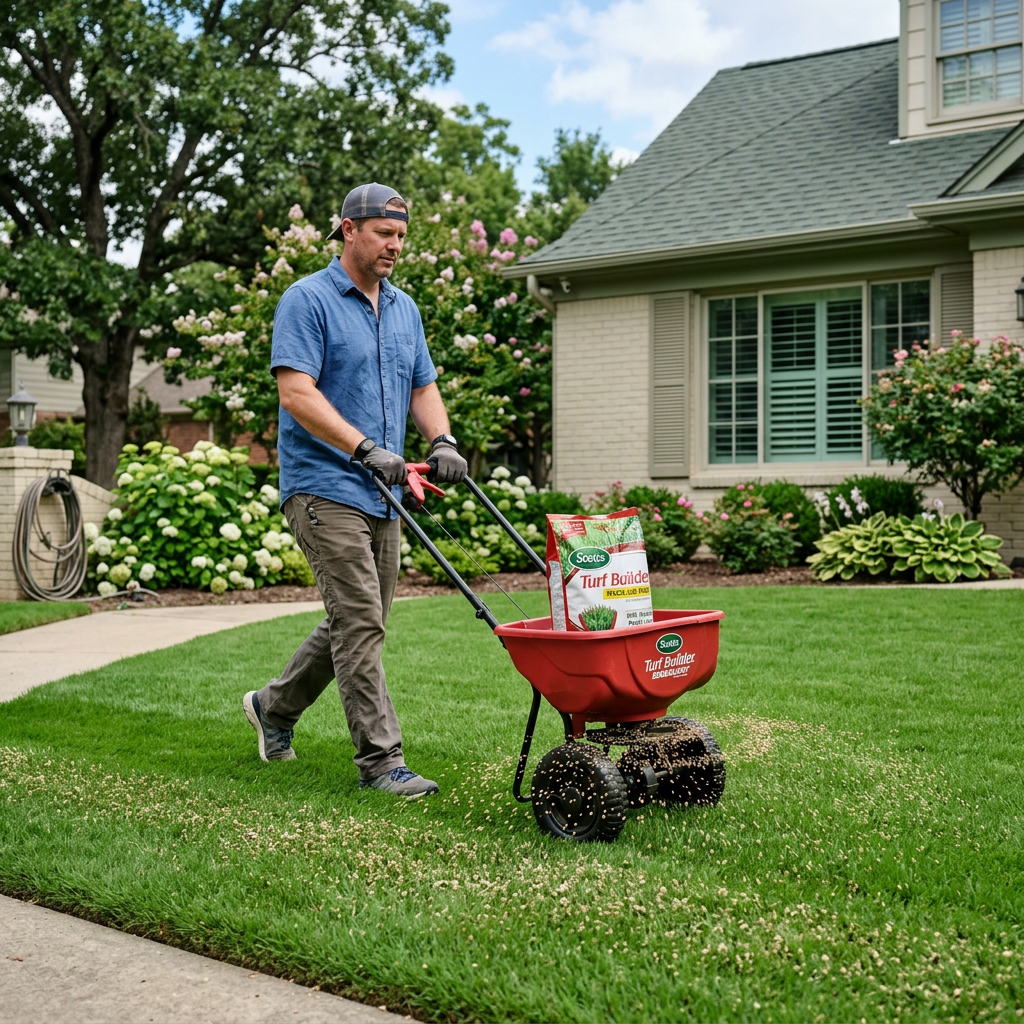
A lush, vibrant, and weed-free lawn is the pride of any homeowner. If you have Bermuda grass, you already know it is one of the most resilient, heat-tolerant, and beautifully dense warm-season grasses available. However, because it thrives so vigorously in the sun, it can also become a prime target for aggressive summer weeds like crabgrass, dandelions, and clover. Keeping these invaders at bay while ensuring your turf gets the nourishment it needs requires a strategic approach.
That is where using a dedicated weed and feed for bermuda grass comes into play. This dual-purpose lawn care product is designed to save you time and energy by knocking out troublesome weeds and delivering a robust dose of essential nutrients in a single application. But because Bermuda grass has a unique growth cycle and specific seasonal sensitivities, you cannot just throw down any random product at any time of the year.
In this comprehensive, we will break down everything you need to know about selecting, timing, and applying the perfect weed and feed for bermuda grass to transform your yard into a golf-course-quality masterpiece.
1. Understanding Bermuda Grass: The Fast-Growing Warm-Season Turf
Before diving into product labels and spreaders, it is vital to understand what makes Bermuda grass unique. Unlike cool-season varieties like Kentucky Bluegrass or Fescue, Bermuda grass (Cynodon dactylon) loves the heat. It wakes up from winter dormancy in the mid-to-late spring, peaks in growth during the scorching summer months, and heads back into dormancy when nighttime temperatures consistently drop below 50°F (10°C).
Bermuda grass spreads aggressively via two mechanisms:
- Stolons: Above-ground runners that creep across the dirt to anchor new roots.
- Rhizomes: Underground stems that push horizontally through the soil to sprout new blades.
Because it spreads so rapidly, a healthy Bermuda lawn can naturally choke out many types of weeds. However, if your lawn is thin, under-fertilized, or scalped, weeds will quickly fill the gaps. Using the right weed and feed for bermuda grass helps maintain that dense, aggressive growth barrier so weeds never stand a chance.
2. What Exactly is Weed and Feed?
“Weed and feed” is a catch-all term for a lawn care product that combines a herbicide (weed killer) with a fertilizer (lawn food). Instead of walking your yard twice—once to treat weeds and once to spread fertilizer—these granular or liquid formulations handle both tasks simultaneously.
However, not all formulas are created equal. The herbicide component typically falls into one of two categories:
Pre-Emergent Weed and Feed
Pre-emergents work by creating a chemical barrier in the top layer of your soil. This barrier prevents dormant weed seeds from successfully germinating and breaking through the surface. They do not kill existing weeds; instead, they stop future weeds (like crabgrass) before they even start.
Post-Emergent Weed and Feed
Post-emergents target weeds that are already actively growing in your yard. They are absorbed through the weed’s leaves or roots, disrupting its internal systems and causing it to wither away.
Important Note: When looking for a weed and feed for bermuda grass, always read the active ingredients. Bermuda grass is highly sensitive to certain chemicals during specific times of its growth cycle, meaning an incorrect formula can stunt or severely burn your turf.
3. The Core Benefits of Using Weed and Feed for Bermuda Grass
Investing in a high-quality weed and feed for bermuda grass offers several distinct advantages over traditional, separate applications:
- Unmatched Convenience: Combining two foundational lawn care steps into one application saves you hours of labor and simplifies your seasonal maintenance schedule.
- Targeted Nutrition: Bermuda grass is a heavy nitrogen feeder. Formulations engineered for this grass type provide the exact macronutrient ratios required to trigger rapid lateral spreading and a deep emerald-green color.
- Cost Efficiency: Buying a single dual-purpose bag is frequently more cost-effective than purchasing premium professional-grade fertilizers and standalone selective herbicides separately.
- Uniform Protection: When applied using a properly calibrated broadcast spreader, you ensure that every square inch of your lawn receives an equal share of both weed protection and nutrient density.
4. Timing is Everything: When to Apply It
If there is one golden rule in lawn care, it is that timing overrides everything else. You could buy the most expensive, top-tier weed and feed for bermuda grass, but if you spread it during a deep summer drought or while the grass is struggling to wake up from winter dormancy, you risk damaging your lawn.
Let’s look at the ideal seasonal strategy for warm-season lawns.
+------------------------------------------------------------------------+
|                      BERMUDA LAWN TIMING WINDOWS                       |
|                                                                        |
|  Early Spring          Late Spring / Early Summer      Early Fall      |
|  (Soil: 55°F - 60°F)   (Soil: 65°F+, Active Growth)    (Before Frost)  |
|  [Pre-Emergent Only]   [Post-Emergent Weed & Feed]     [Winterization] |
+------------------------------------------------------------------------+
The Spring Awakening (Late March to May)
Do not rush to apply a heavy nitrogen post-emergent weed and feed the moment you see the first green blades. Forcing Bermuda grass out of its natural dormancy with high nitrogen can cause “spring dead spot” or shock the root system if a late frost hits.
- The Strategy: Wait until you have mowed your greening lawn at least twice. This confirms that the turf is actively growing and ready to process nutrients. Air temperatures should consistently sit between 60°F and 85°F.
The Summer Maintenance Window (June to August)
During the peak of summer, Bermuda grass is growing at its maximum velocity. However, applying certain broadleaf herbicides when daytime temperatures exceed 85°F to 90°F can result in severe chemical burns on your turf.
- The Strategy: If you must apply a weed and feed for bermuda grass during mid-summer, do it early in the morning or late in the evening when temperatures drop, and ensure your lawn is well-hydrated beforehand.
The Fall Preparation (September to October)
Before Bermuda grass goes dormant for the winter, it needs to store energy in its root system. This is a great window for a low-nitrogen, high-potassium application paired with a pre-emergent to stop winter weeds like Poa annua (annual bluegrass).
5. How to Choose the Right Product: N-P-K and Herbicide Profiles
When walking down the lawn care aisle, it is easy to get overwhelmed by the rows of colorful bags. To pick the absolute best weed and feed for bermuda grass, you need to interpret the N-P-K ratio and confirm the safety of the herbicide components.
Reading the N-P-K Ratio
Every bag of fertilizer features three prominent numbers (e.g., 29-0-10 or 15-0-15). These numbers represent the percentage by weight of three vital macronutrients:
- Nitrogen (N): Drives top growth, leaf development, and vibrant green color. Bermuda grass craves nitrogen.
- Phosphorus (P): Stimulates early root development. Established Bermuda lawns rarely need added phosphorus unless a soil test explicitly indicates a severe deficiency.
- Potassium (K): Builds disease resistance, cold hardiness, and overall cellular stress tolerance.
For Bermuda grass, look for an N-P-K ratio with a high first number and a moderate third number, such as 28-0-10 or 30-4-6.
Safe vs. Unsafe Herbicides for Bermuda Turf
Check the fine print on the back of the package to make sure the chemical formulas line up with your grass type:
| Safe Active Ingredients | What They Target | Why They Work on Bermuda |
| 2,4-D | Broadleaf weeds (Dandelions, Clover) | Destroys dicot weeds without harming monocot turf grasses when applied within temperature limits. |
| Dicamba & Pennant | Broadleaf and some stubborn annual grasses | Offers excellent systemic control through leaf and root absorption. |
| Prodiamine / Dithiopyr | Pre-emergent crabgrass barrier | Excellent for early-season prevention without stunting established roots. |
Warning: Avoid any products containing high concentrations of Triclopyr or MSMA on home residential lawns unless specified on the label for your exact Bermuda hybrid, as these can cause severe yellowing, chemical stunting, or permanent turf death.
6. Step-by-Step Application Guide for Pristine Results
To maximize the efficacy of your chosen weed and feed for bermuda grass, proper application technique is paramount. Follow this step-by-step methodology to achieve safe, even coverage across your entire yard.
Step 1: Conduct a Soil Test
Before adding anything to your dirt, execute a basic soil test. This tells you your lawn’s exact nutrient profile and pH level. Bermuda grass prefers a slightly acidic to neutral pH range of 6.0 to 6.5. If your pH is out of balance, your grass cannot efficiently absorb the nutrients in your weed and feed.
Step 2: Prep and Mow Your Lawn
Mow your lawn to its standard recommended height—typically 1 to 1.5 inches for standard Bermuda home lawns. Make sure your mower blades are sharp to avoid tearing the grass tips. Tearing creates open wounds that leave the grass highly vulnerable to herbicide stress.
Step 3: Check the Weather and Moisture Requirements
Read the product label carefully to determine if it requires a wet or dry application:
- For post-emergents targeting leafy weeds: Apply early in the morning when the lawn is covered in dew, or lightly mist the grass first. The moisture helps the granular weed killer stick directly to the weed foliage.
- For pre-emergents: Apply to a completely dry lawn, and plan to water it in with roughly 0.5 inches of water within 24 to 48 hours to activate the soil barrier.
Step 4: Calibrate Your Broadcast Spreader
Never guess your spreader settings. Check the back of the bag for your specific spreader model’s recommended number setting. Turn your spreader off while filling it on a driveway or sidewalk to prevent accidental, concentrated spills that will instantly burn holes in your grass.
Step 5: Walk an Even Grid Pattern
Begin by walking the perimeter of your lawn to create a header strip. Then, move back and forth across the interior in straight, parallel lines. To ensure maximum uniformity, many lawn care enthusiasts cut the recommended application rate in half and pass over the yard twice—once vertically and once horizontally.
   Vertical Passes            Horizontal Passes
+-----------------------+  +-----------------------+
|  |    ^    |    ^    |  | ===================== |
|  |    |    |    |    |  | --------------------- |
|  v    |    v    |    |  | ===================== |
|       |         |    |  | --------------------- |
+-----------------------+  +-----------------------+
7. Common Mistakes That Can Damage Your Bermuda Lawn
Even experienced homeowners fall into common pitfalls when deploying a weed and feed for bermuda grass. Being aware of these traps can save you from a patchy, damaged yard.
Applying Over a Newly Seeded or Sodded Lawn
Bermuda sod or fresh seed needs time to build a robust root network before facing selective herbicides. Applying a weed and feed too early can inhibit root development or completely kill tender young seedlings.
- The Rule: Wait until you have mowed new sod or seedlings at least three to four times before applying any chemical weed control.
Over-Application (The “More is Better” Myth)
Adding double the recommended amount of product will not make your lawn twice as green. Instead, it causes a severe spike in soil salinity, leading to fertilizer burn. The grass tips will turn a crispy brown or yellow, and the excess nitrogen will wash out into local groundwater systems.
Ignoring Temperature Thresholds
Applying a post-emergent broadleaf weed killer when temperatures soar above 85°F to 90°F is a recipe for disaster. The herbicide becomes highly volatile, causing extreme stress to your Bermuda grass while proving less effective at killing weeds, which naturally slow down their metabolic absorption during severe heat stress.
8. Advanced Tips for a Thick, Naturally Weed-Resistant Yard
While using a high-quality weed and feed for bermuda grass is an excellent tool, it should only be one component of an integrated, holistic lawn care strategy. Cultivating a thick, aggressive lawn is the single best long-term solution for natural weed suppression.
Implement the “Low and Often” Mowing Rule
Bermuda grass thrives when cut low. During the peak summer growing season, make an effort to mow your yard twice a week rather than once. Keeping Bermuda trimmed to 1 inch forces the plant to redirect its energy away from vertical growth and into lateral spread via its stolons and rhizomes. This builds a tight, interwoven green mat that completely blocks sunlight from reaching dormant weed seeds.
Master the Art of Deep, Infrequent Watering
Running your sprinkler system for 10 to 15 minutes every single day encourages a weak, shallow root system that weeds can easily outcompete. Instead, switch to a deep, infrequent watering schedule.
- Aim for 1 to 1.5 inches of total water per week, delivered in two substantial morning sessions. This encourages your Bermuda roots to dive deep into the soil profile for hydration, making your turf exceptionally drought-tolerant.
Core Aeration for Heavy Clay Soils
Because Bermuda grass sees heavy foot traffic, the underlying soil can easily become heavily compacted over time, choking off oxygen and moisture from the root zone. Rent a mechanical core aerator in the late spring or early summer when the grass is growing aggressively. Pulling plugs of soil relieves compaction, slices through thatch, and lets your weed and feed treatments penetrate directly down to the root systems where they are needed most.
9. Frequently Asked Questions (FAQs)
Q: Can I use a weed and feed formulated for Centipede or St. Augustine grass on my Bermuda lawn?
A: It is highly discouraged. Products mixed specifically for St. Augustine or Centipede grass often use different active herbicide ingredients (like Atrazine) at concentrations that can severely stun, yellow, or damage an actively growing Bermuda lawn. Always ensure your selected product explicitly lists Bermuda grass as safe on the front panel.
Q: How long should children and pets stay off the lawn after an application?
A: As a general baseline, keep children and pets completely off the treated area until the granules have been thoroughly watered into the soil and the grass blades have dried completely. Always consult the specific safety guidelines printed on your product’s packaging for precise reentry intervals.
Q: Why are my weeds still alive a week after applying a weed and feed?
A: Systemic post-emergent herbicides do not work instantly like contact weed sprays. It typically takes 10 to 14 days for the active chemicals to completely circulate through the weed’s vascular framework. You will know it is working when you notice the stems twisting, curling, and turning a pale yellow or white color.
Q: Should I bag my grass clippings after applying weed and feed?
A: For the first two mowings following a weed and feed application, it is best to bag your grass clippings. This avoids redistributing any residual, unabsorbed herbicide granules or viable weed seeds back onto the surface of your lawn. Once the weeds are dead and the product is fully absorbed, you can return to mulching your clippings to return natural nitrogen to the soil.
10. Conclusion
Transforming your yard into a lush, weed-free outdoor oasis does not require a commercial crew or a massive budget. It simply requires an understanding of your lawn’s biological needs and the discipline to apply the right products at the right time.
By selecting an appropriately balanced, high-nitrogen weed and feed for bermuda grass, waiting for the ideal temperature windows in the spring and summer, and avoiding common application mistakes, you give your turf everything it needs to thrive. Combine this targeted chemical care with low, frequent mowing, deep watering, and periodic soil aeration, and your Bermuda grass will reward you with a dense, resilient, emerald-green carpet that turns heads all season long. Ready to elevate your lawn care game? Grab your spreader, verify your soil temperatures, and give your Bermuda turf the fuel it needs to dominate the neighborhood.