
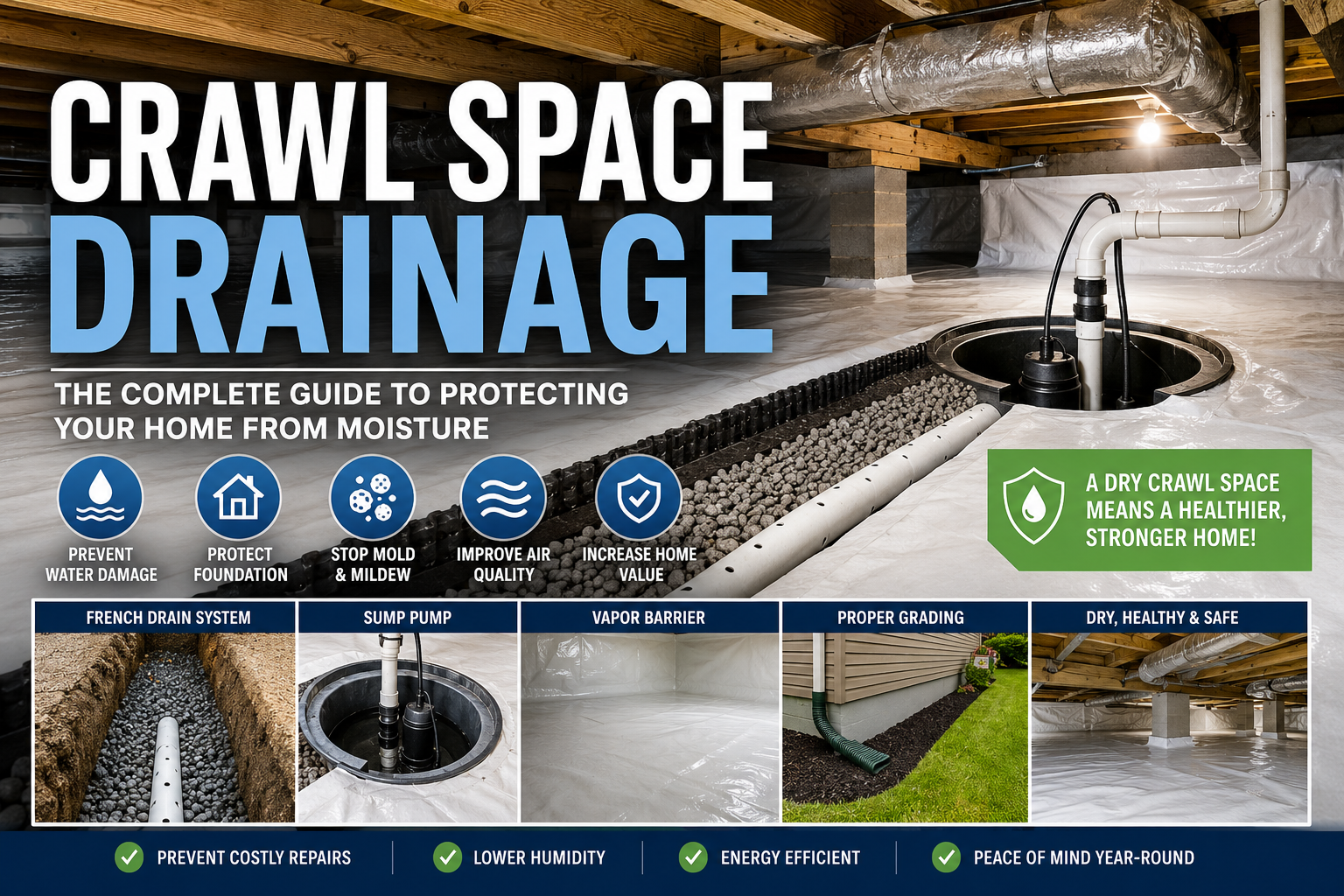
Water in your crawl space can lead to costly repairs, mold growth, wood rot, and poor indoor air quality. Installing an effective crawl space drainage system is one of the best ways to protect your home’s foundation and maintain a dry, healthy environment. Whether you’re dealing with seasonal flooding, heavy rain, or persistent groundwater, understanding crawl space drainage can help you prevent long-term structural damage and expensive maintenance.
In this comprehensive guide, you’ll learn how crawl space drainage systems work, the signs of moisture problems, available drainage solutions, installation tips, maintenance practices, and how to choose the right system for your home.
What Is Crawl Space Drainage?
A crawl space is the area beneath a house that provides access to plumbing, electrical wiring, HVAC components, and structural supports. Unfortunately, because it’s close to the ground, this space is vulnerable to moisture intrusion.
Crawl space drainage refers to a collection of methods and systems designed to redirect water away from the crawl space before it causes damage. These systems may include interior drains, exterior grading improvements, sump pumps, vapor barriers, and drainage mats.
The primary goal is to keep the crawl space dry year-round.
Why Proper Crawl Space Drainage Is Important
Ignoring moisture in a crawl space can result in serious issues that affect your home’s safety and value.
- Prevents Mold Growth: Damp environments create ideal conditions for mold and mildew. Mold can spread quickly and negatively impact indoor air quality, especially since air from the crawl space often circulates throughout the home.
- Protects the Foundation: Standing water can weaken soil beneath the foundation, leading to settling, cracks, and structural instability over time.
- Prevents Wood Rot: Moisture damages wooden floor joists, beams, and subflooring. Keeping the area dry extends the life of these structural components.
- Improves Indoor Air Quality: Dry crawl spaces reduce humidity, helping minimize musty odors and airborne allergens.
- Increases Energy Efficiency: A dry crawl space allows insulation to perform more effectively, reducing heating and cooling costs.
Common Causes of Crawl Space Water Problems
Understanding where water comes from is the first step toward choosing the right drainage solution:
- Heavy Rainfall: During storms, excess groundwater can seep into the crawl space through foundation openings or poorly drained soil.
- Poor Yard Grading: If your yard slopes toward your home, rainwater naturally collects around the foundation.
- Clogged Gutters: Overflowing gutters dump water next to the house instead of directing it away.
- Broken Downspouts: Short or damaged downspouts allow water to accumulate around the foundation walls.
- High Groundwater Table: Some homes are built in areas where groundwater remains close to the surface throughout the year.
- Plumbing Leaks: Leaking pipes beneath the home can slowly introduce moisture into the crawl space.
Signs You Need Crawl Space Drainage
Watch for these warning signs around your property:
- Standing water after rainfall
- Damp or muddy soil
- Mold growth
- Musty odors inside the house
- Sagging floors
- Increased indoor humidity
- Wood rot or rust on metal components
- Pest infestations
- Visible condensation on pipes
If you notice one or more of these problems, it may be time to improve your crawl space drainage system.
Types of Crawl Space Drainage Systems
Several drainage solutions are available depending on the severity of the moisture problem.
1. Interior French Drain
An interior French drain is installed around the perimeter of the crawl space. It collects groundwater and directs it toward a sump basin for removal.
- Key Advantages: Excellent for groundwater control, works well during heavy rainfall, and is long-lasting when professionally installed.
2. Exterior French Drain
This system is installed outside the home’s foundation to intercept groundwater before it reaches the crawl space.
- Key Benefits: Reduces hydrostatic pressure, protects foundation walls, and minimizes water infiltration.
3. Sump Pump Systems
A sump pump removes collected water from a sump basin and discharges it safely away from the home. Modern sump pumps often include:
- Battery backup systems
- High-water alarms
- Automatic activation
- Cast-iron motors for durability
4. Drainage Matting
Drainage mats create channels beneath the crawl space floor that allow water to flow toward a drainage system instead of pooling. They also help protect vapor barriers from punctures.
5. Vapor Barriers
Although vapor barriers don’t remove standing water, they significantly reduce moisture entering through the soil. High-quality vapor barriers reduce humidity, improve energy efficiency, protect insulation, and help prevent mold growth.
Interior vs. Exterior Drainage Systems
| Feature | Interior Drainage | Exterior Drainage |
| Installation | Inside crawl space | Around foundation exterior |
| Cost | Moderate | Higher |
| Water Control | Excellent | Excellent |
| Excavation Required | No | Yes |
| Maintenance | Easy | Moderate |
| Best For | Existing homes | New construction or major renovations |
How to Choose the Right Crawl Space Drainage System
Every home has different moisture conditions. Consider these factors when selecting a system:
- Local climate and heavy rainfall patterns
- Soil type and groundwater levels
- Foundation design
- Frequency of flooding
- Overall budget
- Existing water damage
- Long-term maintenance needs
A professional inspection can identify the most effective combination of drainage solutions for your property.
How to Install a Crawl Space Drainage System
The installation process depends on the type of system you choose, but most crawl space drainage projects follow similar steps:
Step 1: Inspect the Crawl Space
Begin by identifying the source of the moisture. Look for standing water, foundation cracks, leaking pipes, poor grading outside the home, mold, or damaged insulation.
Step 2: Remove Existing Water
If water is already present, remove it using a wet/dry vacuum, portable pump, or professional water extraction equipment. The space should be as dry as possible before installation begins.
Step 3: Install Drainage Channels
Drainage trenches or perforated pipes are installed around the perimeter of the crawl space to collect groundwater and direct it toward a sump basin.
Step 4: Install a Sump Pump
The sump pump automatically removes collected water and discharges it safely away from the home’s foundation. Consider adding a battery backup system for power outages.
Step 5: Add a Vapor Barrier
A heavy-duty vapor barrier is installed over the crawl space floor and partially up the foundation walls to block moisture from rising through the soil.
Step 6: Test the System
Once installation is complete, test the system to ensure water flows correctly and the sump pump activates as expected.
Crawl Space Drainage Maintenance Tips
Even the best crawl space drainage system requires regular maintenance to perform efficiently:
- Inspect the Sump Pump: Test the pump every few months by pouring water into the sump pit to ensure it activates properly.
- Clean Drainage Lines: Clear out leaves, dirt, and debris that could clog drainage pipes and restrict water flow.
- Check the Vapor Barrier: Inspect for tears, loose seams, or punctures, and repair them promptly.
- Inspect Gutters and Downspouts: Keep gutters clean and ensure downspouts extend at least 5–10 feet away from the foundation.
- Monitor Humidity Levels: Use a hygrometer to keep crawl space humidity below 60% to discourage mold growth.
Cost of Crawl Space Drainage
The total cost depends on the size of the space, the extent of water damage, and the type of system installed.
| Service | Estimated Cost (USD) |
| Crawl space inspection | $100 – $300 |
| French drain installation | $1,500 – $6,000 |
| Sump pump installation | $800 – $2,500 |
| Vapor barrier installation | $1,200 – $4,000 |
| Crawl space encapsulation | $5,000 – $15,000 |
| Foundation grading improvements | $500 – $3,000 |
Investing in proper drainage now can help you avoid far more expensive structural repairs later.
DIY vs. Professional Installation
DIY Projects (Suitable For)
- Cleaning gutters and extending downspouts
- Installing basic vapor barriers
- Sealing small foundation cracks
- Improving exterior yard grading
Professional Installation (Recommended For)
- Persistent flooding or high water tables
- Structural damage assessment
- Interior French drains and perimeter pipe routing
- Sump pump and battery backup installation
- Full crawl space encapsulation and extensive mold remediation
Common Mistakes to Avoid
Avoid these errors when planning your crawl space drainage project:
- Ignoring standing water after major storms.
- Installing a vapor barrier without addressing active water drainage first.
- Choosing an undersized sump pump.
- Failing to maintain gutters and downspouts.
- Neglecting routine system inspections.
- Allowing landscaping or dirt to slope toward the foundation.
- Skipping professional inspections when structural damage is suspected.
Benefits of Proper Crawl Space Drainage
- Protects Your Foundation: Reduces hydrostatic pressure and minimizes foundation movement or cracking.
- Improves Indoor Comfort: Regulates humidity throughout the home, creating a healthier living space.
- Prevents Pest Infestations: Dry conditions deter termites, rodents, and insects.
- Increases Property Value: Homes with well-maintained, dry crawl spaces are far more appealing to buyers.
- Reduces Repair Costs: Preventive drainage solutions cost significantly less than fixing mold or foundation failure.
Frequently Asked Questions (FAQs)
What is the best crawl space drainage system?
The best system depends on your home’s conditions. Many homeowners benefit from a combination of an interior French drain, a sump pump, and a high-mil vapor barrier for comprehensive moisture control.
How do I know if my crawl space has drainage problems?
Common signs include standing water, musty odors upstairs, mold growth, sagging floor joists, high indoor humidity, and wood rot.
Can I install crawl space drainage myself?
Basic tasks like extending downspouts or laying down a simple vapor barrier can be DIY projects. However, installing underground drainage pipes and sump pumps is usually best handled by professionals.
Does a vapor barrier stop standing water?
No. A vapor barrier blocks soil moisture and humidity, but it cannot remove standing water. It must be paired with a drainage channel and sump pump.
How often should I inspect my crawl space?
Inspect your crawl space at least twice a year and after major rainfall events to catch any moisture issues early.
Is crawl space encapsulation worth it?
Yes. Encapsulation, when combined with proper drainage, helps control humidity, improve home energy efficiency, protect structural wood, and prevent mold growth.
Conclusion
An effective crawl space drainage system is one of the smartest investments you can make to protect your home. By preventing standing water, reducing humidity, and directing moisture away from the foundation, you can avoid mold, wood rot, structural damage, and costly repairs.
Whether you choose a French drain, sump pump, vapor barrier, or a complete encapsulation system, the key is addressing water issues before they become major problems. Regular inspections and maintenance will keep your crawl space dry and your home healthier for years to come.